

A Life More Wild - Series 6, Episode 2
Barney Murray on the wibbly tightness, brutal conditions and surprisingly young demographic of drystone walling
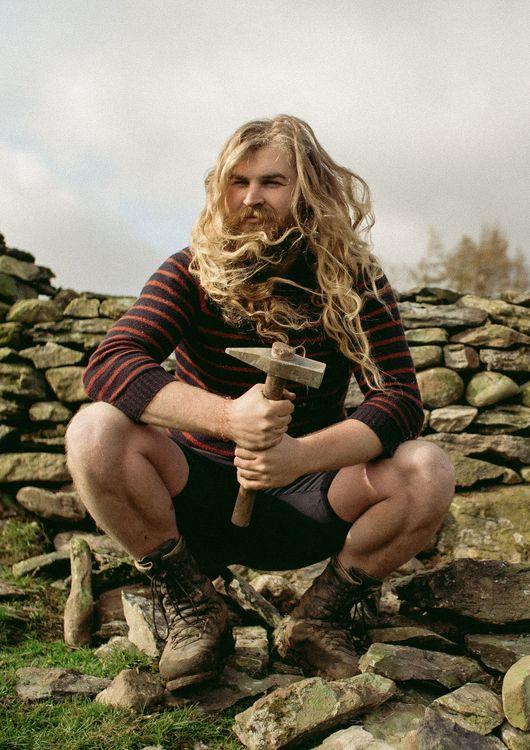
Most of us would be lucky to build something that stays up for a week, but drystone waller Barney Murray puts a 100 year guarantee on his work. So far, although he does admit it's only about 10 years in, he's looking good for it.
Join Barney now as he fixes up a gap in a wall near his home in Wales and discusses how he came to the craft, his own particular style, and finding himself a veteran of the surprisingly young walling scene when he's not even 30.
My name is Barney Murray, and I am a professional drystone waller and I'm going to show you the ropes today. We're going to set about building a fallen gap in what is a pretty precarious old wall. We'll see to it that the wall is built well and to a slightly better standard. Hopefully it should stand for a century.
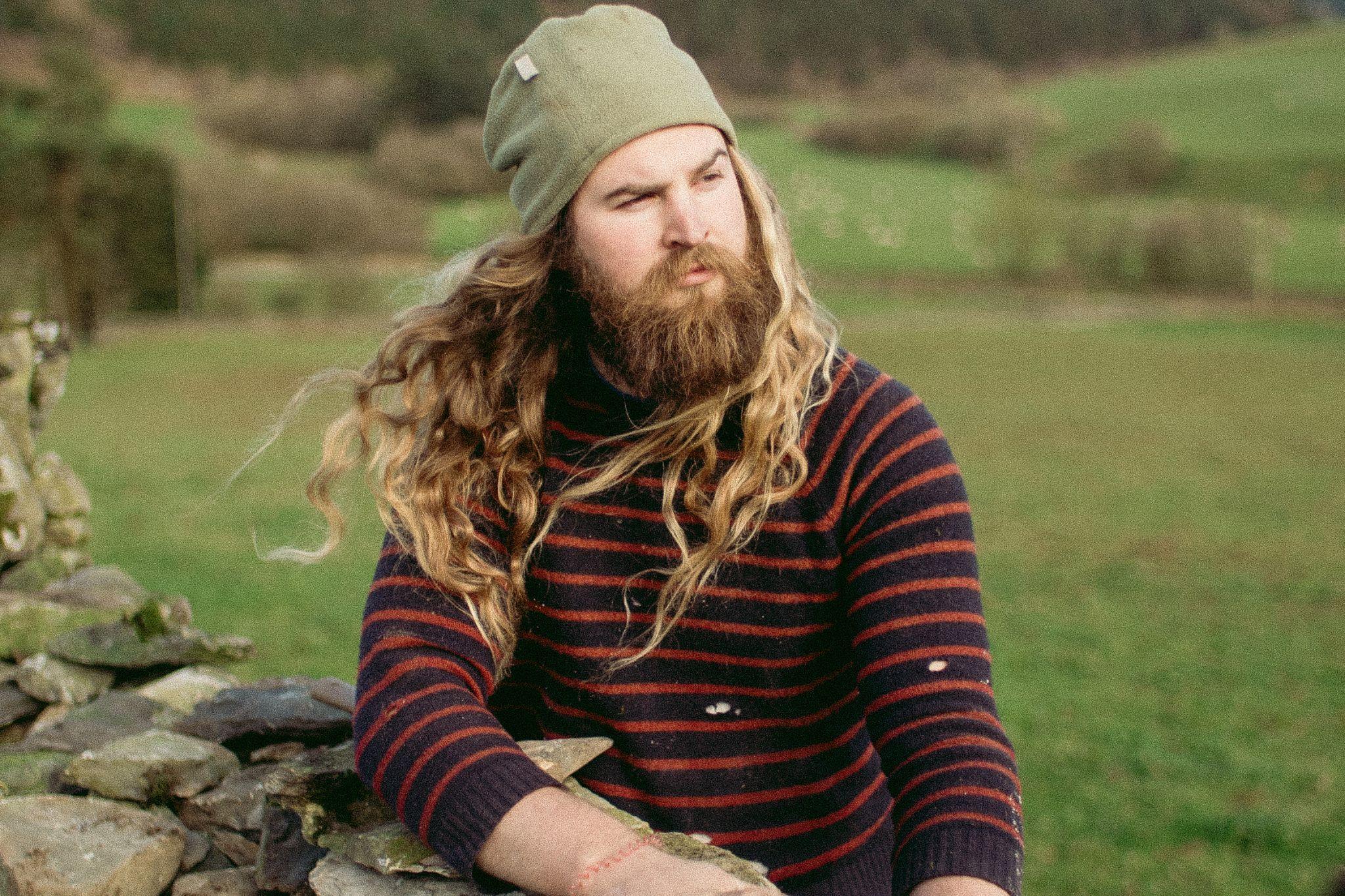
This is Pentra Trow, which means “village over there”. So we're on the other side of the river and we're heading to the top corner of this field. I've started a little gap this morning. I've done a couple of gaps here this morning, but I’m just gonna finish that one off. And I'll show you the ropes, show you how a drystone wall is made.
I started when I was 18, 19. I was in college in Wrexham, doing my Art Foundation and really hating it. And knowing I didn't want to go to university or, you know, do any more academic things. I was totally fed up. So it was, it was just complete fortune. These two wallers who were starting up a business needed a labourer, and I just hopped on it, sacked off college immediately.
I got to Christmas, I think, and that was it. And 50 pounds a day was pretty good. I was certainly happy. I had very few overheads and it opened up the world. As soon as I started, I knew that it was for me. I dare say it could have been anything. It could have been, you know, it could have been hedge laying. It could have been timber framing. It could have been, you know, farming or something, but for whatever reason, it was drystone walling. So that became my true calling.
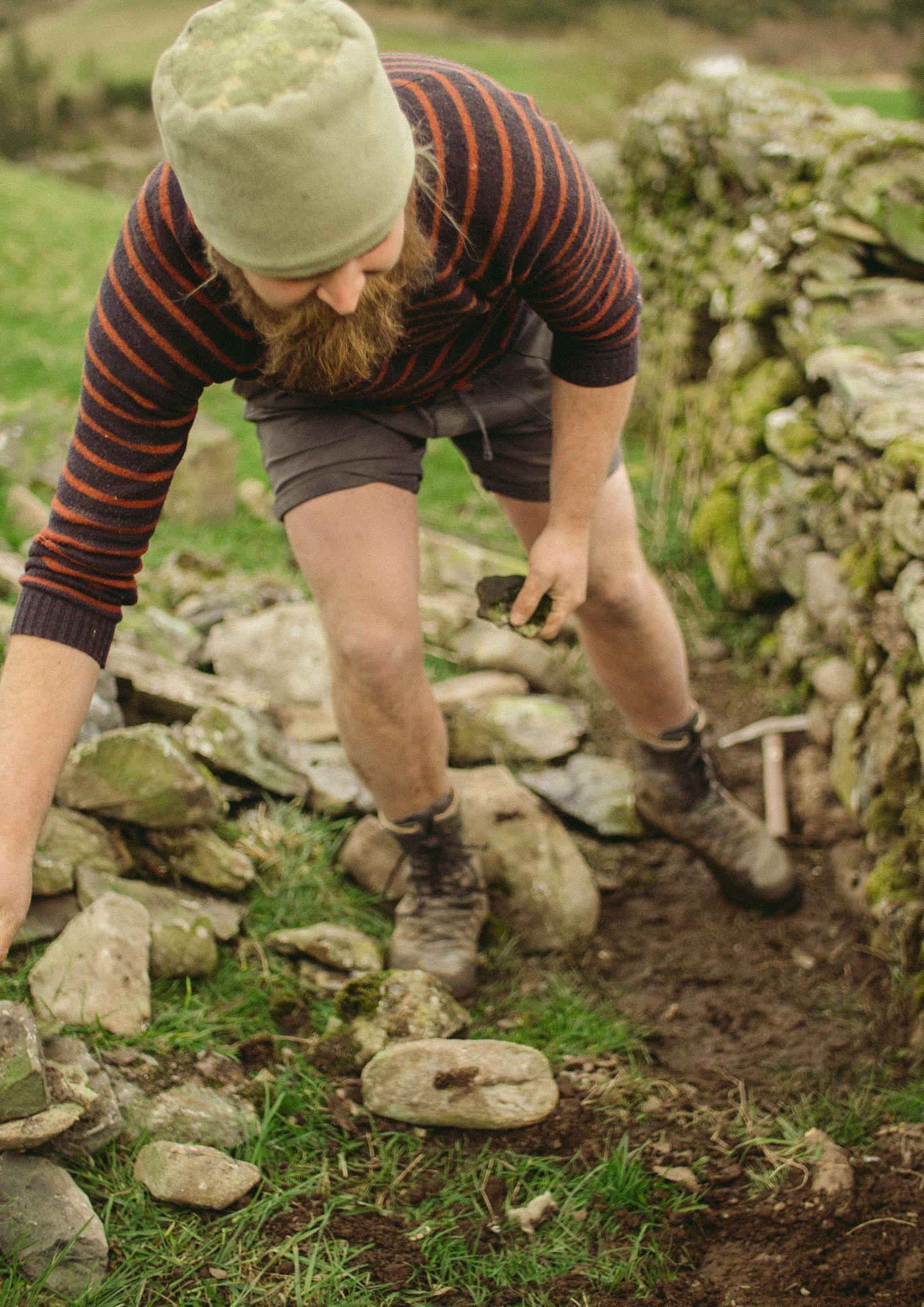
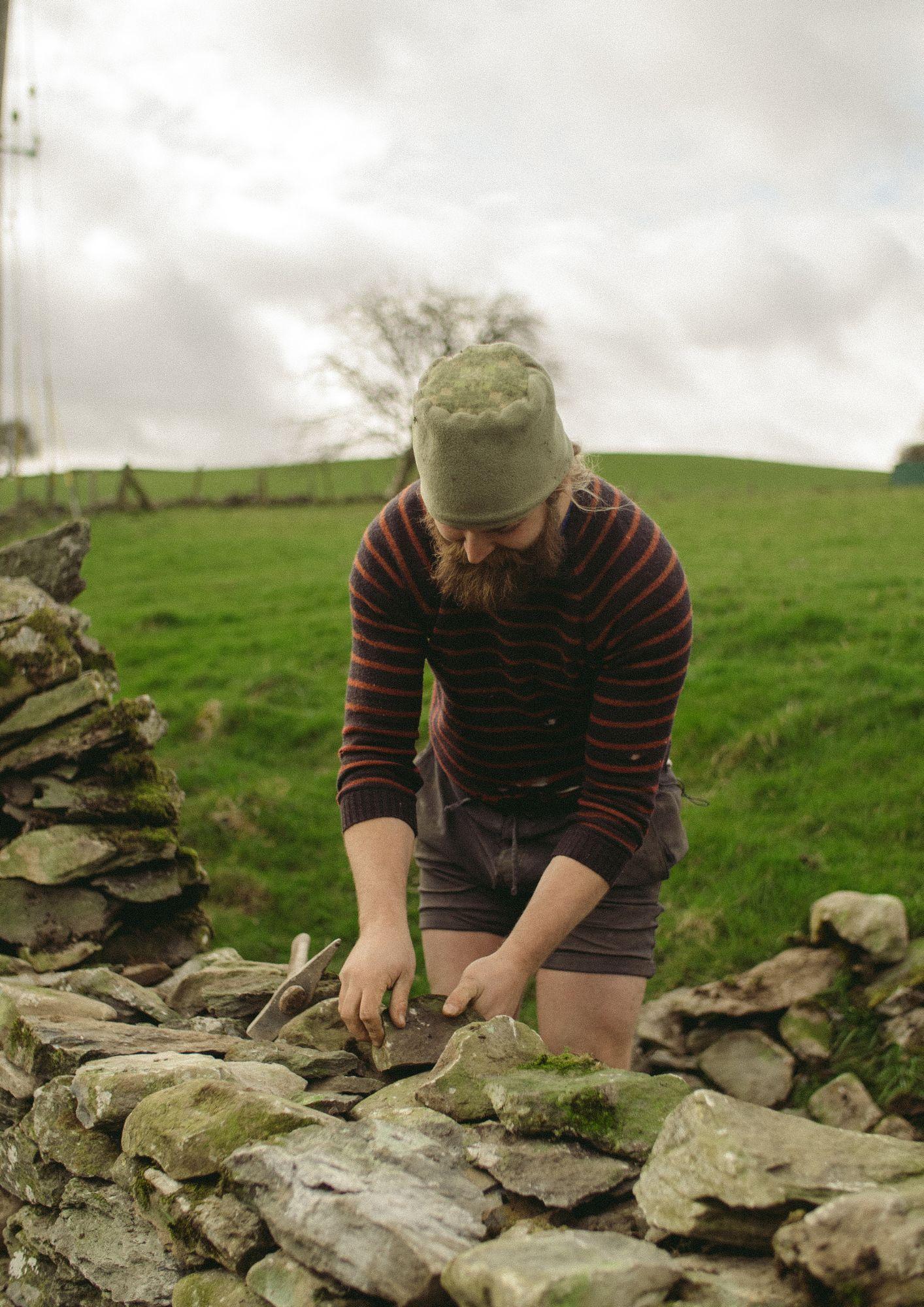
It is a brutal job. And maybe there's a sadistic nature to me, with what I put myself through in working because it's, it's tough, it can be brutal. I mean, we've, you've come out on a very nice day, but up here, it can be pretty bloody exposed. And it is hard work, but it is incredibly rewarding at the same time. Just seeing, you know what this was before. This is a gap that I've been building. Well, I probably started it late this morning, and beforehand, it was in worse nick than that. I've just picked a section of wall which was in desperate need.
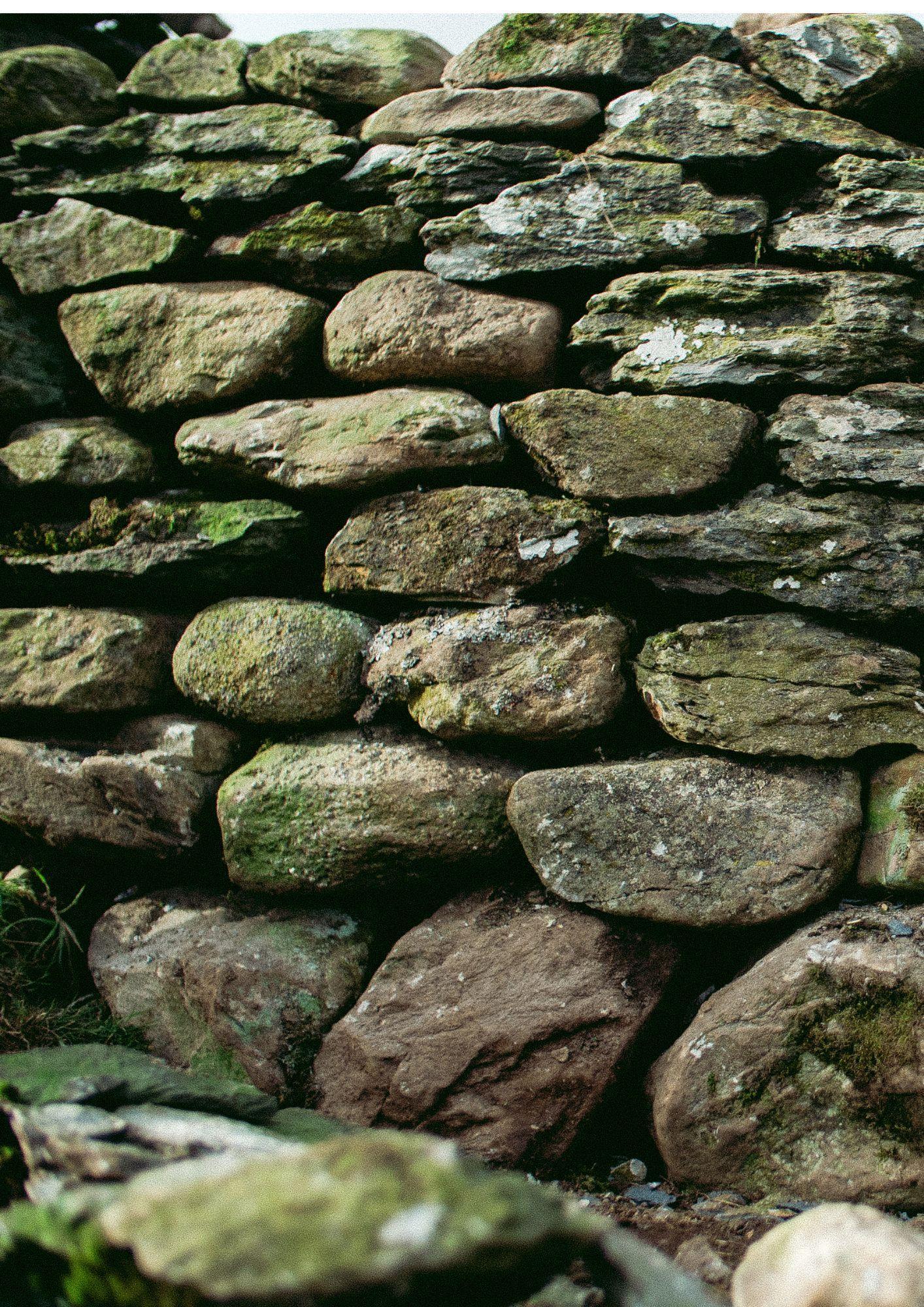
Taking it from that and turning it into this, it's just a process of working with these shapes, this three-dimensional imagery, really, and just sort of working with the material I've got. It's not like working with freshly quarried stone on a nice, you know, garden job or something like that. I am at the mercy of the material that was here before, so I have to make do with what I've got, and ideally all the stone that's come down should go back up.
Ideally you'd have one person on each side, and you'd build the gap in harmony. But because I'm having to hop over and do both of the sides of the wall, what I'm aiming to do, or what I have to do is build up both of the skins at the same time. So effectively there’s two walls and I need to build them up together, just so that everything's tying in nicely, and I can keep the middle of the wall nicely packed. As I go up, the wall gets slightly narrower. It's like, a capital letter A, using that, using that triangle for strength in the wall.
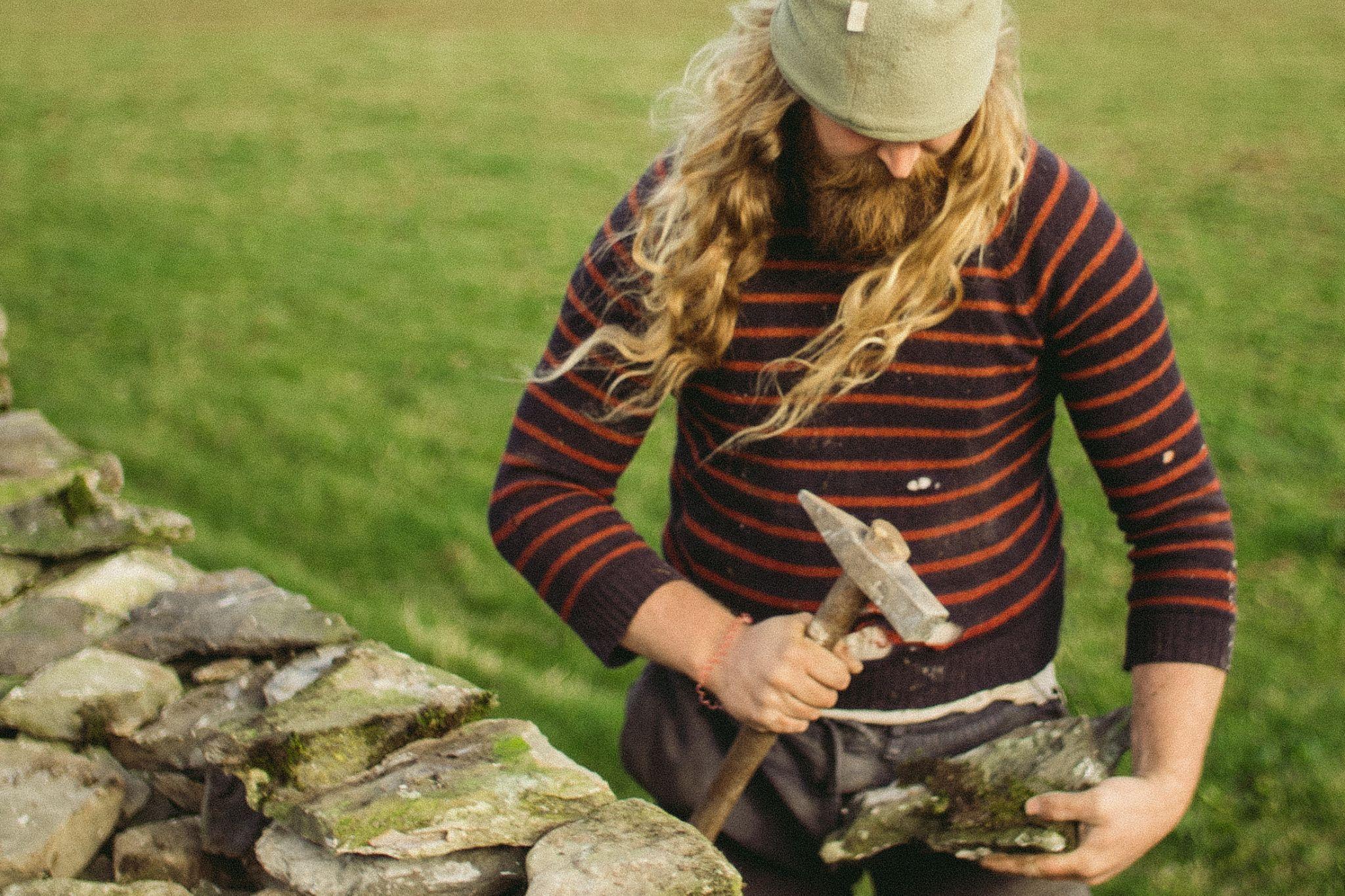
I'm constantly thinking about the next stone. Just thinking not so much the stone that I'm laying, but the stones either side of it when I place it, and also the stones that are going to sit on top of that. So I'm thinking ahead the whole time. Of course, I've done it my whole professional career, working career anyway, so doing this for eight years, I have to do a lot less thinking than I once did. Which nice. I sort of enter a flow state. And it is quite meditative. Well, it is incredibly meditative. It is also insane. You're just trapped in your head. If these stones break when you hit them in the wrong place, it can be painful and difficult, and it can make you want to quit, but you just have to fight through it.
It does look serene, especially like on a day like today, up on top of a hill, working here. There is nowhere better. It is, quite simply, the best job in the world, and I'm very lucky to get to do it. What we're hearing now, there's a lot of new life in this valley where we are. There's two farms in the valley, Ty Gwyn, I think over there.and Penta Trow. They're both hard at lambing. So there's a lot of feeding happening. There's a lot of checking these sheep, these ewes and and also a lot of lambs getting taken out into the field.
Drystone walling creates so much habitat for small mammals and invertebrates. They all show up. They all come and say hello, even up here somewhere where you wouldn't really expect to see much wildlife, because it's away from any trees or anything like that. It's a bit barren either side. But in this wall I've found newts, I've found lizards, I've seen slow worms here, obviously the Osprey I flush out. There was a little mouse hole under the foundations of this wall. So yeah, they're all here, and the wall creates a safe sanctuary for those little critters. The other thing it serves as is a shelter for sheep and cows. These walls are so important, especially somewhere like this, where there's not a great deal of tree cover. In the hottest summers and in the worst winters, these walls save 1000s of lives of livestock.
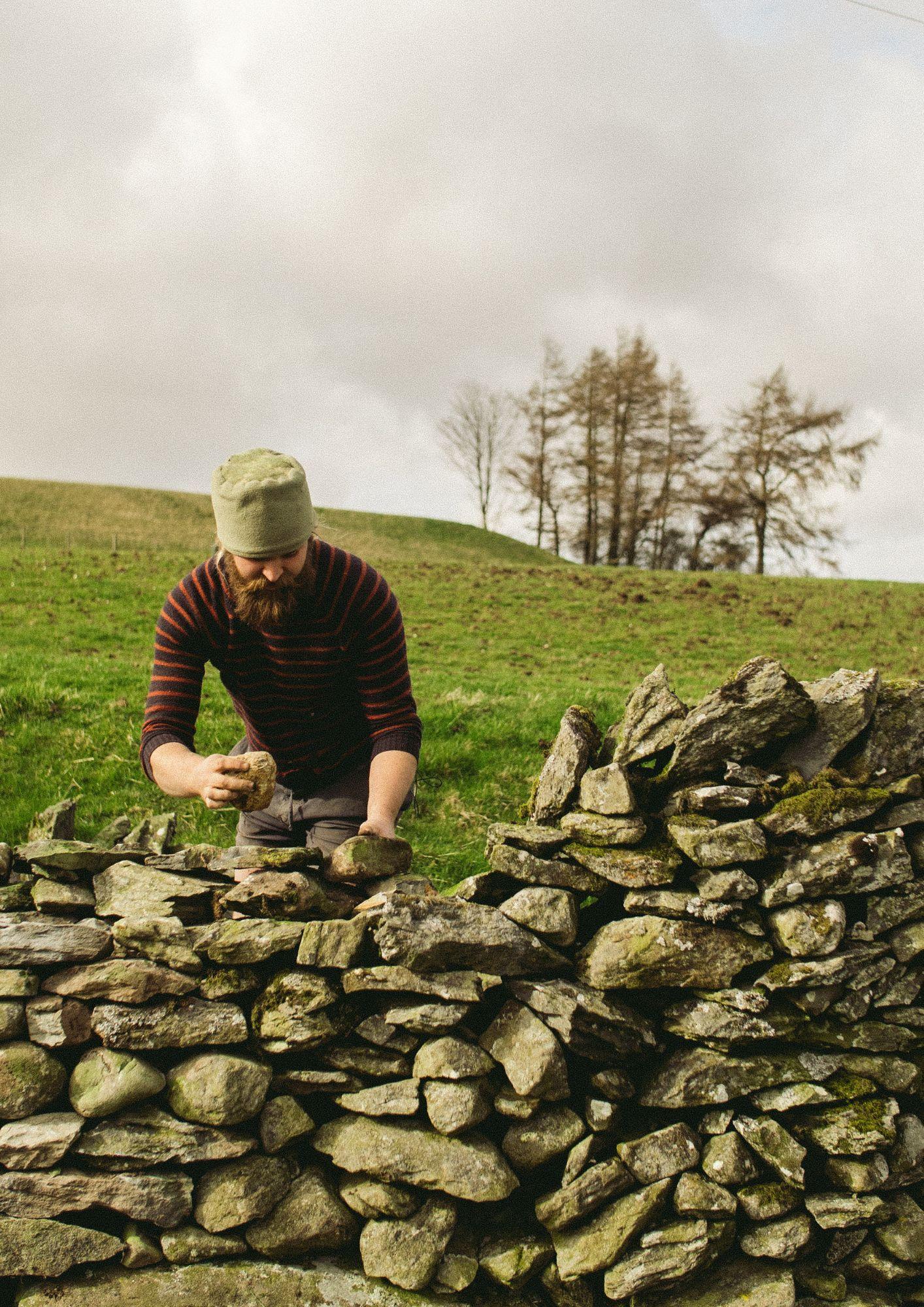
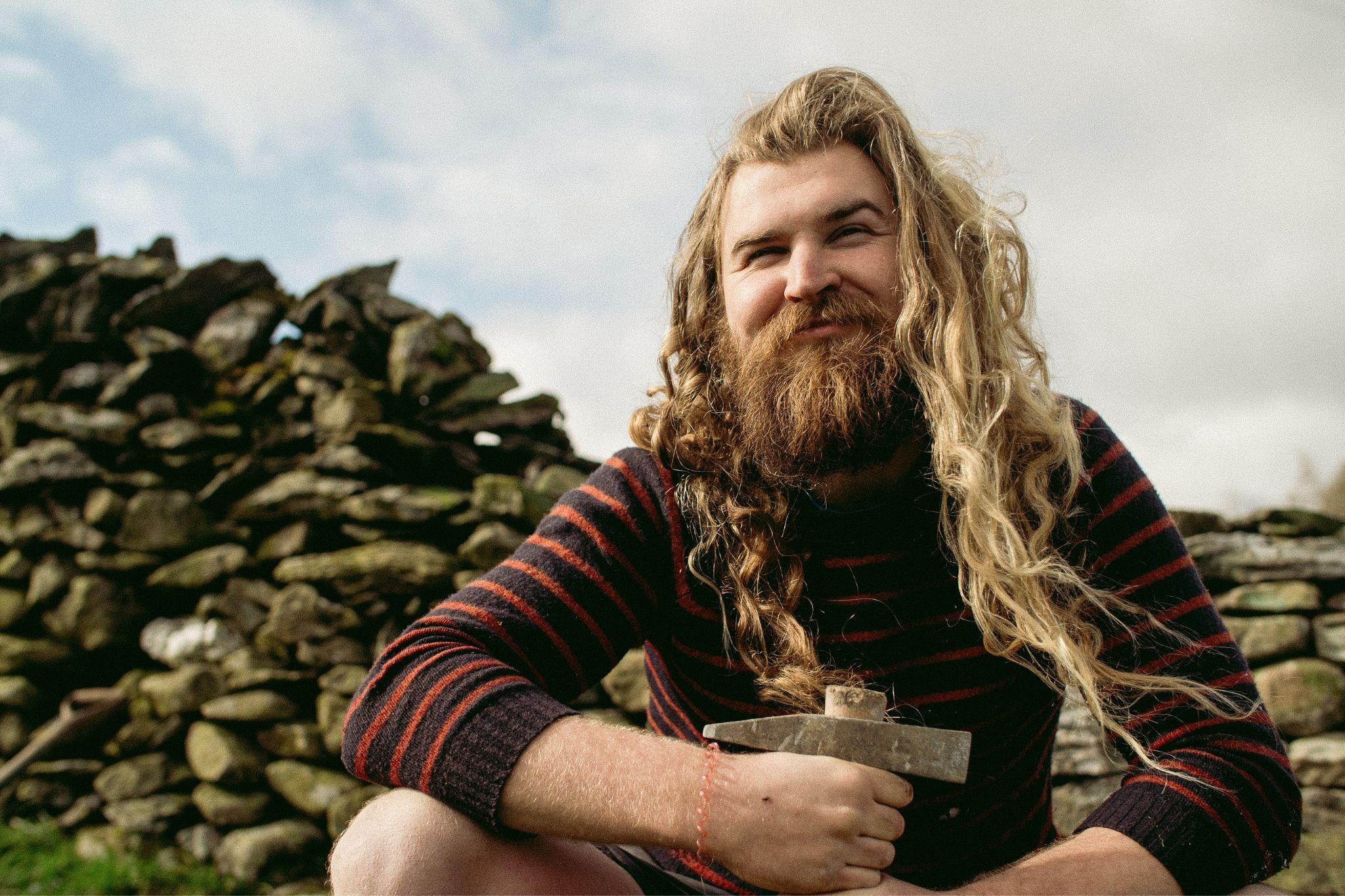
I think walling is in the best place it's been in, probably since the First World War. There are so many young people with a similar story to me. Just had enough of academia. They've had enough of being sat in bloody lessons in school, so the demographic of walling, while the stereotype is an old man on top of a field, it’s getting younger. There's a lot of young people taking to it. I'm now more of a veteran, really. There's some fantastic young wallers taking to it, and there's a really good community of young people walling, who want to help and just share knowledge and share skills, which is important. I'm really, really lucky to be part of it, part of the community at the moment, because there's really big things happening.
Lots of people call it art, but I don't think it is. I think it's definitely a craft because it's made by one's hands and it’s functional. It serves a purpose. I can identify, more or less within a 30-mile radius of where I am now, who's built every wall. It is very personal. The way that everyone's work looks, it's all individual and it does tell a tale. We're stood here along this wall which many different hands have played a part in and it tells the story of all of those generations and all of those individuals who have built sections and mended it. So it is, yeah, it's very, very personal.
So a Barney Murray wall is a mishmash! It's a quilt of all of the brilliant tutors and teachers I've had over the years. There's something that's been developed from that. So there's definitely a wibbliness to it, a wibbly tightness to my walling. I would, well, I'm talking about my own work now, but that's, that's probably how I would describe it. Everybody sacrifices certain things in their work, because nothing can be 100% perfect, especially when you're working with these dogs head stones. So there's always a compromise, maybe allowing a little bit of looseness in certain aspects. So opening up these gaps, or leaving the occasional running joint, or whatever it might be. Everyone has their own quirk and their own trait in their style. It is akin to someone's handwriting. No two people build the same.
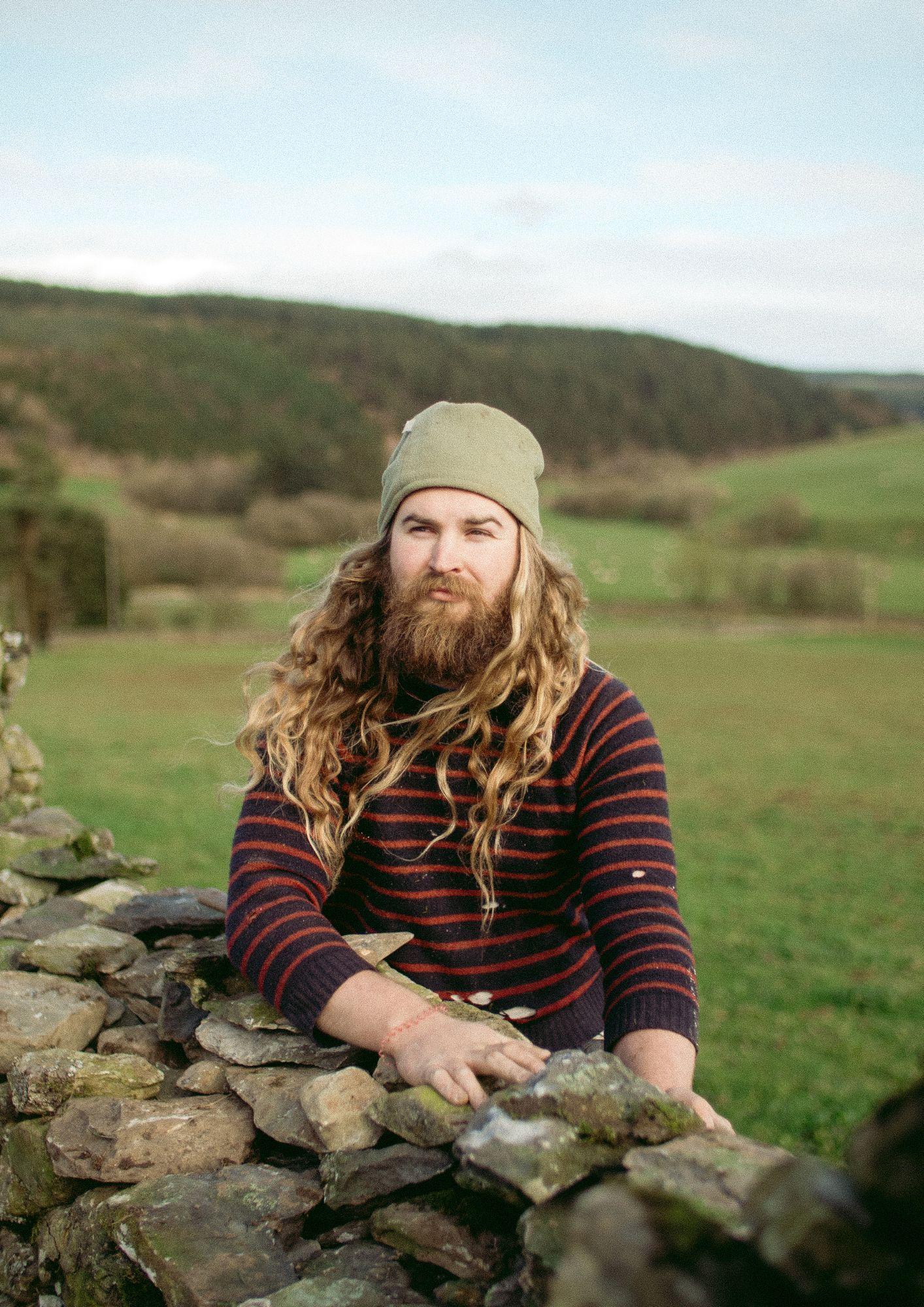
Usually you’re influenced by your primary school teacher, and actually I'm in the next-door village to my old primary school teacher, Gwennol Elis, such is the way of these small rural communities. I think it's nice to do justice to those people that have been before, and who have contributed to that wall, contributed to the landscape. It's just making sure that your work sits well within that using the same, identical materials. And you could rebuild this section of wall a million times over, and it would never be the same. Everybody who builds it is going to do something, at least one thing differently, you know. And there's infinite ways of arranging these stones, you know, infinite. It's never ending. No two walls are the same, which is quite nice to think about in a way. You know, you can never replicate it. Nothing can be truly identical to the last one.
Okay, so we've essentially built the structure of the wall, the building, so to speak. And now I’m doing the coping, or the caiad, as I'd probably call it in Welsh, the lid at the top, and putting the top on. I'm matching what vernacular is here. So all the tops are sort of leaning over onto the next one. And the idea of that is that should a sheep hop over the wall and drag off one of these coping stones, then because the stone next to it is leaning on it, that gap will get filled by that falling over and shutting the gap. So it's really important that you match the local vernacular. Whatever was here before, you must always recreate.
When you're building the wall, it would be so easy just to use all of these beautiful, flat, big stones in in the wall itself, but you would cheat yourself, and you’d kick yourself later because you would be without suitable stones for the top. So you have to sacrifice your best stones for this job, and ideally you have a stone that is wide enough to span the width of the top of the wall, linking and tying those two skins together. Also, it does help having wide copings. It does prevent a lot of weather from getting in. And it does really consolidate the wall so it's a good practice to be strict.
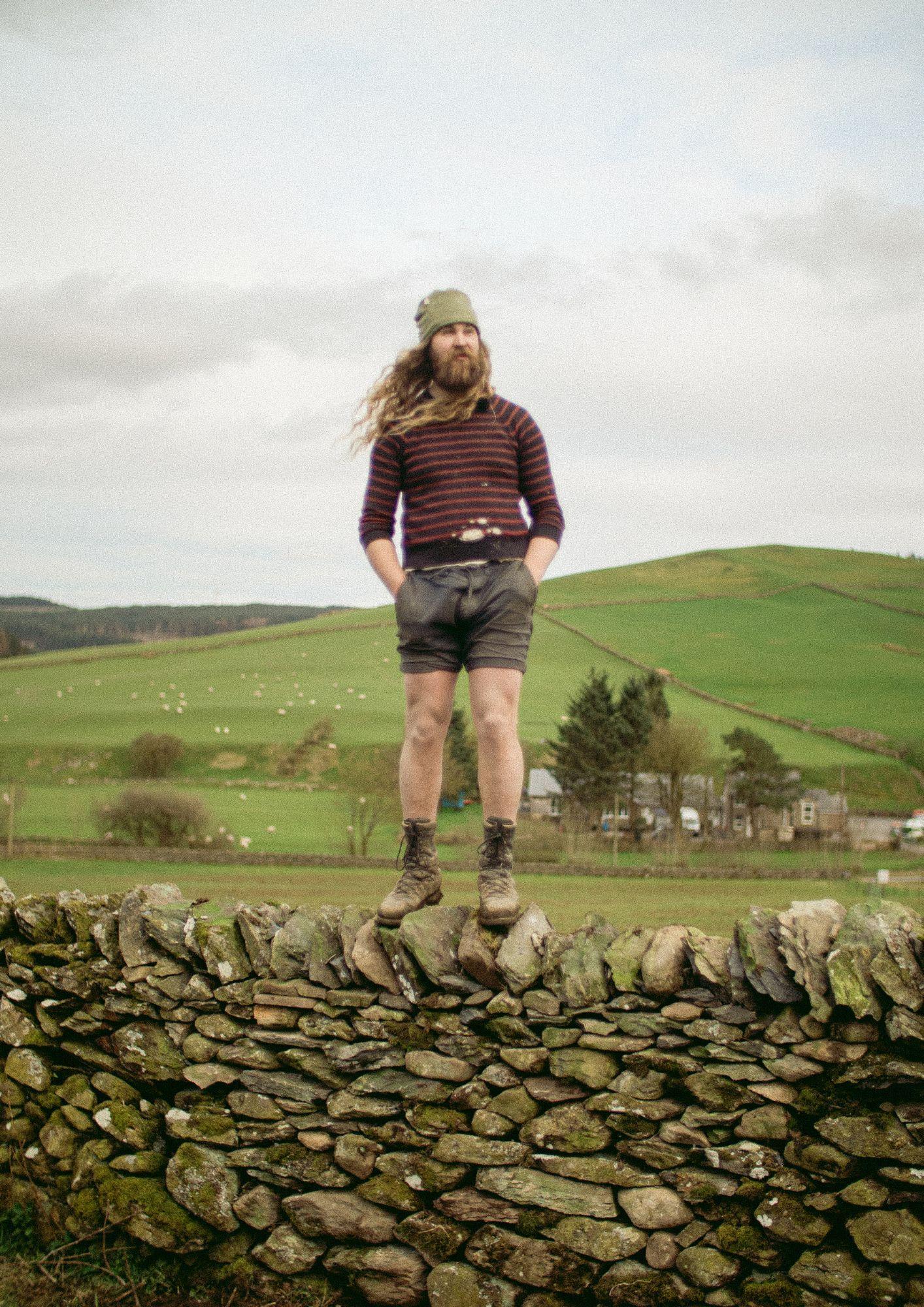
And that's what most of dry stone walling is really. It's just, you know, not allowing yourself to use all the best stones at the start. You have to compromise, especially in a setting like this, where, had I used all my tops in the bottom of the wall, I would be without any now unless I went and borrowed the farmer's tractor where he's got a stone pile. But it's so nice to build this wall with what was here. I brought in a couple of foundations just from further along. But it's all come together at the end, exactly as I planned it. Maybe it just happened that way this time. It doesn't always!
Approaching the last now... Smash. And then there we go, just like that, the gap is complete, and the sheep are now trapped where they're meant to be, instead of free to escape as they were before. I like to put a 100-year guarantee on any of walls, obviously not next to a tree that's newly grown, or planted, or anything like that, because trees do kill walls. But yeah, I'd like to put a 100-year guarantee on all of the walls that I build, and I hope that they outlive me and hopefully the generation after that. That's something I can confidently say. I mean, you know, whatever I am… eight years in, I haven't had anything, anything fall over or go wrong so far. So I've only got, you know, 90 years left of that warranty! There's a craft older than fire with a material older than time.
Well he certainly seems happy, but then he would be with such a great coping strategy. Sorry. In a way though, he does set a good example - ditch what you don’t like in your life, find something you love doing and do it. Not a bad plan.
Another great guest will be along soon for a walk and until then, please remember to rate and review ALMW wherever you get your podcasts, we really appreciate it.
Why we're one of the highest scoring travel B Corps in the world
People
We're majority employee owned, which means we all get a say in how the business is run.

Profit
Our Charitable Trust uses 24% ownership of the company to support environmental causes
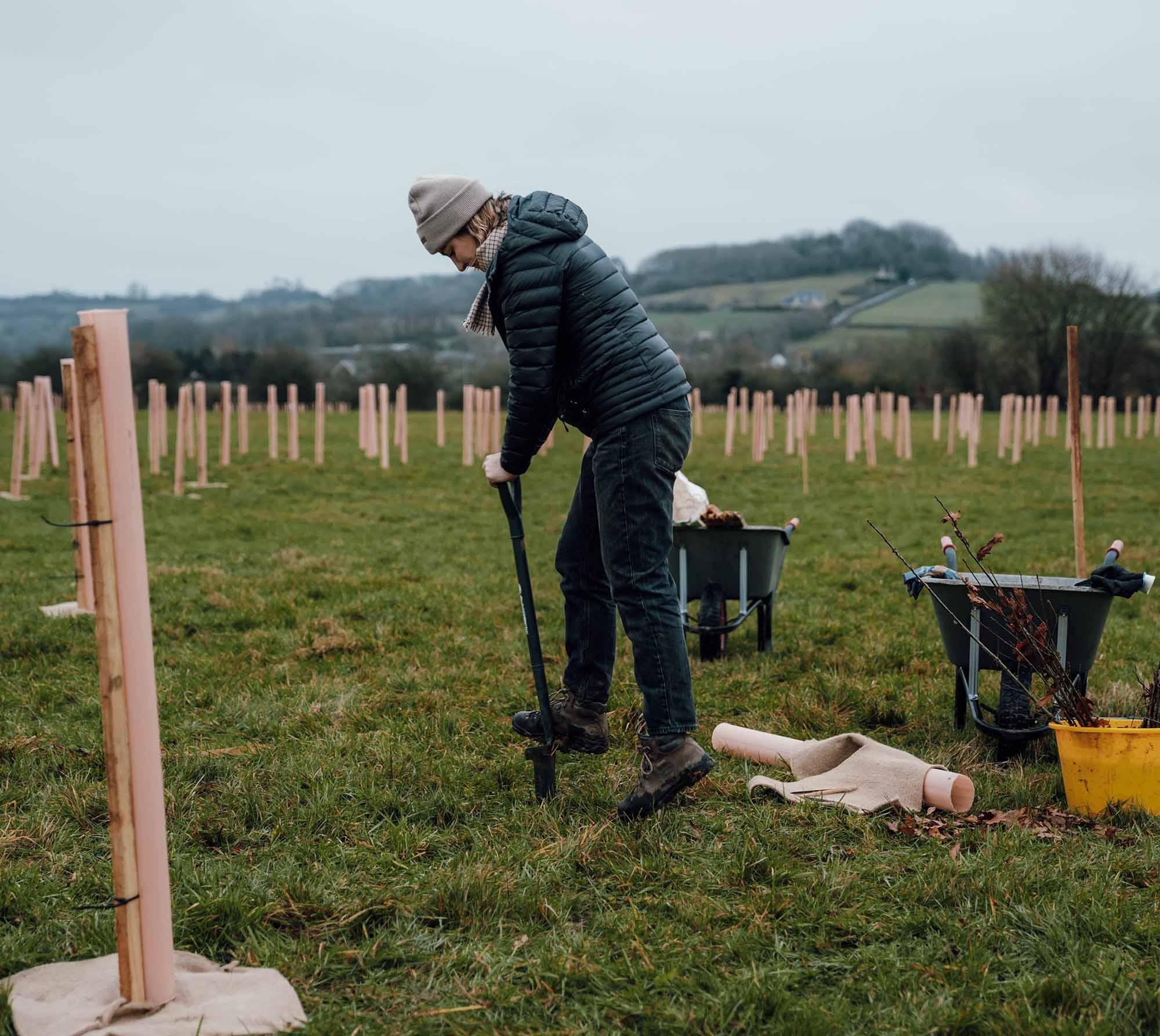
Planet
We're committing to raise £50,000 by 2027 to help protect nature in our national parks.