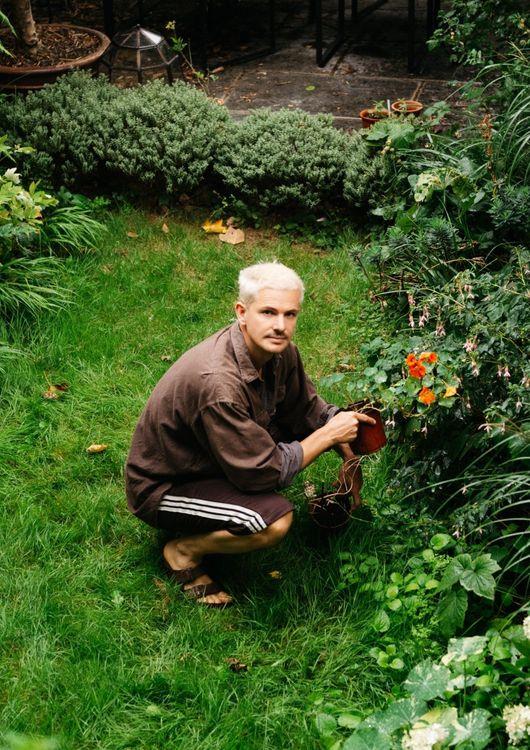
Wrong turns and tulips – how an artist found his way
Artist and author, Rollo Skinner, most known for his installations and set designs using plants and flowers, isn’t living the dream. He’s tried that. A couple of times, in fact. His life now is more nuanced than the pursuit of a single, shining objective, a magic bullet, an endpoint. It’s about knowing himself and being true to that knowledge. It’s a journey that took him to some very odd places, some that seemed perfect at the time but all of which turned out to be part of that mistake so many of us make – thinking of a what, not a who.
It began with a cinematic moment. Rollo, performing in a musical, was spotted by someone who worked in TV. “This casting director was like, “Him! He should go to drama school!”” he explains, pointing with fitting theatricality. “It was one person’s words, one opinion, but there I was, shapeless and formless in terms of what I knew of myself, so of course I completely bowed down to this person who’d never met me in my life but seemed so certain about me.”
It was the sort of thing people fantasise about – being plucked out of normal life and given your big shot, so naturally he took it. After a few small roles, he found himself filming for a series called The White Princess, travelling to beautiful locations and doing incredible things, but he found that the further he went into acting, the more uneasy he began to feel.

“I was riding horses, like the Lloyds Bank horses! I was playing the head of the stables. And it was in these stunning settings, and I was like, this is the dream, and yet I'm really struggling with this feeling of being very alienated from who I actually am.” Looking back, it’s far clearer to him now what was going on than it was at the time.
“Childhood wasn’t easy. I was gay at an all boys school and the teenage years just got harder and harder. So I was searching for an environment where I could just be myself. But the irony is that, going to drama school, the one thing you’re not ultimately going to be is yourself. I hadn’t quite realised that. It was a bit of a wrong turn, which is funny because Wrong Turn VI is the name of a movie I was in!”
While he loved elements of acting, he remembers feeling envious of the people working on the sets and the costumes. “It felt like they were getting to create this incredible world and I was just walking around in it. I was good at it, but it didn’t come naturally to me at all. I had to work so hard to feel comfortable there.”
So Rollo gave up drama and went looking for somewhere he felt more at home but, in what could almost be a spoiler for Wrong Turn VII, he found himself in another world that wasn’t of his own making. In a conscious effort to retrain and refocus, he joined The School of Communication Arts. It was a buzzing place in London, based in what had first been a church and then the nightclub, Mass. Around 30 students were given intense advertising training in a wildly creative environment which led straight to a career in art direction.
Rollo threw himself into it, working long days in the cauldron of high-end brand marketing, but after a few fast-paced years, the demands of the workplace and his personal circumstances became unbearable. “Increasingly, my life became very digital,” he remembers, “long hours working on these decks, on computers, and I was also in a relationship at that time that was robbing me of my confidence. Those two things, trying to keep my head above water in advertising, then coming home and trying to keep my head above water in that relationship... I was experiencing a kind of breakdown, and there was this point when I even had to stop taking the tube, because I had this incredibly loud noise in my head. I was hyper anxious and fatigued at just trying so hard. I was exhausted from trying.”
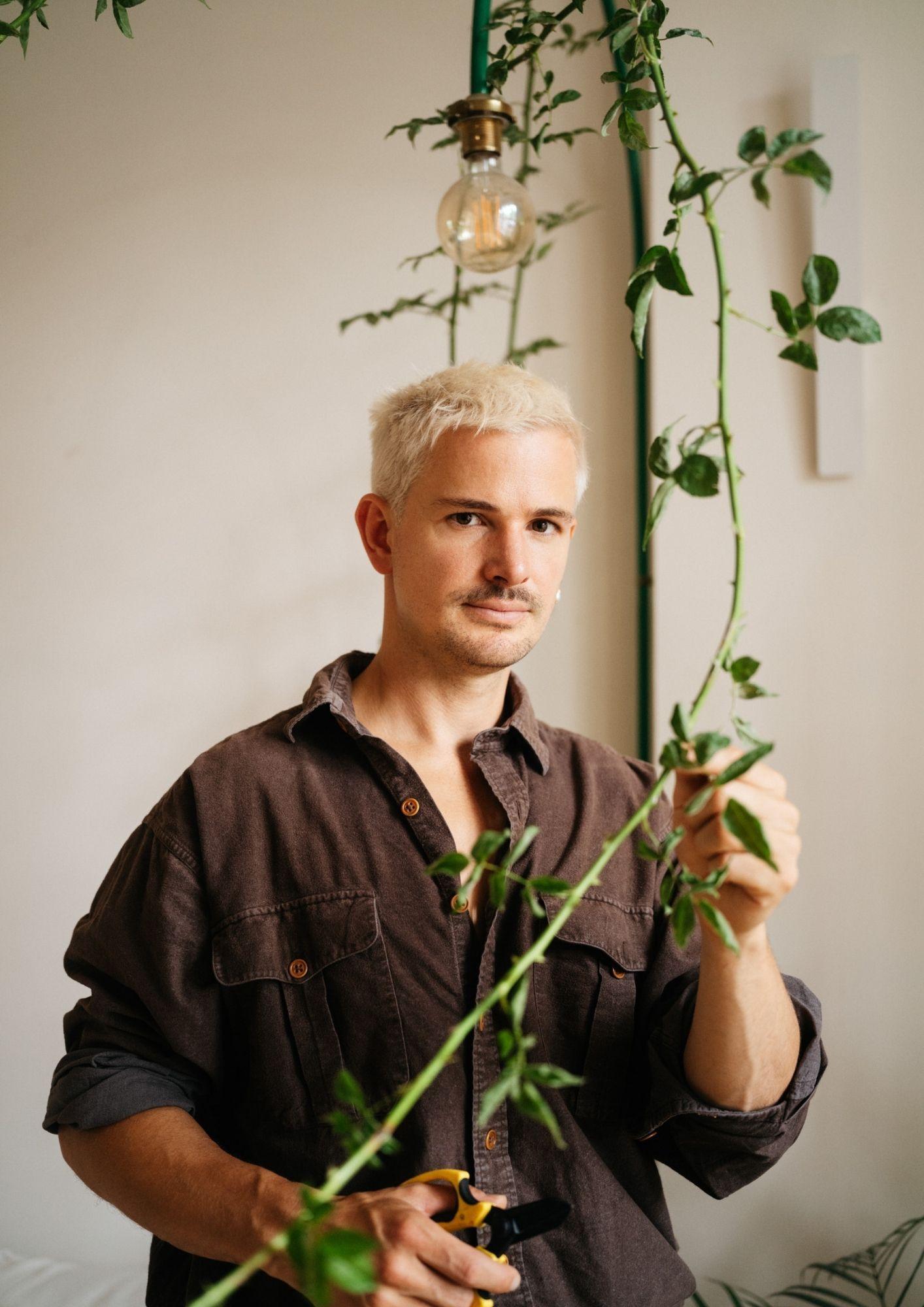
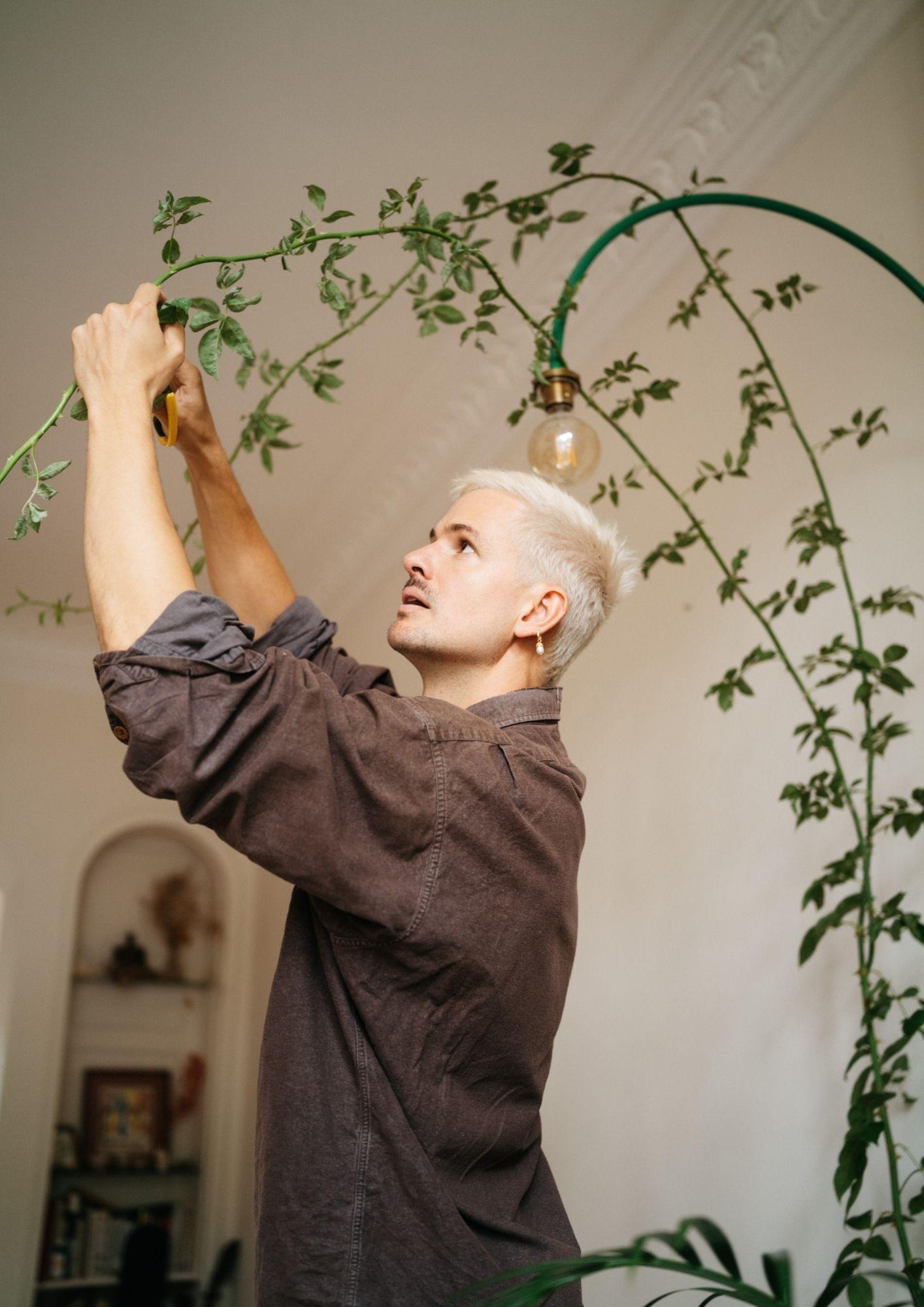
Then came a turning point, a step towards, if not the right path, then the beginning of the understanding that it wasn’t about paths at all. Rollo found the book, The Artist’s Way, by Julia Cameron, which encourages people to try out different lives in their minds, seeing what fits and what brings them joy. “I live near Tesco” he begins, surprisingly when talking about his epiphany, “and one day, I was walking past, and I thought, you know, I quite like floristry, nature, gardening. And I walked in and just bought myself a little four-pound bunch of tulips. I brought them home, sat down at the kitchen table and started to kind of play with them. And a feeling washed over me, something that I hadn’t found through all my years acting, or all my years in advertising. A feeling of this innate sense that I can really do this, this thing feels so me, no part of me is trying here. It was wonderful.”

He pauses for a moment, lost in the memory of it, then continues, “What I made was terrible, of course. I'm not saying I was suddenly this incredibly talented person. It was just that I tapped into that feeling of being like, Aha. This is me. I feel like I'm at home with these things.” That bunch of tulips sparked a Proustian reawakening of his early childhood, when nature was a greater part of his life. “Growing up,” Rollo says, visibly animated, ”I was always outdoors, getting muddy, getting mud underneath my nails. I loved being in nature. Nature was my refuge from the difficulty of trying to fit into this incredibly strange society, which we’ve dressed up as normal, but so many of us really struggle to find a place in. And nature is a very, you know, non judgmental, expansive, peaceful, loving place. And I’d known that without knowing it as a child. Playing with the flowers was a sort of coming home to myself.”
Soon Rollo was exploring all kinds of flowers and plants, powering into this new world with as much intensity as the previous ones but, crucially, none of the friction. “I live quite close to Columbia Road, where they have the flower market on Sundays. At the end of the day, they’re just trying to get rid of stock so one day I paid about 20 pounds and filled my kitchen with so many different flowers. I felt euphoric. I’d found my medium and the palette for that medium was vast. There's an infinite number of shapes and shades and things to play with.”
Perhaps the most important aspect of this new, hopefully right turn, was that Rollo never intended it to be a career. It came with no pressure, only the joy of working with something he felt a connection to. When lockdown forced him home to his parents house in the south west, he discovered even more powerfully that his newfound passion was, in fact, one of his earliest loves. Back in the woods and countryside of his youth, with the primroses and hawthorn bursting into bloom around him, he felt as if something was being restored to him, the familiar seen anew.
He began to post arrangements and artwork on social media, simply to celebrate them and express himself, but then requests started coming in. First it was friends’ weddings and more prosaic affairs, enough to show Rollo what was possible but also that he’d need more than passion alone. Interning at a florist and a stint at the brilliant, but now defunct, London Flower School gave him the grounding and knowledge he needed. Then the first big call came in.
It was from a major music label, who wanted him to work on a set for the video of a prominent artist. The prospect was incredibly exciting and sent Rollo diving into his sketchpad. Designs were drawn up – a colourful cacophony of sunflowers and delphiniums – everything was agreed and a substantial number of flowers ordered. Then disaster struck. “Two days before shooting they had a complete change of creative direction. Now, the thing about flowers is, once you’ve clicked buy, you’ve got about a ten minute window to cancel. It’s all so quick because they cut and ship immediately, to keep them in the best condition. I’d ordered hours before I got told it was off. The label did let me keep all the flowers, though.”
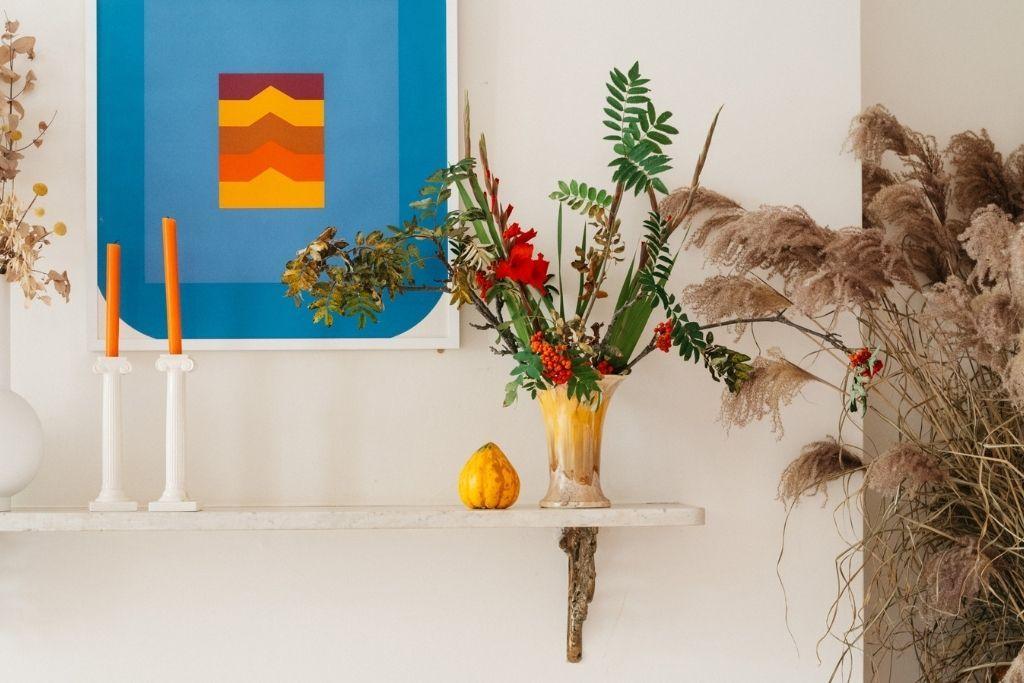
What Rollo did with a music video-worth of flowers turned a setback into a lucky break. If the shoot had gone ahead, it might have put him on another treadmill, robbing his reconnection with nature of its purity. Instead, he took over his father’s greenhouse, creating a, “wonderful, celebratory thing that I would never normally have had the quantities to make.” It was a reminder to keep moving, stay true and keep the art central, for its own sake.
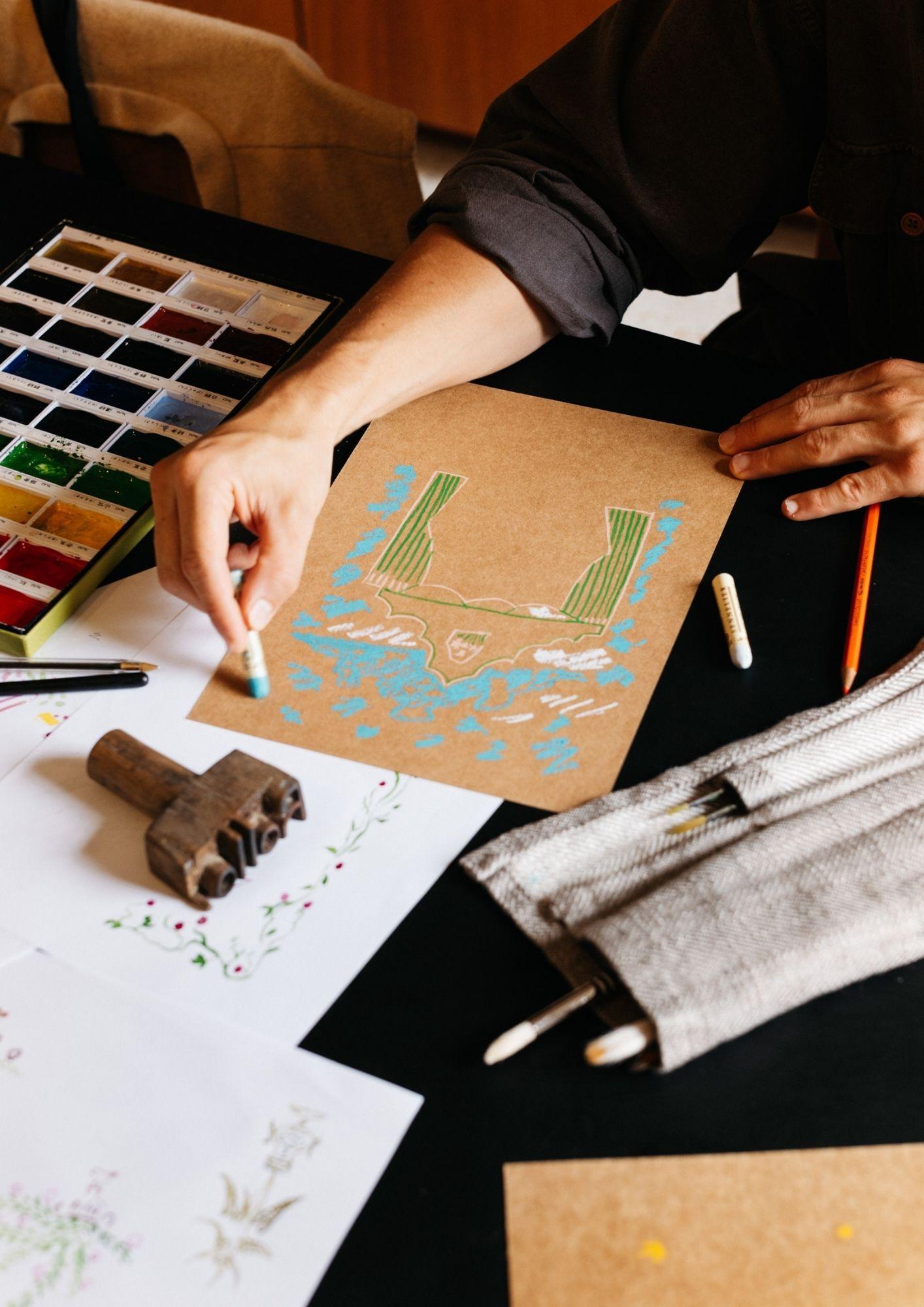
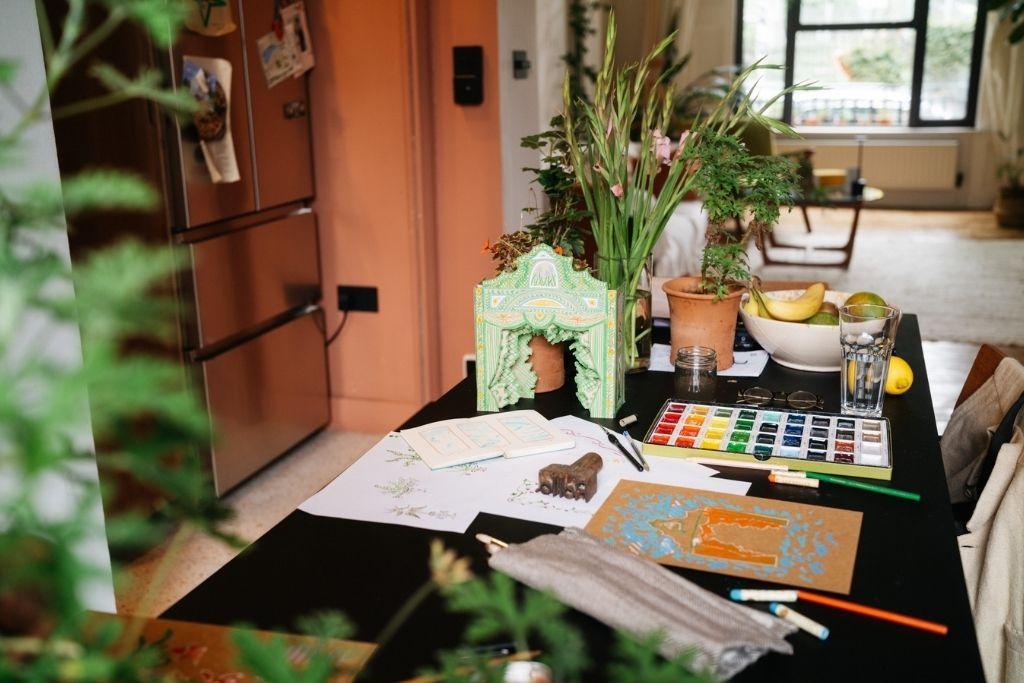
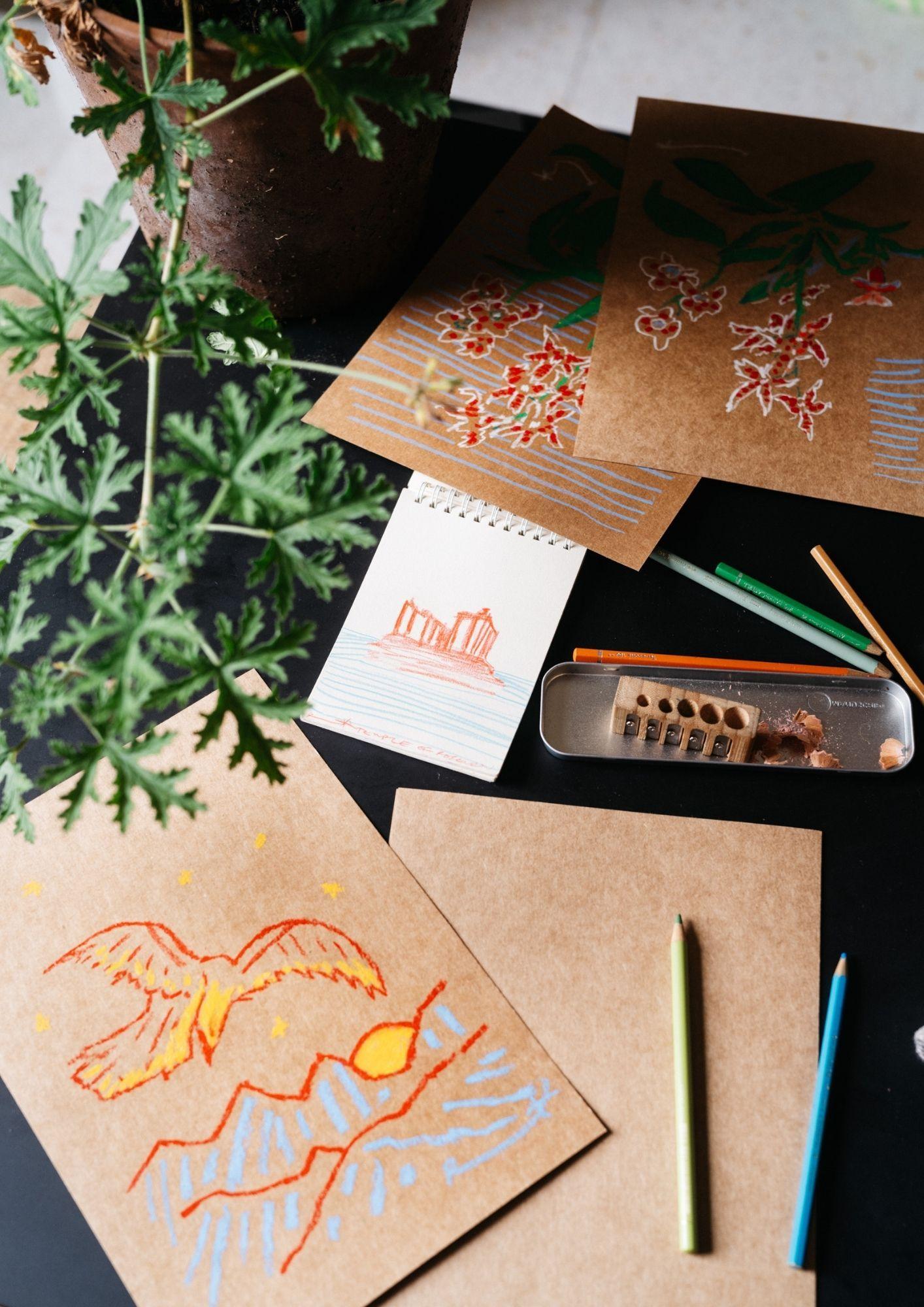
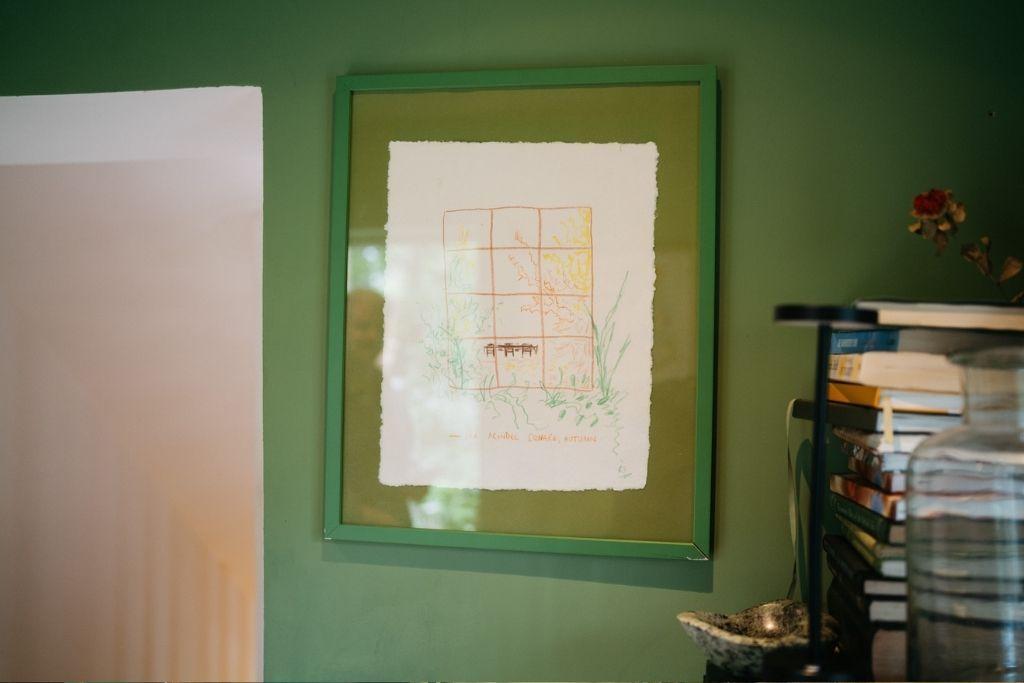
Grander projects did follow, like the shoot for Barbour with Alexa Chung, which saw Rollo working with legendary photographer Tim Walker, but he was always careful to balance commissions with his own expression. “I think of myself more as an artist than a florist. Through working with flowers, I've had these other renaissances, returning to drawing and music as well. Within all those things, I just love to create these worlds to escape to, which are largely natural ones, even if I’m not using flowers directly to create them.”
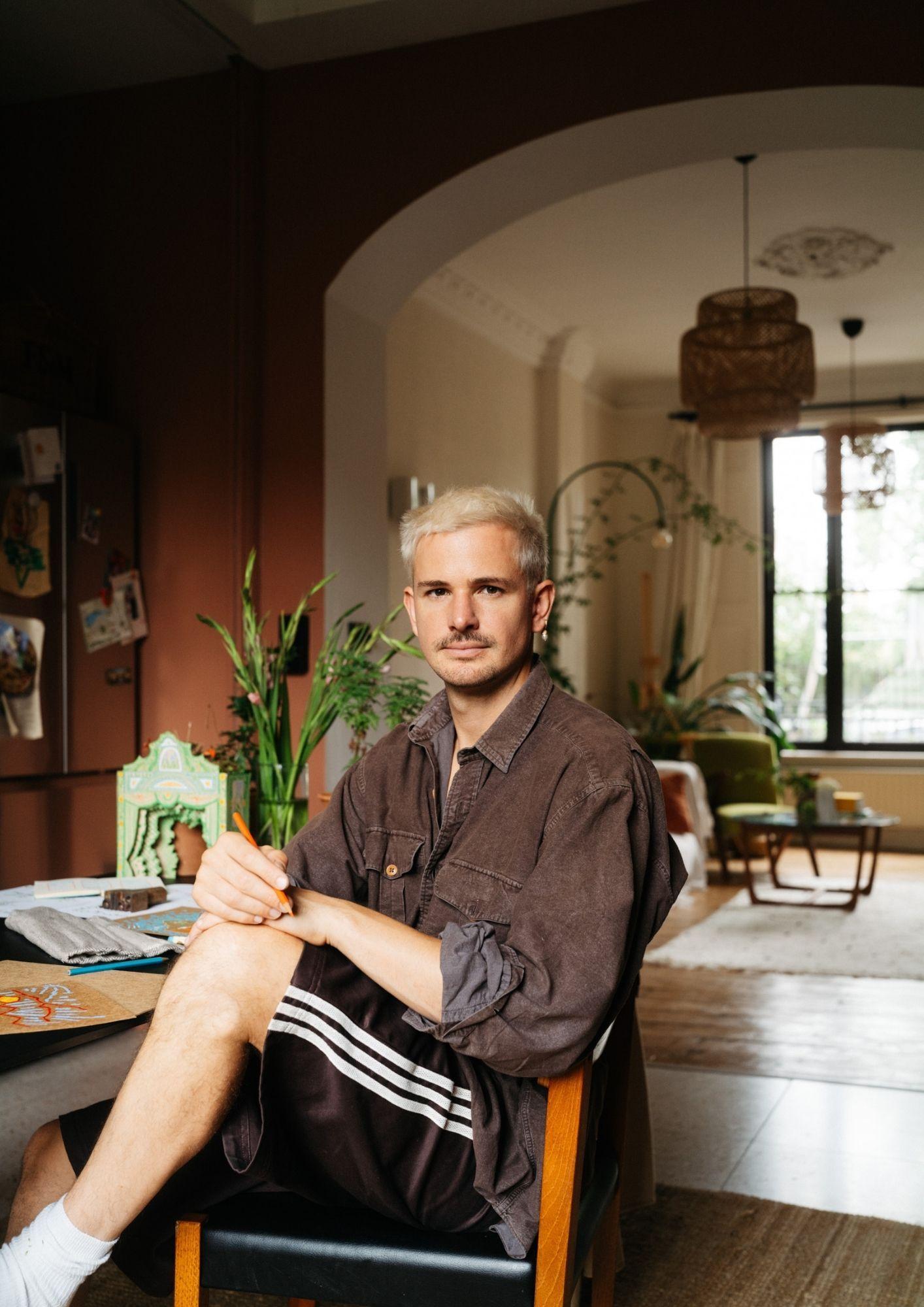
I ask if that means he’ll one day give up flowers as a medium completely, but he says they’ll always be a part of what he does, even as he constantly explores new avenues. His recently published book, Queer by Nature (although Rollo swears me to secrecy over a wonderful alternative title for the UK release), is an illustrated fable about a boy’s search for identity. Its autobiographical basis prompts me to wonder what happens at the end. Does the boy find his path? The artist find his way?
Rollo smiles and shrugs. It’s not that simple. “Have I found all my answers? No, I absolutely haven't. But I'm enjoying looking for the answers much more than I did, whereas before it was like a need for survival to find the answer. Now it's just the wonderful experience of evolving and allowing oneself to experience everything. Maybe I sound a bit lost and I do feel like this perennial beginner. Every new job, I feel like I'm a beginner within it. It’s annoying but also a wonderful thing that I'm learning to navigate better than I used to. Now I’m not like, this is the thing! This is a new answer! That old thing is wrong! I'm just kind of accumulating these things as I go. I think that's the reality of being human. We are so multifaceted and there are so many different storylines within each person. As a culture, we’re not really good at allowing for multiple, simultaneous storylines, but it's the truth of our experience. What nature is, for me, is that place where people can live out their truest selves.”
In one of Rollo’s recent Instagram posts, he channelled The Artist’s Way by encouraging people to “just start”. Not chasing success, or driving towards a goal, so much as doing something that brings them joy. For him, a bunch of tulips became an awakening and an adventure, both backwards into a childhood inspired by the natural world, and forwards on a journey free of destinations. Not living the dream, just enjoying the dreaming.
Words by Christopher-Wilson Elmes
Featuring Rollo Skinner
Other articles you might like
Weaving together nature, art and architecture
Cooking wax and cutting buses – the surprising story of Shred & Butta