







What are Biofuels and how can you use them?
Biofuels are renewable fuels made from plant or waste materials rather than crude oil. With fossil fuels also being derived from natural materials, the word is slightly confusing, but the key is that using biofuels hugely reduces carbon emissions when compared against diesel, petrol and LPG. In this article, we’ll discuss the two different types of biofuel and the advantages and disadvantages of each when it comes to emissions, availability and the ease of adoption.
Why use biofuels?
Reduced Lifecycle Emissions
Biofuels can significantly cut greenhouse gas emissions relative to fossil fuels if sustainably sourced — especially when made from waste. Claims to reduce carbon footprint by up to ~80-90% while preserving reliability and performance. The exact impact naturally varies depending on the production method and usage, but they’re well worth looking into.
Ease of switching
Many advanced biofuels (like HVO and BioLPG) work with existing LPG tanks, boilers, cylinders and appliances with no or minimal modifications, meaning you don’t need new equipment. You should always check appliance warranties and manufacturer specs before switching.
Availability
BioLPG and HVO are not yet available everywhere on demand but we’re keen to work with suppliers to make them more widely available in smaller quantities. If you’re interested in moving to a Biofuel, let us know: sustainability@canopyandstars.co.uk
The two types of biofuel
Rather than considering biofuels by their source or chemical makeup, it makes sense to view them in terms of what you want them to replace, LPG or diesel/petrol.
1. Best Replacement for LPG - Renewable Liquid Gas (BioLPG & rDME)
What are they?
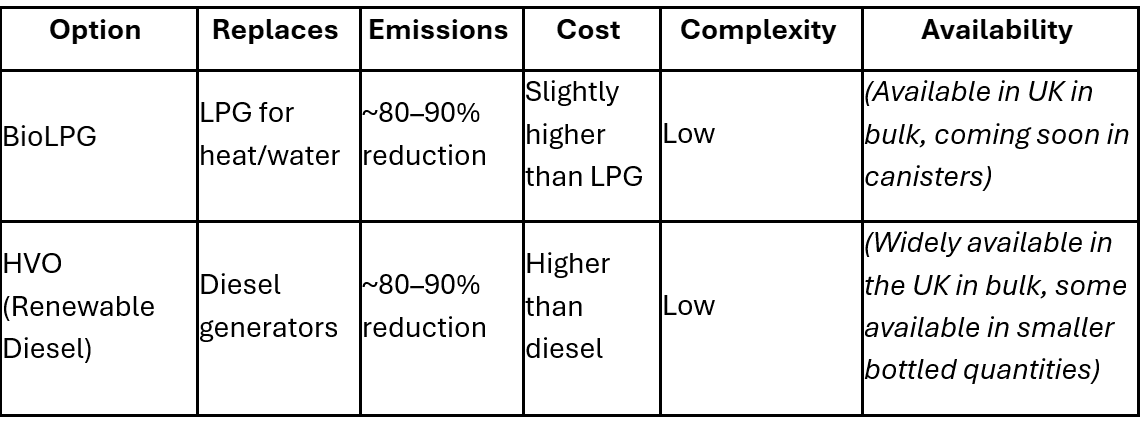
BioLPG (biopropane) is a renewable alternative to conventional LPG, chemically almost identical and used for heating, hot water, and cooking. It claims to cut carbon emissions by up to ~80% vs fossil LPG.
rDME (renewable dimethyl ether) is another renewable gas similar to propane/butane and can also be used in place of LPG.
How are they made?
BioLPG is made from renewable sources like used cooking oil, agricultural waste, plant material and organic waste streams — essentially turning waste carbon into a usable liquid fuel. rDME is produced from renewable gases or biomass-derived methane and is easily blended with LPG.
Cost comparison
BioLPG is often slightly more expensive than fossil LPG because it’s a renewable product, but prices vary by supplier and tariff.
Availability (UK)
BioLPG is already supplied in the UK by major LPG distributors such as Flogas and Calor, but predominantly for larger refillable LPG tanks. Currently, we have been unable to find anyone supplying BioLPG in smaller canisters (I.e. 47kg) however we are in contact with major suppliers to express interest on behalf of our owners. If you are interested in switching to BioLPG, or know of anyone currently supplying it in small canisters, please let us know sustainability@canopyandstars.co.uk
2. Diesel/Petrol Replacement - HVO
What is it?
Hydrotreated Vegetable Oil (HVO, sometimes called Renewable Diesel, is a liquid biofuel made by processing plant or waste oil into a hydrocarbon fuel that is chemically close to fossil diesel.
How is it made?
HVO is produced by hydrotreating fats, used cooking oil or other biological oils to remove impurities. It creates a clean-burning fuel that meets diesel specifications.
Cost comparison
HVO typically costs roughly double standard diesel per litre (Feb 2026). However, prices are coming down and if the generator is being used only as a back-up measure, and low quantities are required, this should not have too great an impact.
Availability (UK)
HVO is increasingly available as a bulk fuel (especially for commercial and rural uses). There are also some smaller companies out there selling 10-1000 litre bottled HVO, such as LubiQ.
Summary