




The off-grid host’s handbook: How owners create genius stays that feel truly restorative
Written by Beth Tingle
Created March 2026
Read time: 6 minutes
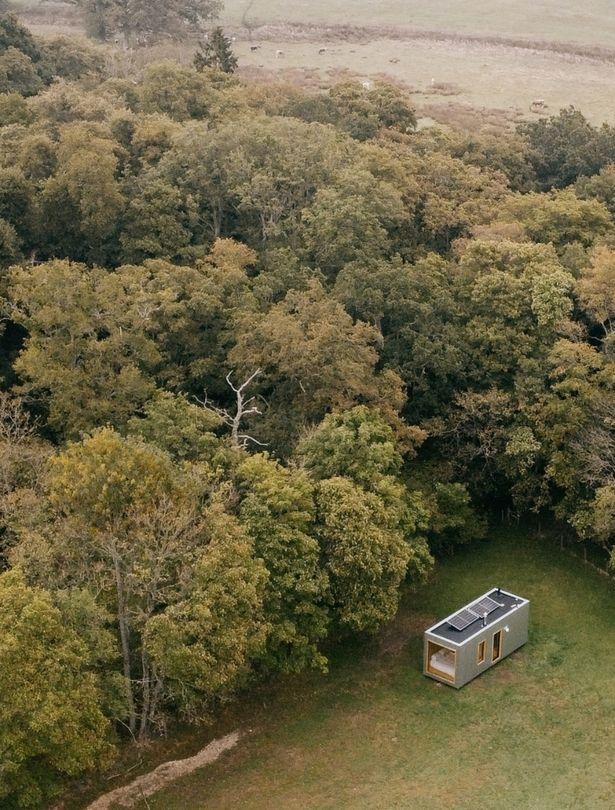
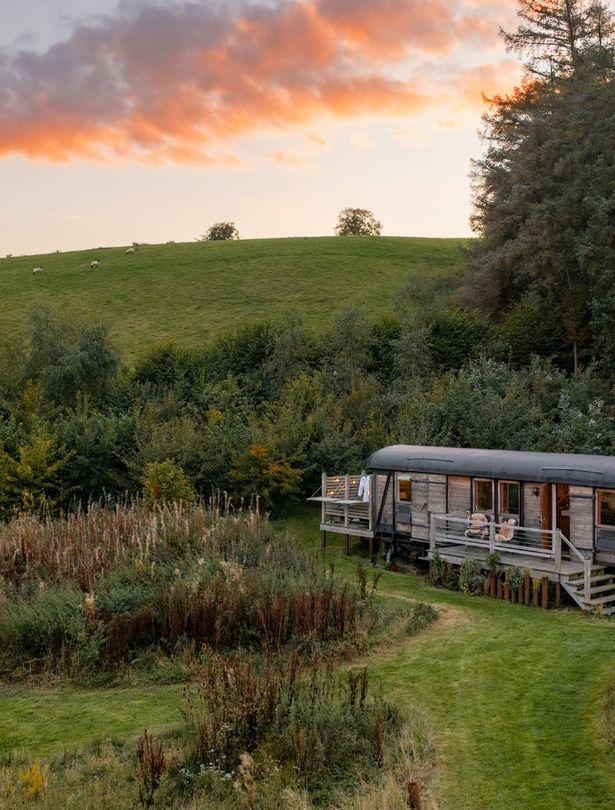
The idea of an off-grid cabin once carried certain assumptions of rickety furniture, patchy lighting and the quiet thrill of surviving a weekend without a plug socket. Today, the best off-grid stays are worlds away from these humble beginnings. Step inside one and you might find a steaming outdoor bath positioned beneath the stars, a king-sized bed beside a panoramic window, a stack of books chosen with care and a wood burner already laid for the evening. The atmosphere is calm and quietly luxurious. Nothing feels accidental, and that’s because it isn’t.
Behind every restorative off-grid stay is a host who has spent months, often years, thinking carefully about how a space should feel, from which materials help a room feel warmer, to how guests move easily through the cabin without thinking about it. Our owners aren’t simply building holiday lets. They’re designing environments that help people slow down, sleep deeply and rediscover the pleasure of uninterrupted time.
The small decisions that shape how a place feels
Often, it’s the smallest details that transform a cabin from just another place to stay into somewhere that truly helps guests unwind. Many hosts design their spaces around the quiet rituals they imagine people will fall into. This might be a kettle positioned beside a window so morning tea comes with a view, a small shelf of books or nature guides beside a comfortable chair, or hammocks placed where the evening sun lingers longest.
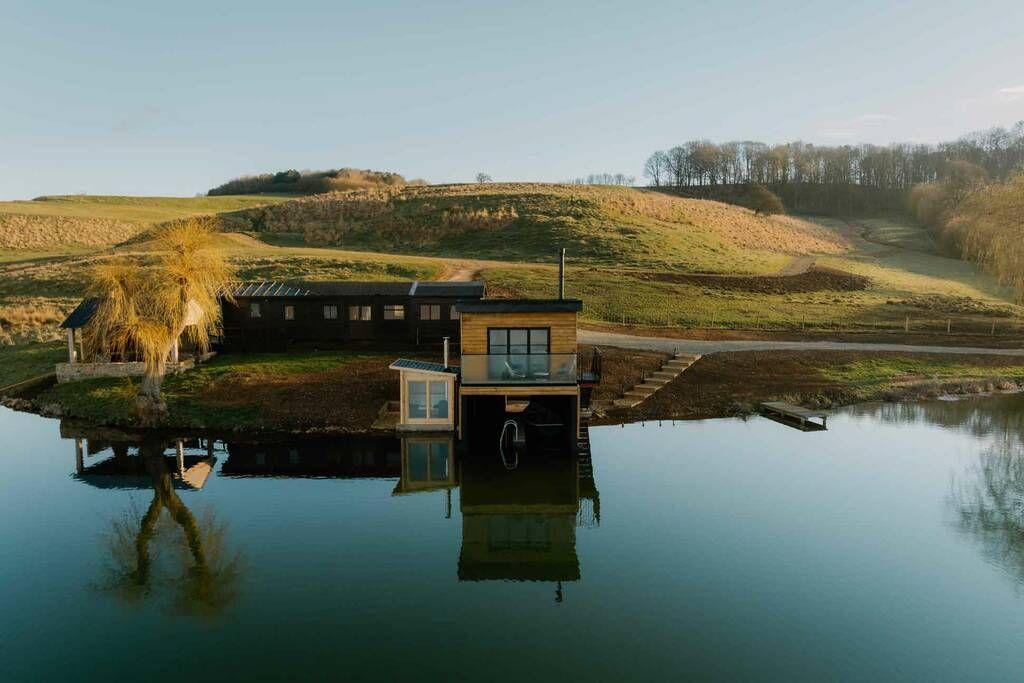
At Otby Lake Boat House in the Lincolnshire Wolds, those rituals revolve around water and warmth. The cabin sits on the edge of a six-acre lake on a working family farm, with wide windows overlooking rippling water and the hills beyond. To make the most of the landscape, the owner decided to add a rowing boat anchored just beneath the cabin and a private wood-fired sauna that faces out over the water. This way, mornings can begin with a row across the lake before returning to the warmth of the sauna.
Small gestures reinforce the sense of place too. A welcome hamper sourced from nearby farm shops waits inside, connecting the stay to the surrounding landscape. Guests frequently comment on how easily they slip into the rhythm of the cabin. As one visitor put it, “the sauna in the morning and rowing boat in the evening made it very hard to leave.”
Designing spaces where the mind can settle
Modern life is saturated with overstimulation. Screens glow late into the night, notifications arrive unpredictably, interrupting flow, and many homes are filled with constant visual noise. The best off-grid cabins reverse that experience.
Natural materials like timber, wool and stone soften a space visually and acoustically. Lighting is warm rather than bright, windows frame woodland, hills or water instead of neighbouring buildings, and interiors remain intentionally uncluttered, giving the mind fewer details to process. At Big Sky Retreat in Devon, this philosophy shapes almost every element of the space. Owners Alison and Scott built the circular wooden yurt themselves using recycled materials and handmade furniture crafted by Scott. The result is tactile and calming, filled with colourful cushions and soft wood tones.
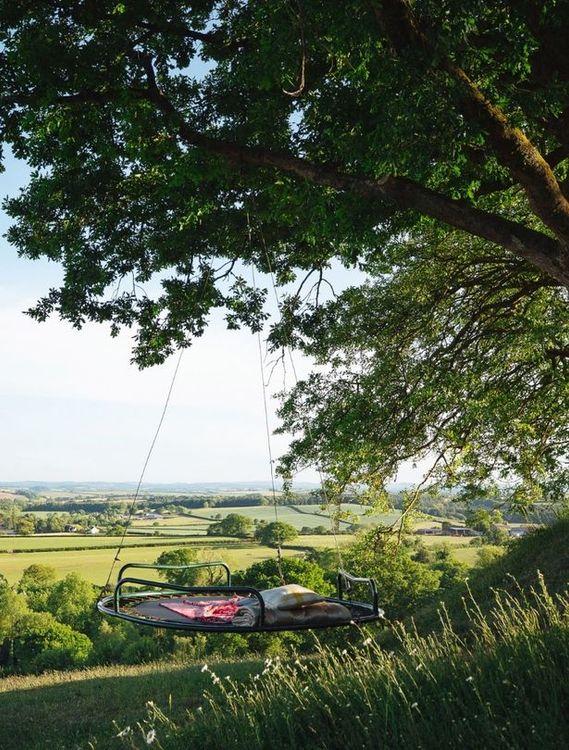
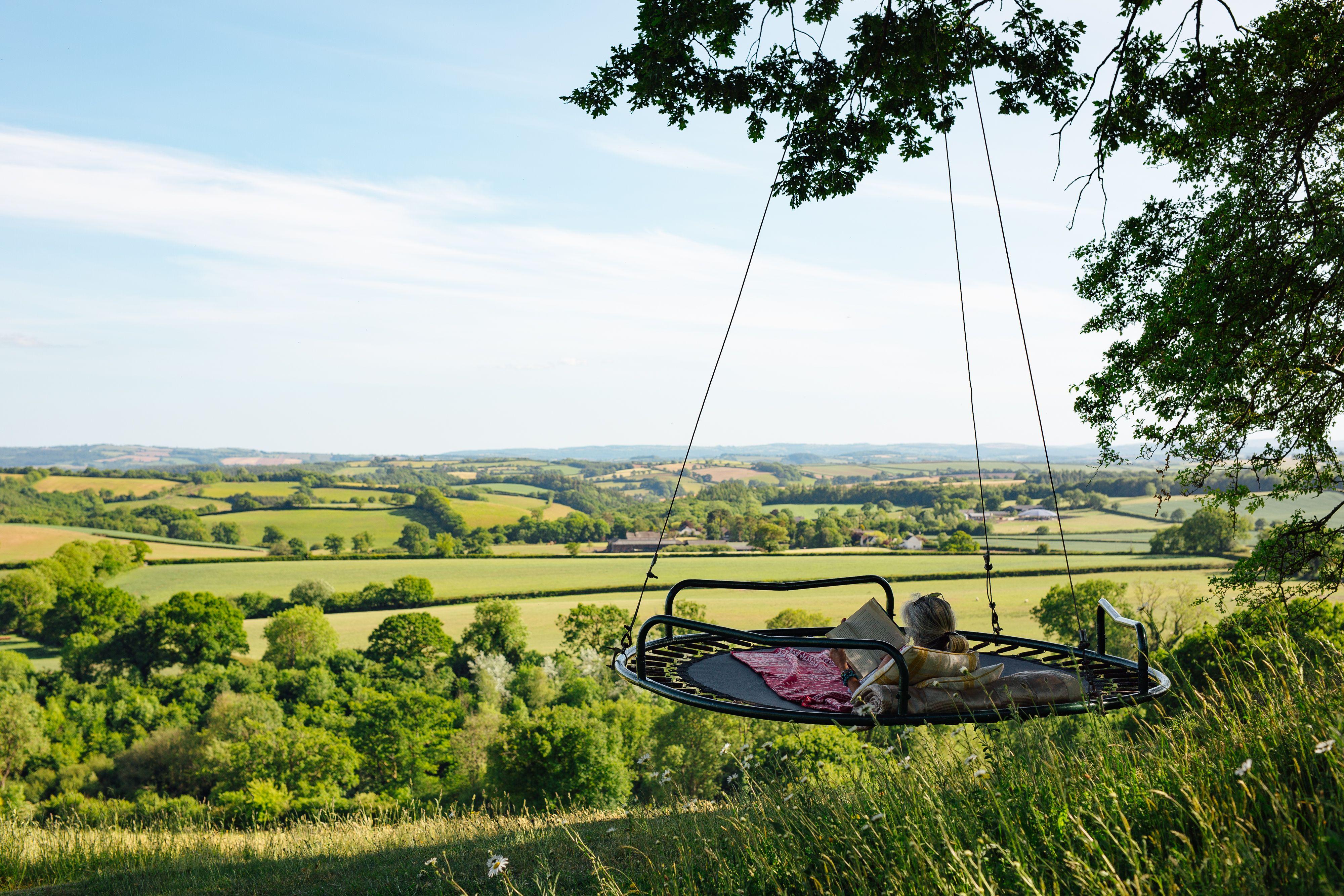
Outside, a huge circular swing faces the wide Devon sky while the surrounding countryside stretches uninterrupted between Dartmoor and Exmoor. Guests often speak about the quiet sense of perspective the landscape creates. One visitor described how “the lifestyle that Alison and Scott have built for themselves is truly inspiring and helps to reignite a different view of how to live your life.” Design, in other words, begins with atmosphere.
The invisible work of comfort in the wild
While the atmosphere of an off-grid stay may feel effortless, creating that simplicity often requires remarkable attention to detail behind the scenes. Solar systems must be carefully sized, so guests never worry about running out of power. Cabins need insulation capable of holding warmth through cold nights. Stoves must be intuitive enough that anyone can light them within minutes. When it works well, guests rarely notice the engineering at all.
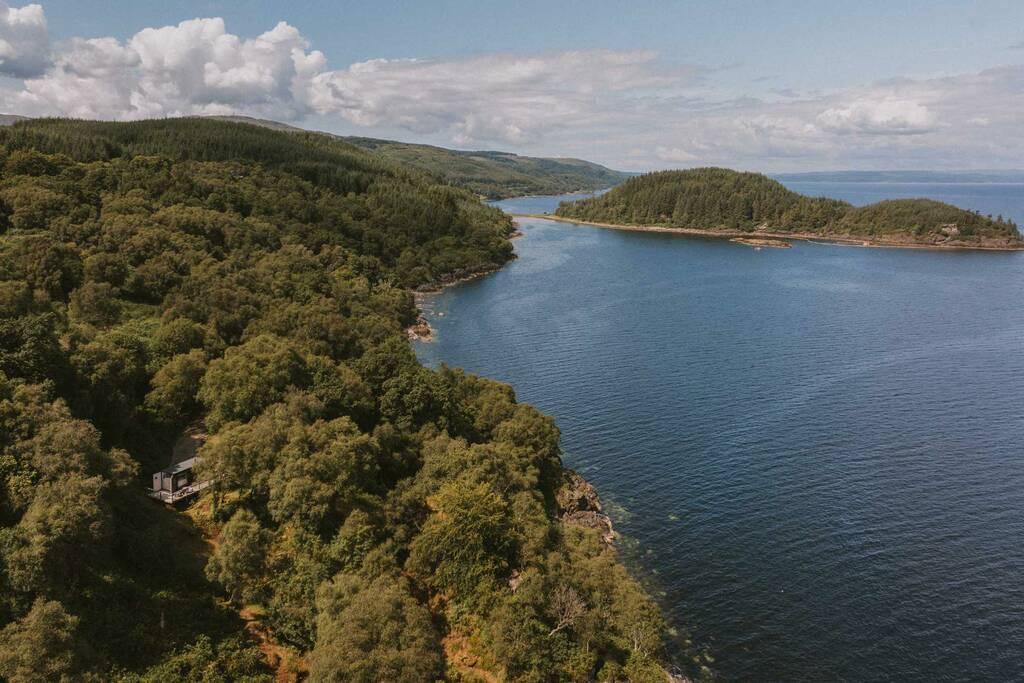
At Secret Container on Scotland’s west coast, owner Steve has balanced clever design with a deep respect for the landscape surrounding it. The cabin sits within woodland he has spent years restoring and replanting, overlooking the shifting waters of Loch Fyne. Wide doors open the space to sea air and birdsong, while inside the wood burner and warm lighting create a cocoon like refuge after long walks or cold-water swims from the private beach below.
Steve’s approach goes further than just architecture. Guests are invited to take part in small conservation tasks during their stay, from planting trees to helping maintain the woodland. It’s a simple idea that quietly deepens the connection between people and place. As one guest described after their visit, it made for “a perfect restful time… an amazing, secluded spot set amongst peaceful old woodlands.”
Why intention matters more than ever
As travel becomes increasingly shaped by algorithms and optimisation, these kinds of human decisions feel more valuable than ever. Off-grid cabins are built slowly and thoughtfully, sometimes by hand. Each one reflects the character of its landscape and the imagination of the person who created it. For travellers seeking unique spaces and genuine rest, that intention matters.
Spaces designed by people who understand quiet, nature and the importance of switching gears into slow living now and again offer something technology cannot easily replicate – environments that support presence rather than distraction. The best off-grid cabins aren’t simply remote places to sleep. They are carefully shaped environments designed to help tired minds slow down, breathe deeper and reconnect with the people and landscapes around them. And that kind of restoration rarely happens by accident.