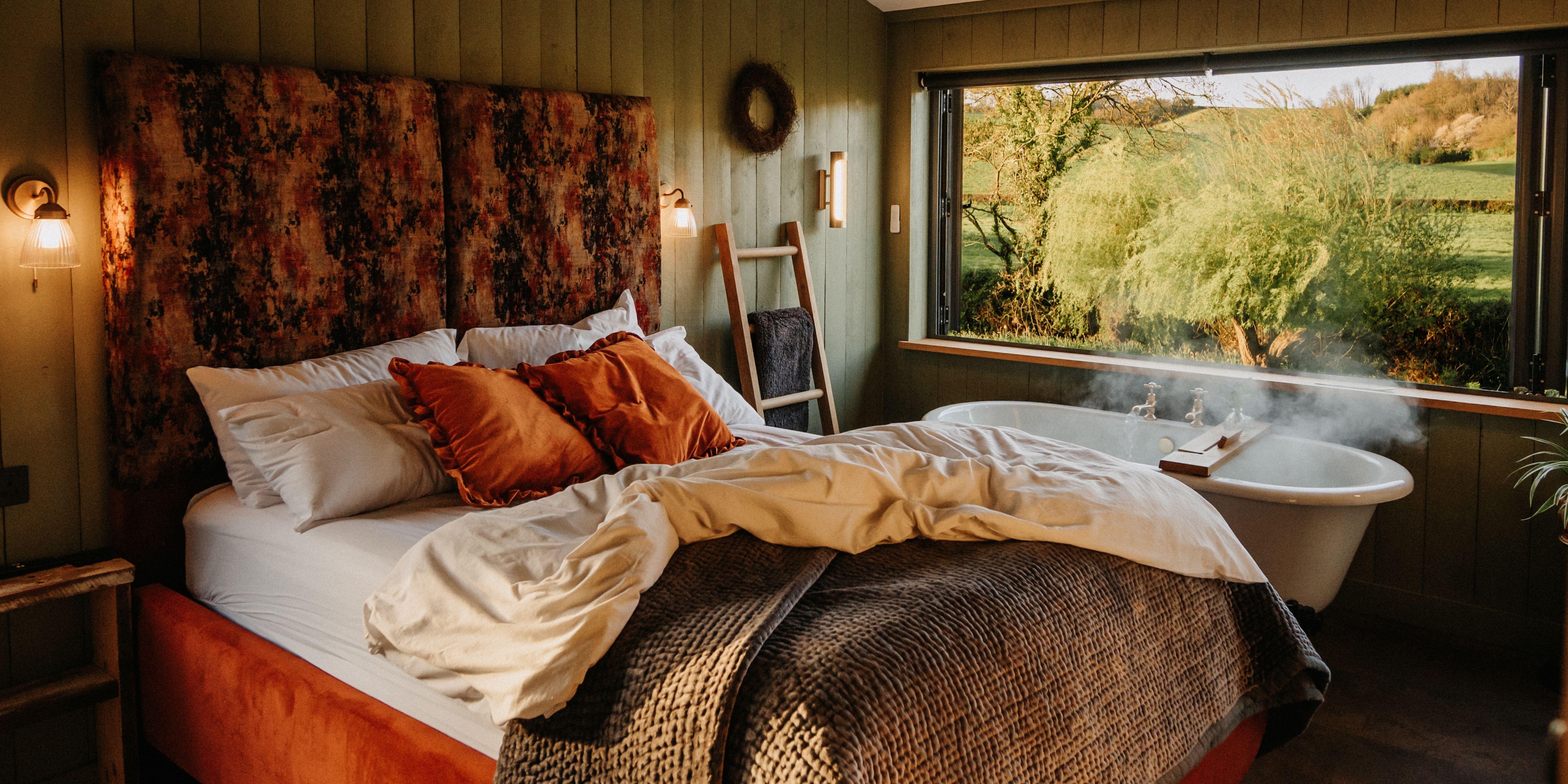







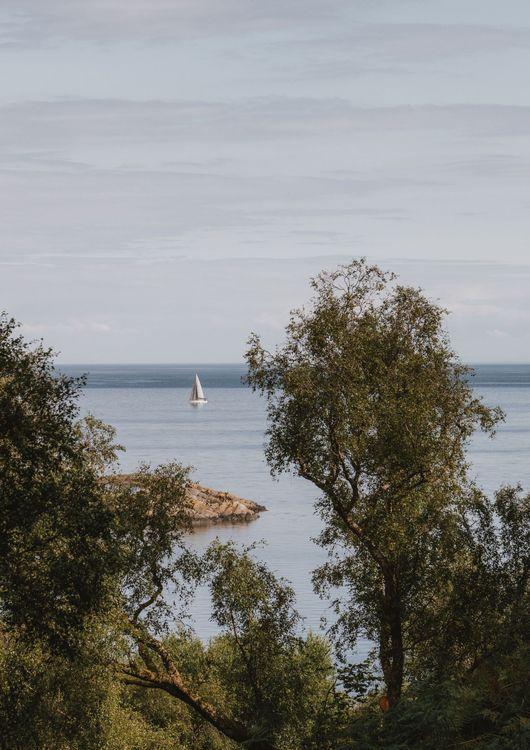
What happens to a burnt-out brain when it spends 48 hours in nature?
Written by Beth Tingle
Last updated April 2026
Read time: 6 minutes
Burnout rarely arrives with a dramatic moment. Instead of announcing itself with a drum roll, it tends to creep in quietly, until one day you notice you’re groggy despite the full night’s sleep and you’ve just had to re-read the same email three times. Your brain feels like a browser with thirty tabs open, and you feel tired, but also wired.
Modern life is very good at this. It places our brains under constant demand as we multitask, process information, switch between screens and environments, all while our nervous system remains on high alert. It’s no wonder something good happens when we step away from it. Even a couple of hours spent at one of our nature escapes can start to shift the way the brain works. Give yourself a full 48 hours, and the changes can be surprisingly powerful.
The first few hours: your brain is still buzzing
Arriving somewhere wild doesn’t instantly quiet the mind. Most people bring their mental noise with them, and you might spend the first hour or so with your attention jumping around, remembering the things you forgot to do.
Your brain has been using what psychologist’s call directed attention mode, the form of concentration we use to focus on tasks while filtering out distractions. It’s the mental muscle we rely on for the whole modern circus of emails, meetings and decision making.
The problem is that directed attention is limited. Psychologists describe it as a resource that becomes depleted when we ask too much of it, so use it all day every day and it starts to run dry. Cities and digital environments are full of demands on that resource, and when it becomes inevitably exhausted, we feel mentally foggy, irritable and overwhelmed.
Nature changes that.
Soft fascination: how nature lets the brain rest
Unlike urban environments, natural landscapes hold our attention in a softer way. The movement of water, the pattern of leaves, clouds shifting across the sky. These things catch our attention without demanding effort.
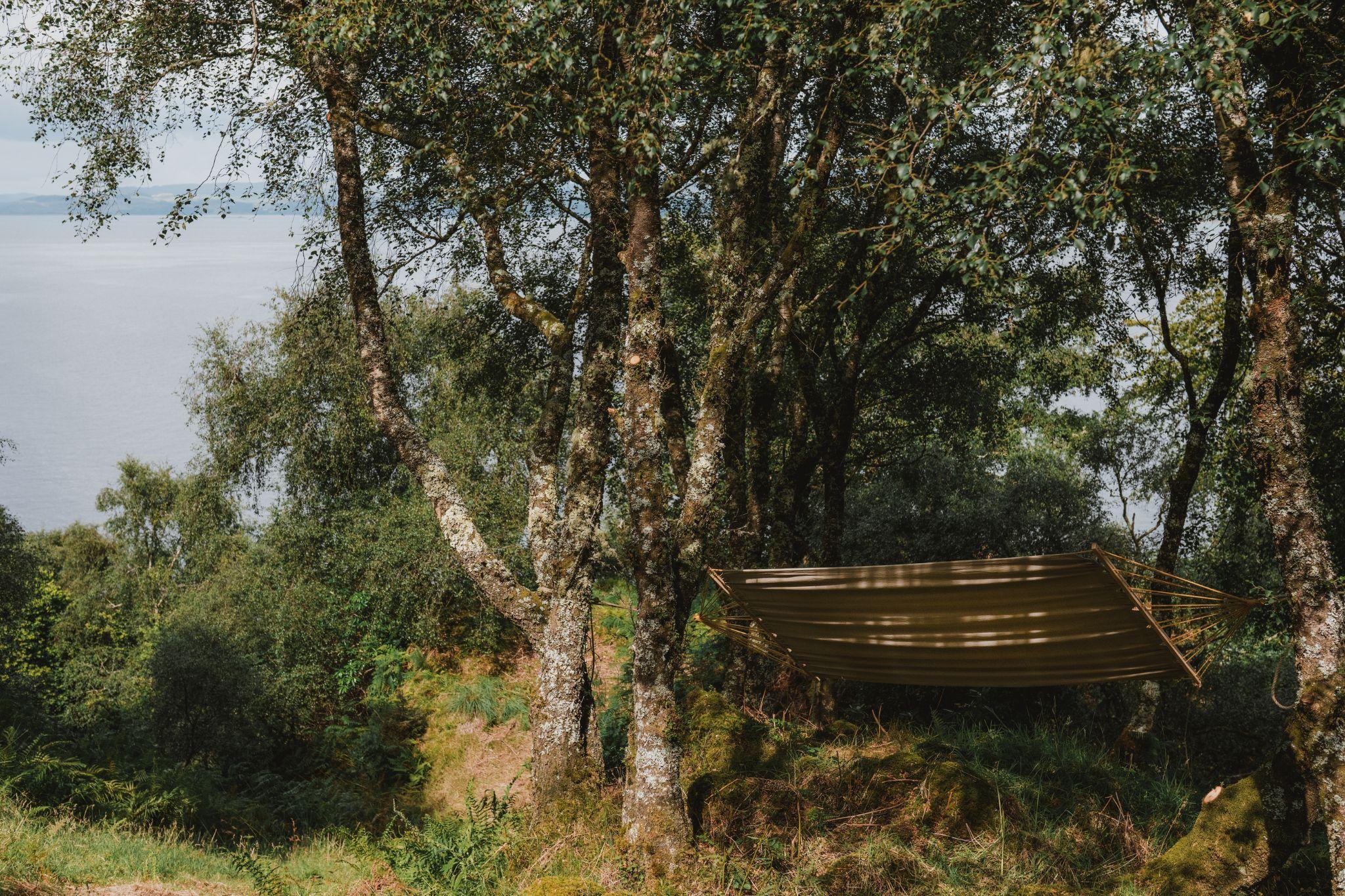
Psychologists call this soft fascination, and it’s central to something known as Attention Restoration Theory. The effect is surprisingly powerful. When the brain engages with environments that are interesting but not demanding, the areas responsible for focused attention finally get a chance to rest. In other words, nature gives the brain’s overworked focus system a chance to recover.
Even brief exposure can have measurable effects. In one study, participants performed better on cognitive tests after a 50-minute walk in a nature setting compared with urban ones. A walk through a park improved memory and focus by around 20%, while walking through busy city streets showed no benefit.
To put it in the simplest of terms, your brain likes a tree more than a traffic light.
Stress begins to fall
At the same time, another system begins to shift. Much of the stress we experience today triggers the body’s fight-or-flight response, a physiological reaction that evolved to deal with immediate threats. It raises heart rate, releases cortisol and keeps us alert.
The difficulty is that modern stress rarely involves anything that can actually be fought or fled from. Your nervous system, however, hasn’t quite caught up with that detail. It can treat an overflowing inbox or an upcoming presentation with the same urgency it once reserved for a suspicious rustling in the bushes that definitely required immediate attention. Time in natural environments activates the opposite system: the parasympathetic nervous system, which regulates rest, recovery and calm.
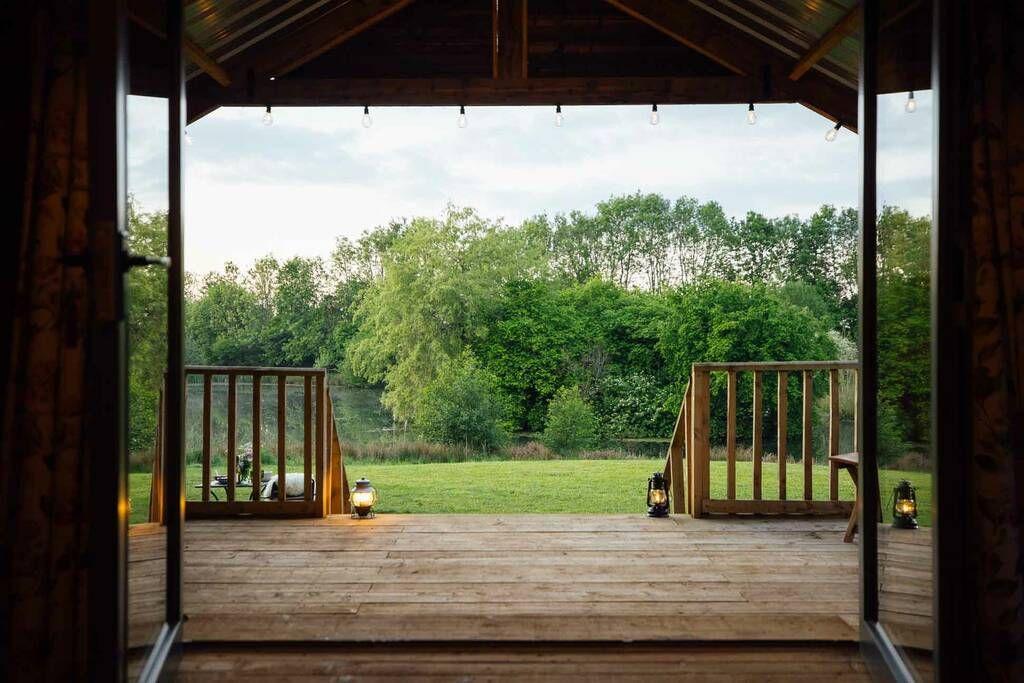
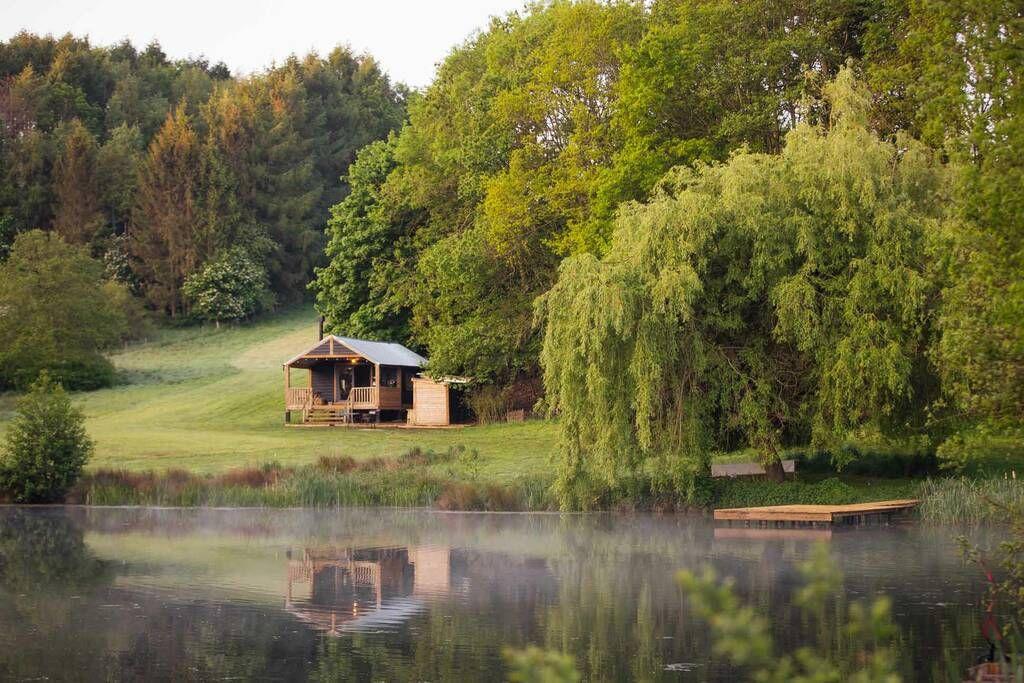
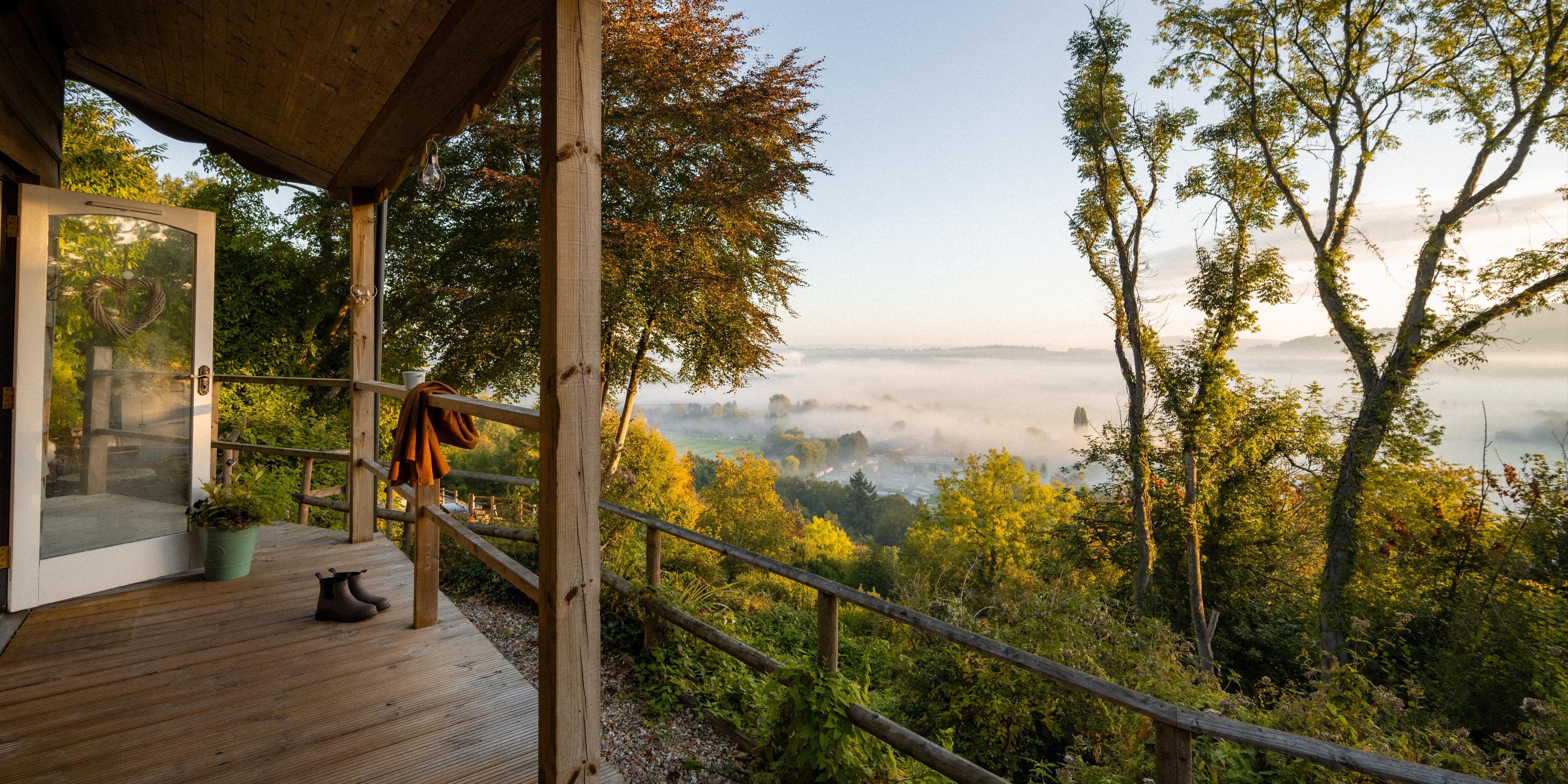
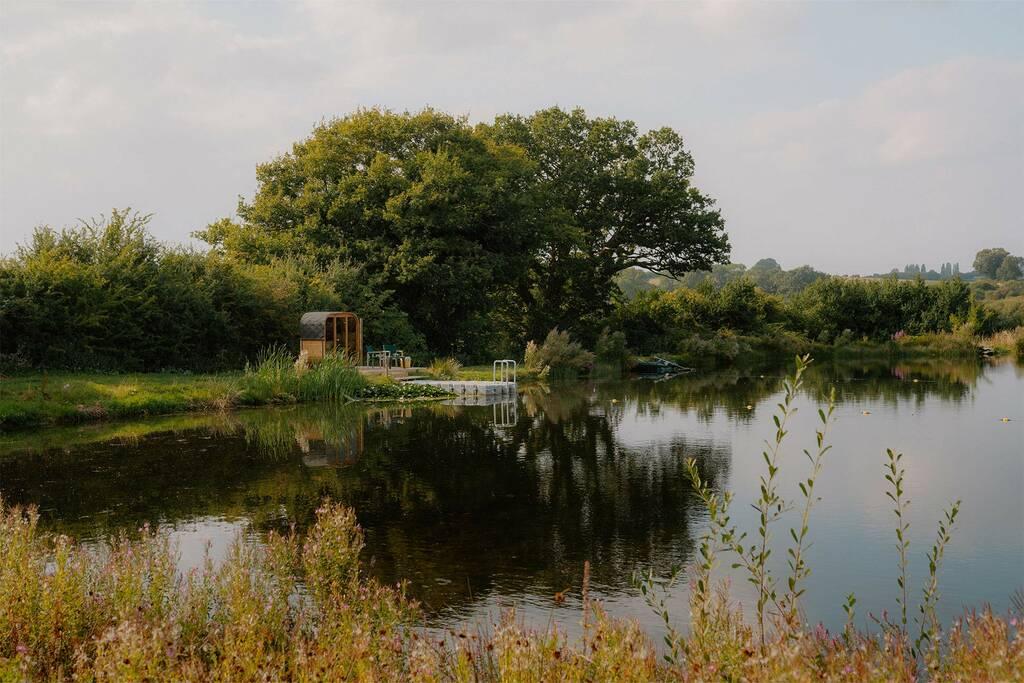
Imagine somewhere like The Cabin at Leys Farm in Oxfordshire, wandering down the track to a timber cabin tucked beside the trees. There’s no WiFi humming in the background, just the quiet lap of water on the lake a few metres away. You make a coffee, sit on the porch and stare out across the water for a while. Maybe you wander down for a cold wild swim before breakfast. Slowly, your body gets the message. Your heart rate slows, stress hormones begin to drop and breathing deepens. You might notice this as a simple feeling, like your shoulders dropping a couple of centimetres down from the tense position they were stuck in before.
This is the brain beginning to understand that it doesn’t need to stay on high alert. For a little while at least, the world feels safe enough to simply sit and watch.
Day two: your attention begins to recover
By the second day, many people notice they can think more clearly. Problems that felt knotted begin to untangle, conversations flow more easily and creative ideas pop up unexpectedly while walking or staring at the horizon. Cognitive neuroscientists have found that when our attention systems get a break from constant stimulation, they recover. It’s the same reason many people say their best thinking happens on a walk, or while staring at the ocean.
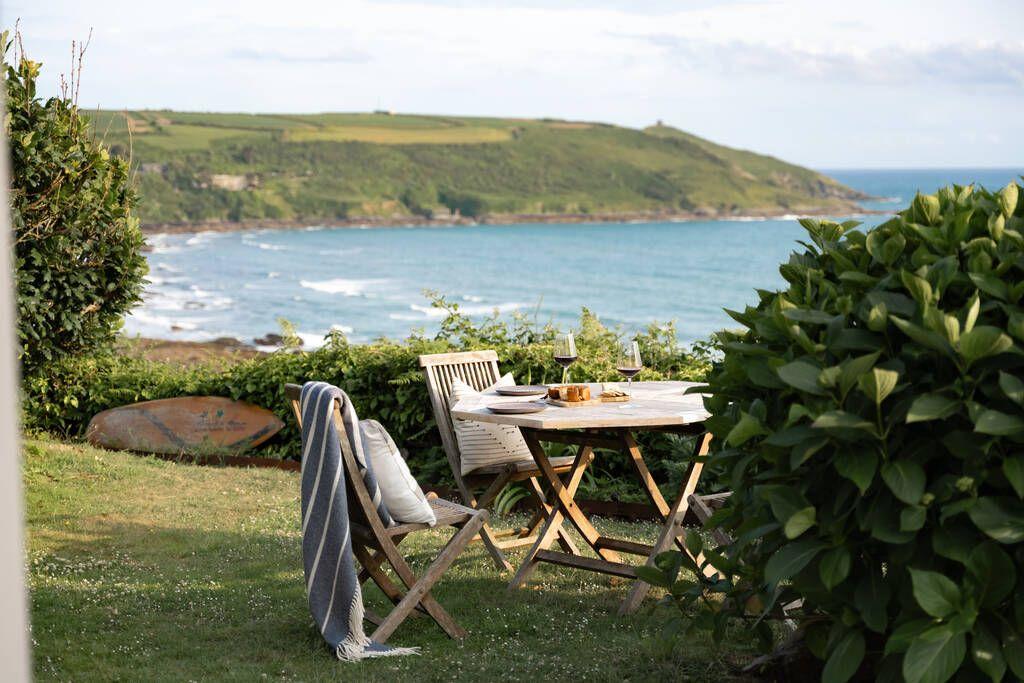
Take Ankorya in Cornwall, for example, perched above turquoise water at the end of an eight-minute trek down the South West Coast Path. After the descent, you’re rewarded with a mid-century cabin that has been gazing out to sea for nearly a century. You might spend the afternoon wandering the Rame Head Peninsula, sitting on a lounger watching gannets wheel over the water, or wandering down to the little cove locals call “Boiler Beach”.
The brain doesn’t have much to do here except observe and that’s exactly what it needs. Which raises an interesting question: why does nature seem to restore us so easily in the first place?
Why nature feels so instinctively good
There’s a deeper explanation for all this. Humans evolved in natural environments and for thousands of generations our brains developed alongside forests, rivers and open landscapes. The biologist E.O. Wilson called our instinctive connection to the natural world “biophilia” – the idea that we’re wired to feel more comfortable in landscapes that resemble the environments we evolved in. Modern life has placed a lot of infrastructure between us and those settings, but the brain still recognises them when we return.
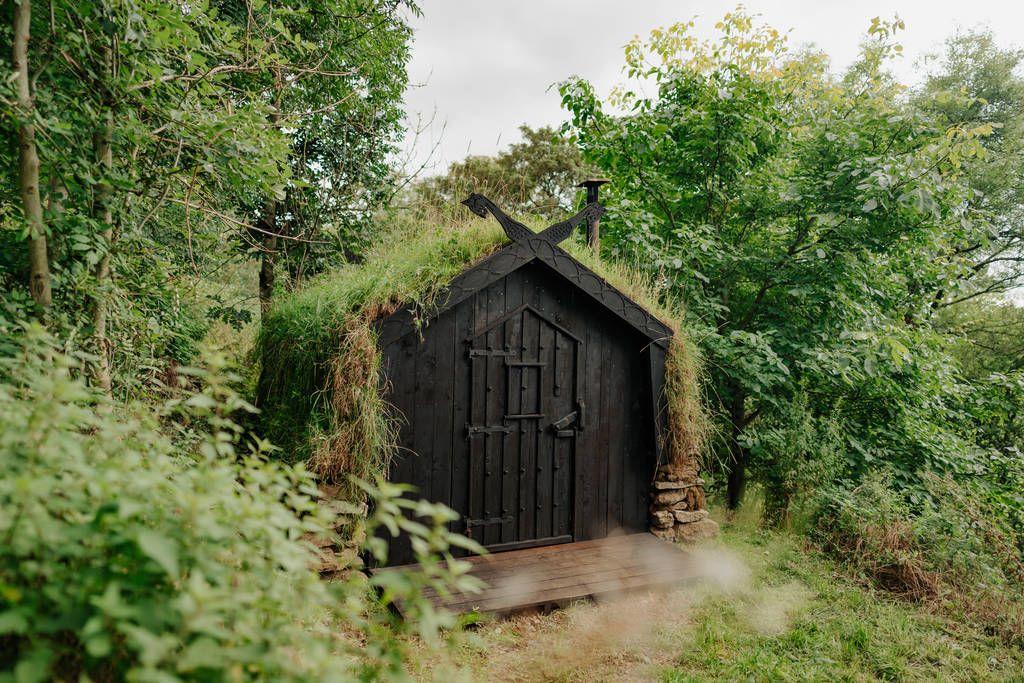
Even short exposure seems to matter. A large UK study involving nearly 20,000 people found that those who spent at least two hours a week in nature were significantly more likely to report good health and higher levels of wellbeing. Two hours is roughly what you might spend walking across the fells near the Icelandic Turf House in Cumbria, a Viking-inspired retreat tucked between the Lakes and the Yorkshire Dales.
From the door you can wander onto Ash Fell, Wild Boar Fell or the sweeping Howgill Fells. Bring binoculars for birdwatching or spend the afternoon fishing at nearby Bessy Beck trout farm before grilling your catch over the fire.
And perhaps that’s part of the magic. A day spent walking, gathering, cooking outdoors and watching the light fade across the hills isn’t very far from how humans lived for most of our history. Out here, the brain slips back into rhythms it recognises and for a little while, at least, life becomes wonderfully simple again.
Why 48 hours can be enough
Of course, in a perfect world we’d all take a week off whenever life starts to feel overwhelming. But most of us live in the real world, where diaries are full, annual leave is scarce and responsibilities rarely disappear for long.
That’s why a 48-hour escape can be surprisingly powerful. A couple of days away from packed schedules gives the brain enough time to remember how to function without being constantly pulled in ten directions.
And the most important thing is that it doesn’t have to happen just once. A few weekends in wild places scattered through the year can act like small reset buttons, gently interrupting the build-up of burnout before it gets too loud. Two days beside the sea, in the woods or under a big open sky might not solve everything, but it can change the way your brain feels when Monday arrives.
You might also like...
Simple things to do to calm your nervous system on a weekend away