

The psychology of a view: why wild landscapes calm the mind
Written by Beth Tingle, April 2026
Read time: 6 minutes
There’s a lot of pressure these days to relax properly. The right routine, the right breathing technique, possibly a playlist called something like Deep Calm Sunrise Flow to try and start your day off on the right, unfrazzled foot. And yet, one of the most reliable ways to feel better is to stand somewhere with a very good view and do absolutely nothing.
There’s no magic technique required. Your brain just quietly recalibrates itself in response to something bigger and far less interested in your ever growing to do list. Which is convenient, because a lot of our places just so happen to come with views that do exactly that.
Your brain on a landscape
Most of what we look at all day isn’t actually that interesting. Emails, phone screens, the same routes repeated on autopilot, the inside of a fridge. As a result, we spend an annoying amount of time looking at things that don’t really deserve our attention. It’s a lot of visual input without much reward and your brain stays busy in a constant “deal with me” sort of way, but not in a way that feels especially good.
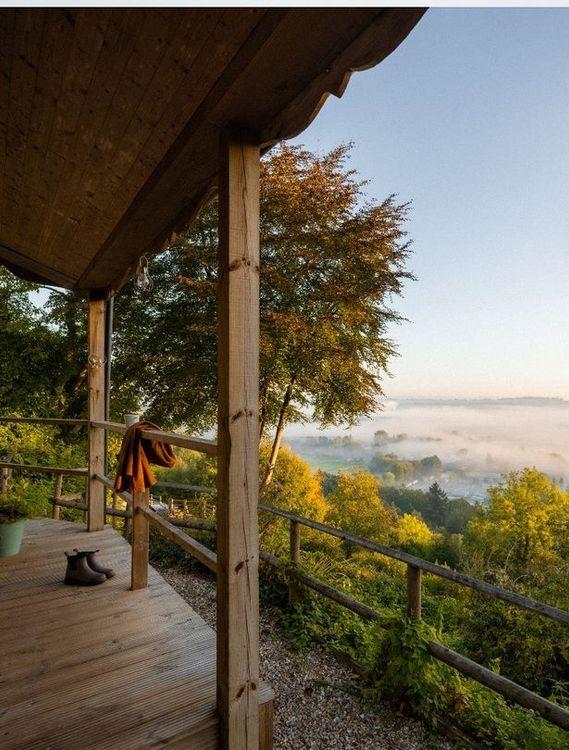
Then there are those sweet little moments that interrupt this usual routine, and you catch yourself in the pause. This could be watching a fire for longer than necessary, staring out of a train window, or getting momentarily hypnotised by rain on glass. None of these require any effort, but they manage to hold your attention anyway. Natural landscapes work much in the same way, just on a slightly grander scale. The movement of light across a hillside, the slow shift of clouds passing over a mountain, or an uninterrupted stretch of sea.
The key difference is how it feels. The view holds your attention without draining your battery. Psychologists call this Attention Restoration Theory, the idea that certain environments allow the brain to recover simply by being in them.
When a view becomes the main event
This is where a good view stops being a nice extra and starts doing something more useful, which has even more impact when it becomes part of your surroundings, not just a stop along the way. When it’s built into where you are, rather than something you have to go out and find, it stops being a highlight and starts shaping the whole experience. That’s something many Canopy & Stars places are designed around, with big windows, open sightlines and layouts that steer you towards looking outside instead of back at your phone. Consider this the designers gentle nudge in a better direction.
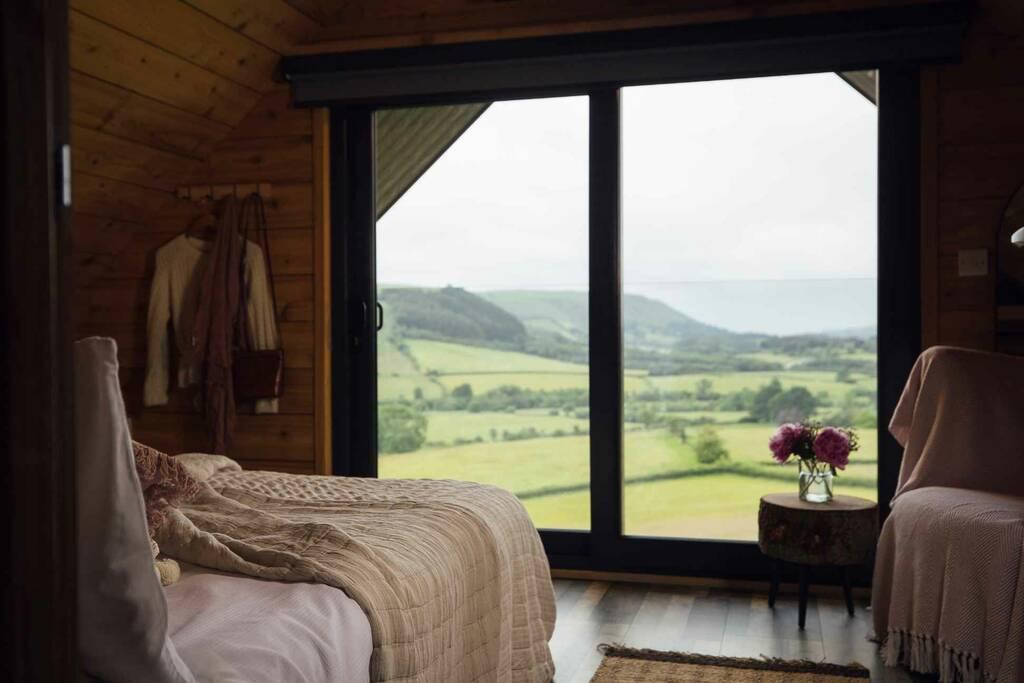
Take Rhiw Wood Treehouses in Powys, for example. The landscape isn’t something you head out to find, it’s already there. Floor-to-ceiling glass opens straight onto a wide Welsh valley, and the view follows you around. From the bed, from the hot tub, from anywhere you sit still for a minute. All you have to do is scroll through the reviews to see it’s something guests mention again and again.
It’s a common thread you notice across a lot of Canopy & Stars places. You look at one thing for longer, think a bit less, and feel a bit better for it. That’s the trick of a great view. It makes your brain slowly realise it can take the afternoon off.
Awe: when scale starts doing the thinking for you
Psychologist Dacher Keltner, author of Awe: The New Science of Everyday Wonder and How It Can Transform Your Life, has spent decades studying that exact feeling. He describes awe as our response to something vast, mysterious or simply bigger than our usual frame of reference. It’s the kind of moment that politely reminds you that your current worries in life are not running the show. That pull you feel watching waves stack into the shore or clouds roll across the sky isn’t just appreciation, it’s your brain responding to scale and perspective quietly being restored.
That matters because most of daily thinking is built around compression. We shrink everything into manageable chunks: tasks, problems, conversations, decisions. Awe briefly reverses that process and instead of compressing the world, it expands the mind’s frame to match it. Research linked to awe suggests it can dial down the stress response, support emotional regulation, and even reduce physical pain perception. In simple terms: it helps your nervous system unclench a little.
At a Canopy & Stars stay, this often happens without intention because the view is already doing the work. You’re not seeking perspective; you’re simply positioned inside it long enough for scale to start influencing tempo. But different landscapes do this in different ways, and not all of them rely on elevation or height. Some do it through distance instead.
When the horizon becomes part of the structure
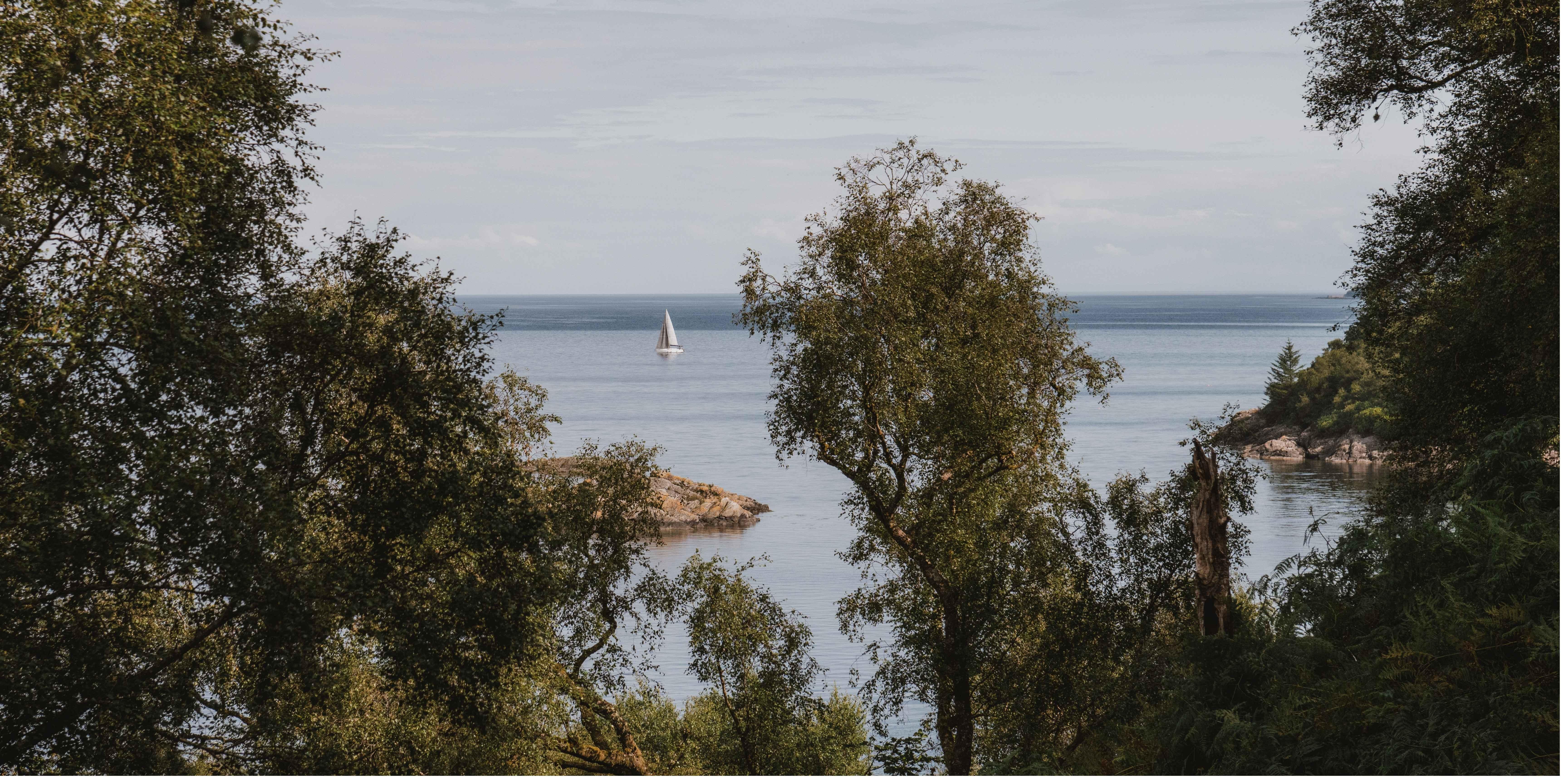
We’ve got a soft spot for a loch view, and quite a few of our stays come with one. They have a habit of stretching your attention out a bit, like your brain’s been given more room than it’s used to.
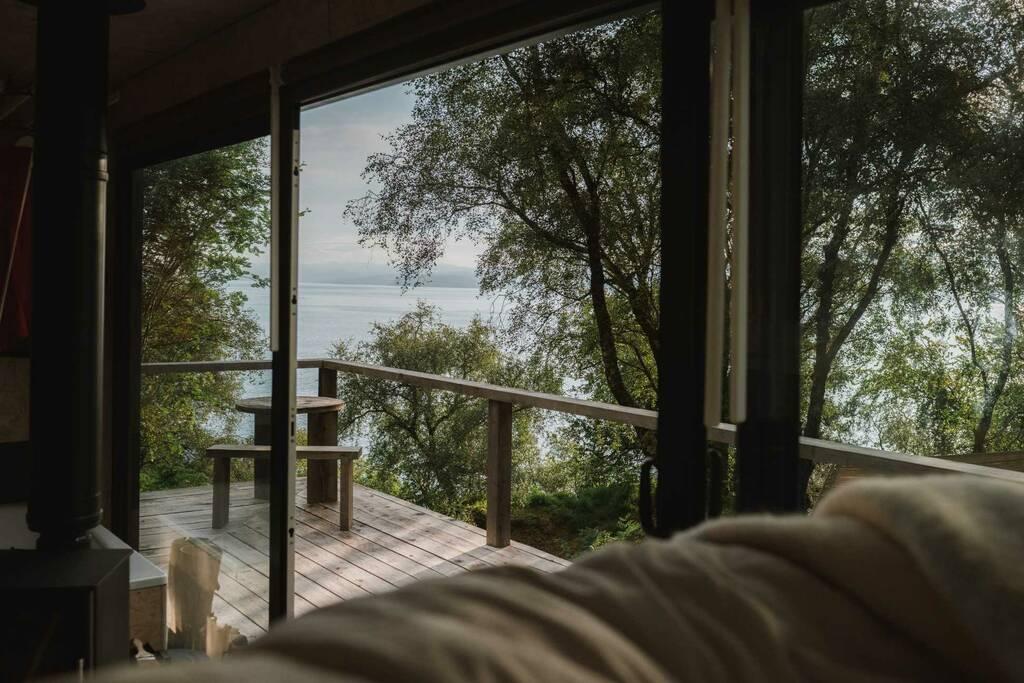
At The Secret Container, an off-grid cabin on Argyll & Bute, that sense of breadth has been shaped by long term rewilding. Steve, who built and cares for the land, came from marine and teaching backgrounds before turning his attention to this stretch of west coast Scotland in the early 2000s. Thousands of trees later, including oak, birch and hawthorn, the area has developed into a regenerating ecosystem. A man made lochan now sits within it, supporting birds and wetland life, adding movement and biodiversity to the view.
So your days tend to naturally orbit the landscape. You might launch a kayak or SUP straight from the shore of the private beach below, then come back and sit on the deck with a drink. The off grid set up means things stay intentionally simple, which means there’s less competing for attention and more space for the view to just do its thing in the background. Which, to be honest, it’s very good at.
A cabin shaped by shifting light and water
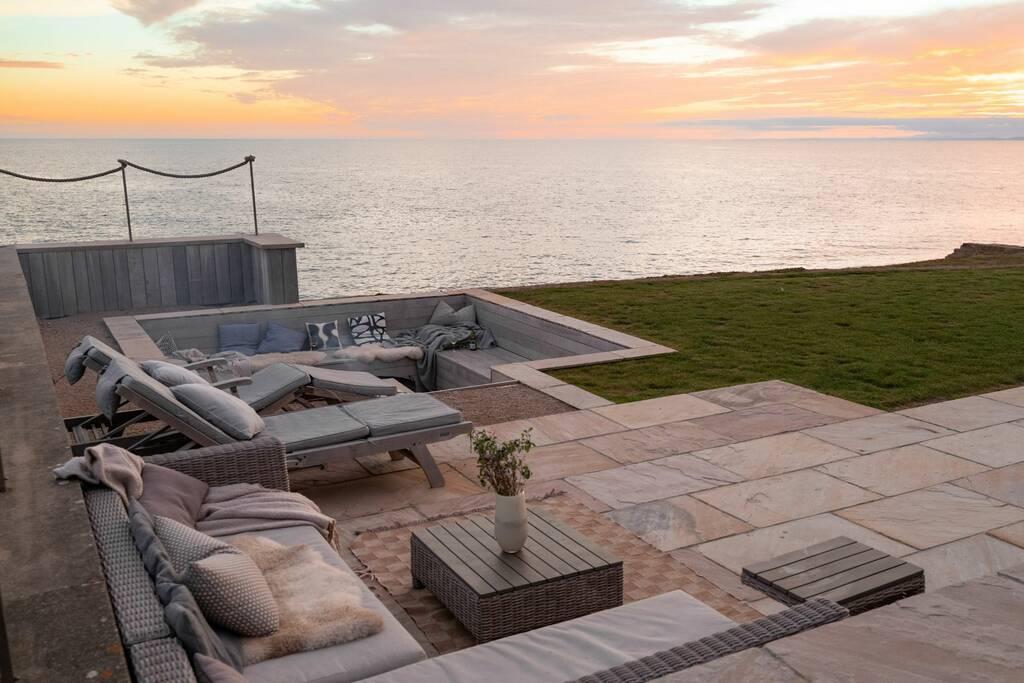
Some of our places have coastal views that come with a bit more movement built in. At Hive Beach House, that view arrives in layers. The cabin sits directly on a 15-mile stretch of coastline, where sea, sky and shoreline constantly rearrange themselves just beyond the glass, so even the most ordinary moments feel slightly upgraded. Gulls fly overhead and the weather redraws the scene hour by hour.
Then there’s a highlight that changes the way you experience it: the sauna and steam room sitting just 30 feet from the shore. You’re looking out through heat and glass at waves breaking, and something about being warm while watching cold water move endlessly steadies something within you. The body slows down while the landscape keeps moving, and somewhere in that mismatch, your nervous system begins to thank you for it. It’s not spa logic, it’s just elemental contrast doing its work.
Outside, it just keeps going and everything is set up in a way that returns you to the view. An al fresco dining table sits just above the beach, so dinner comes with shifting light and tide. The ground floor bedroom is framed by a full glass wall, so the sea is effectively your first and last view of the day, and at sunset, the whole place turns gold at the edges.
Why views work best when they’re built into where you stay
A view is most effective when it isn’t something you visit occasionally, but something you live alongside for a while. This is where place design matters and why so many Canopy & Stars stays are built around it, with big picture windows, beds positioned towards the landscape and balconies that remove the boundary between inside and out. At Rhiw Wood, you don’t just step outside to see the valley, you wake up already facing it. At The Secret Container, the horizon is part of the architecture. At Hive Beach House, the sea is effectively visible from almost every angle, from the sauna to the bedroom to the edge of the terrace.
And that constant presence is what does the work. Slowly, your brain gets the idea that it doesn’t need to do quite so much, quite so urgently all the time. A Canopy & Stars stay offers it the chance to settle on something that doesn’t ask anything of you in return for a little while.
You might also like...
Simple things to do to calm your nervous system on a weekend away
Five nostalgic outdoor activities that aren’t just for kids