

A Life More Wild - Series 6, Episode 5
Matrescence author Lucy Jones on the deeply transformational nature of motherhood, the calm of a graveyard and what she learnt from studying slime moulds
When was the last time you connected with a microscopic organism? Met a cyanobacteria that really got you? For journalist and author Lucy Jones, it was a couple of years ago, and it helped her understand the profound impact that becoming a mother was having on her…
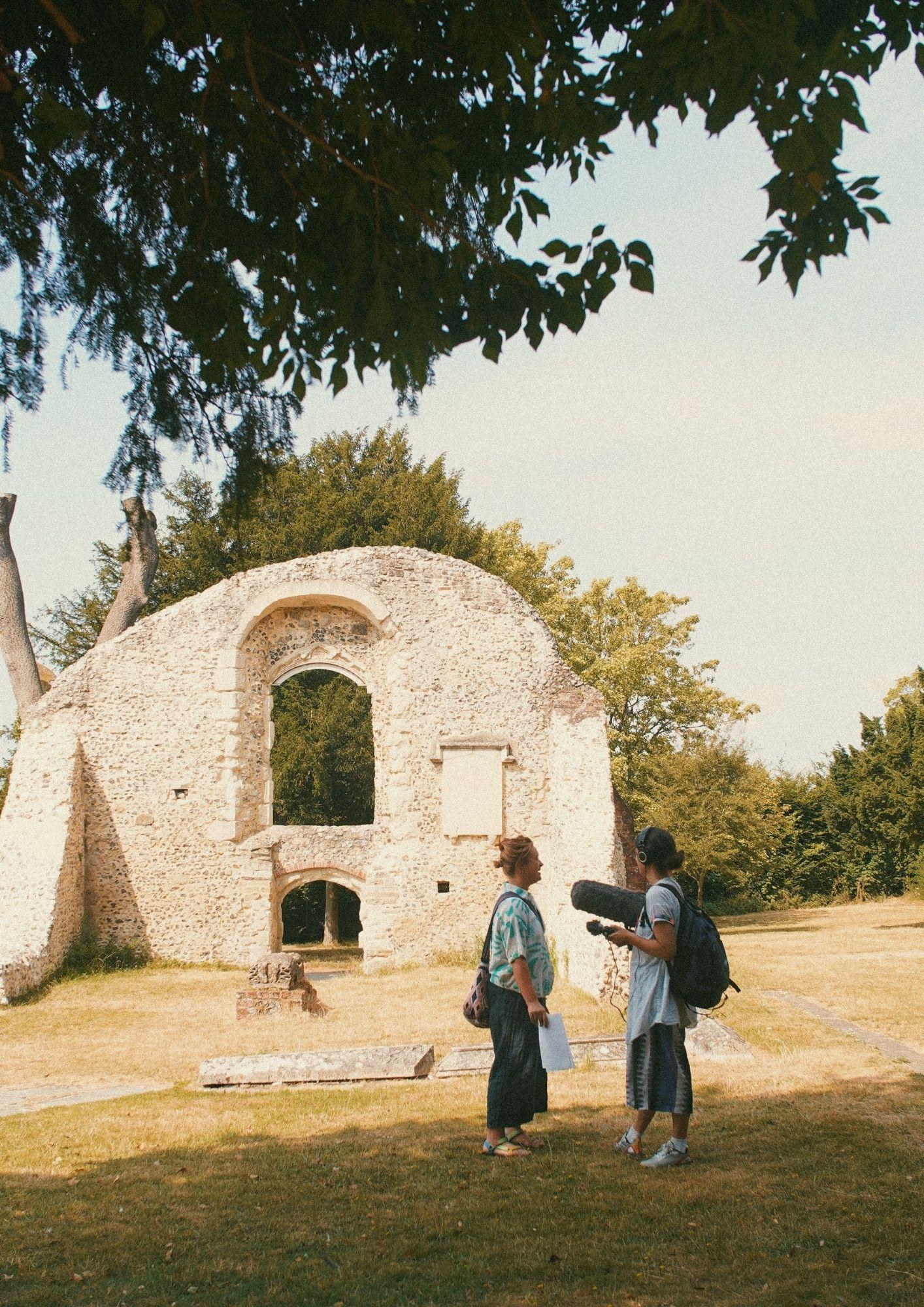
I'm Chris from Canopy & Stars, and this is A Life More Wild. Join Lucy now as she walks through her local cemetery, discussing how much society gets wrong, or simply doesn’t tell you, about motherhood, as well as how the calming space helped her understand her new identity.
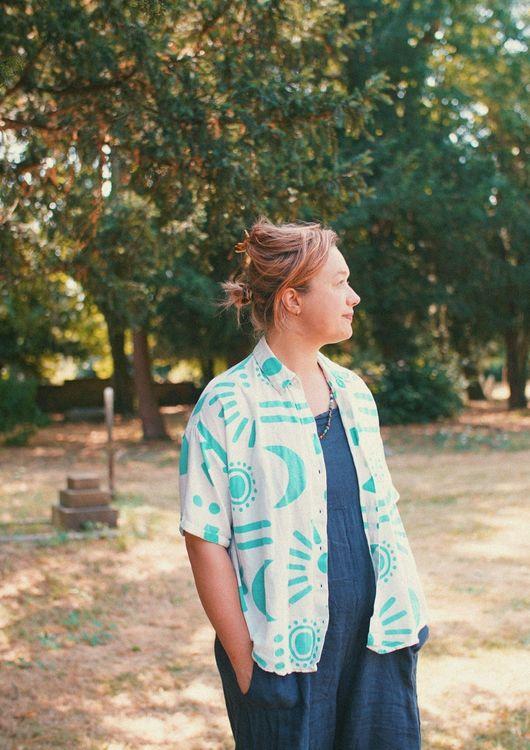
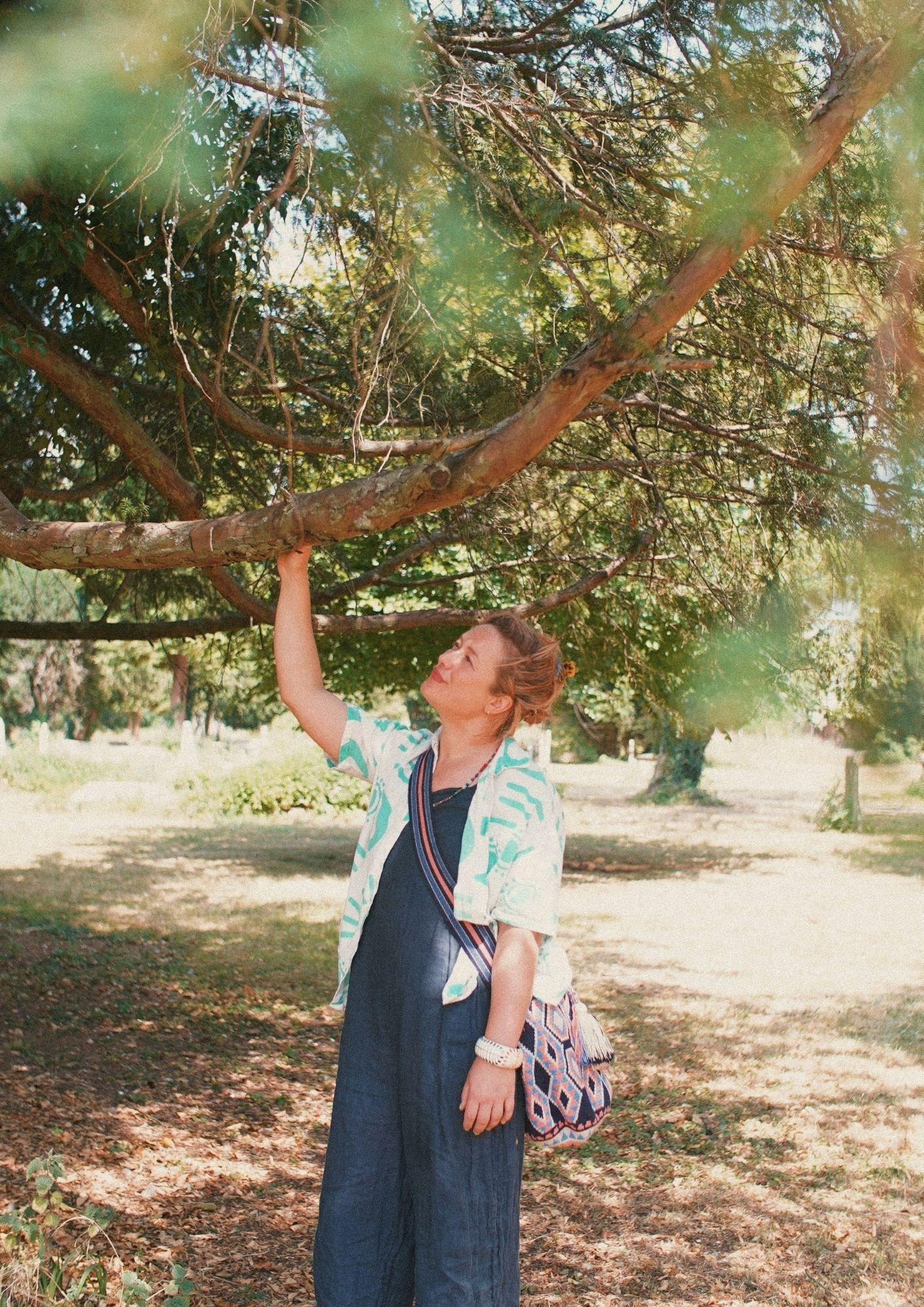
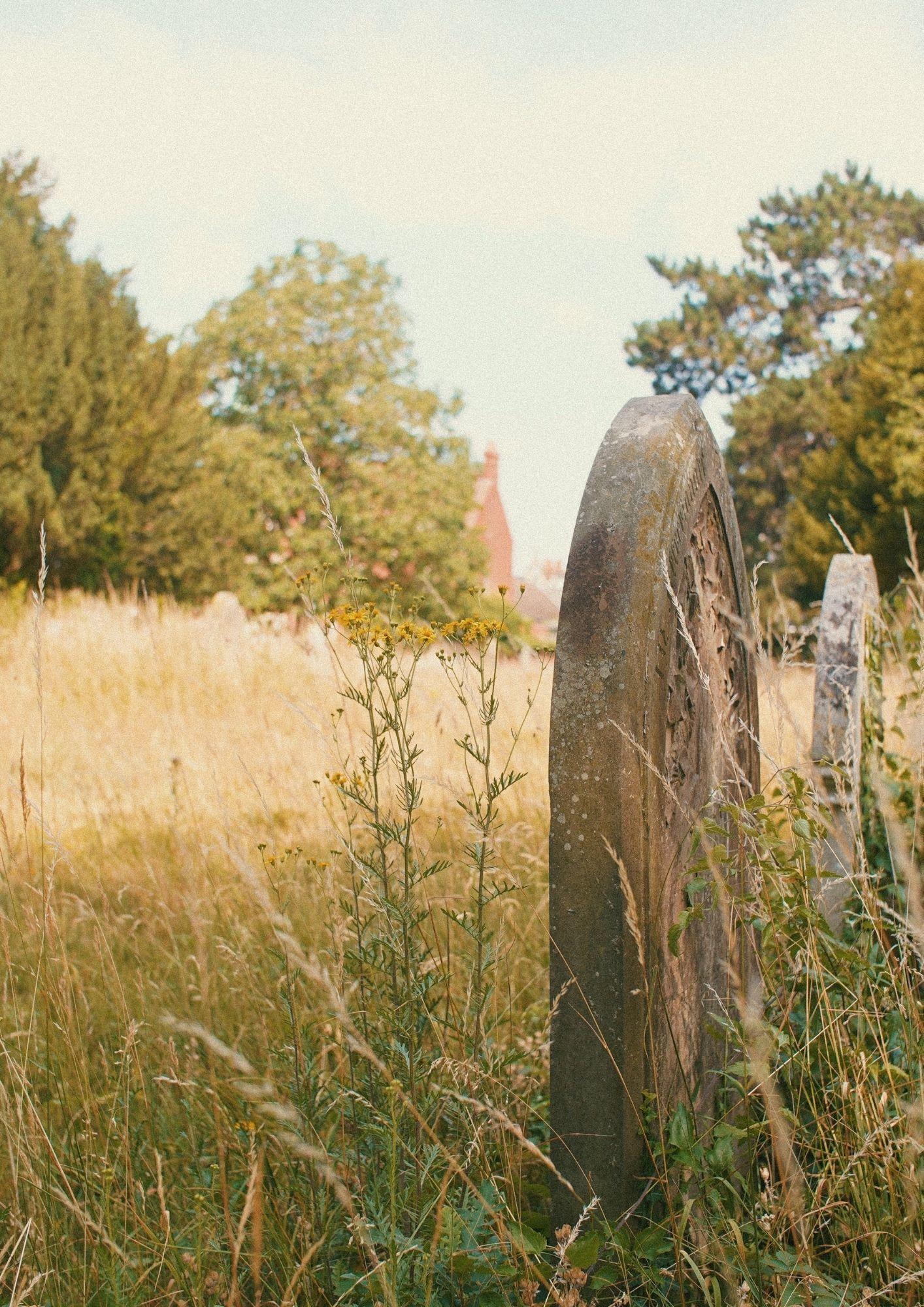
The cemetery, this place, feeds into all my writing because it's a two-minute walk from my house. So when I want to go and be near lots of trees or see what's going on in the world, this is where I come. The biodiversity in this place is really amazing. All sorts of plants and birds and slime moulds and flowers. But also, I found when I became a mother, I had a kind of preoccupation with death and mortality, and thinking about the past, thinking about the future, thinking about time, and being in the cemetery… it sounds a bit weird, but I found it kind of soothing.
I felt that I was thinking so much about all these morbid things. I was kind of hyper vigilant and anxious a lot of the time, but being in a place you know where people had been laid to rest, kind of it felt authentic, like it was it was life and death in this place in a way that I felt was mirrored in the kind of existential experience of early motherhood and that’s what I wanted to communicate in Matrescence.
So we can hear the road. We can often hear the trains, but it's this kind of sanctuary and oasis in the middle of a town, which is actually quite big. And we're looking at a linden tree, which I can't smell right now, but it was smelling absolutely beautiful about two weeks ago. The grass is quite yellow and dry. It's been very dry for a long time, but we've also got lots of dark and old yew trees, as you often get in kind of ancient churchyards and cemeteries, and of course there are lots of gravestones, most of which are really old.
So Matressence simply means the process of becoming a mother, and it was a word coined in the 1970s by the late American anthropologist Dana Raphael. I found this word when my first child was about nine months, and I basically felt that the experience of becoming a mother was so much bigger than I had expected it to be for me, and that it was so much bigger than culture and health messaging and politics and the human world was telling me it was. And for a while, I kind of felt quite strange that I was not adapting, or that I was overreacting and finding it just so big in terms of the change of my sense of self and identity and body and mind and psychology and all of this stuff.
When I found the word matrescence in an article in the New York Times, it just kind of made total sense. You know, it's a bit like adolescence. I realised that it was an actual thing that women or birthing people go through, to be pregnant and give birth, and that it was a metamorphosis into a reality that I didn't feel I'd prepared for. So I called my book that because my book is basically a memoir but draws on lots of research as well, so it's an account of my own attempt to make sense of my own matrices.
I thought before having kids that mothers, like the idea of “mothers” wasn't really a thing. I kind of imagined I'd be a parent, and I thought, I'm in a heterosexual relationship and I’ll carry our babies, but I thought that I'd be pregnant and give birth, and then at that point, you know, I'd go back to who I was before and the reality was really different. I had to contend with this very bodily, embodied experience of pregnancy and birth and new motherhood.
I'd always been someone who'd found talking about female hormones suspicious or thinking about the body being a way of limiting women and of course that has been the case over history but I I was quite taken by surprise by how different the experience was between me and my husband. We still in our society have this kind of romantic ideal of motherhood, and we put mothers on a pedestal, while also devaluing the work of care, and not giving, for example, fathers enough paternity leave, and not creating a society where we can all share in the kind of toils and rewards of caregiving. There's so many layers to the social institution of motherhood in terms of work and how we feel we're expected to parent. But that social impact also affects how we feel and levels of loneliness and isolation, and mental health issues, and so on. It's all very connected.
Oh, look at all the lovely butterflies. I think that's wild thyme or oregano. It's just such a nice place. In winter, it's beautiful but then in spring (oh, there's a rat!) you get like so many snowdrops, then the wild garlic, then bluebells, then cowslips. It's just this symphony of different things happening. I've been living here for about 10 years now, and every year I notice new things. There's just such an infinite variety of interesting stuff going on here.
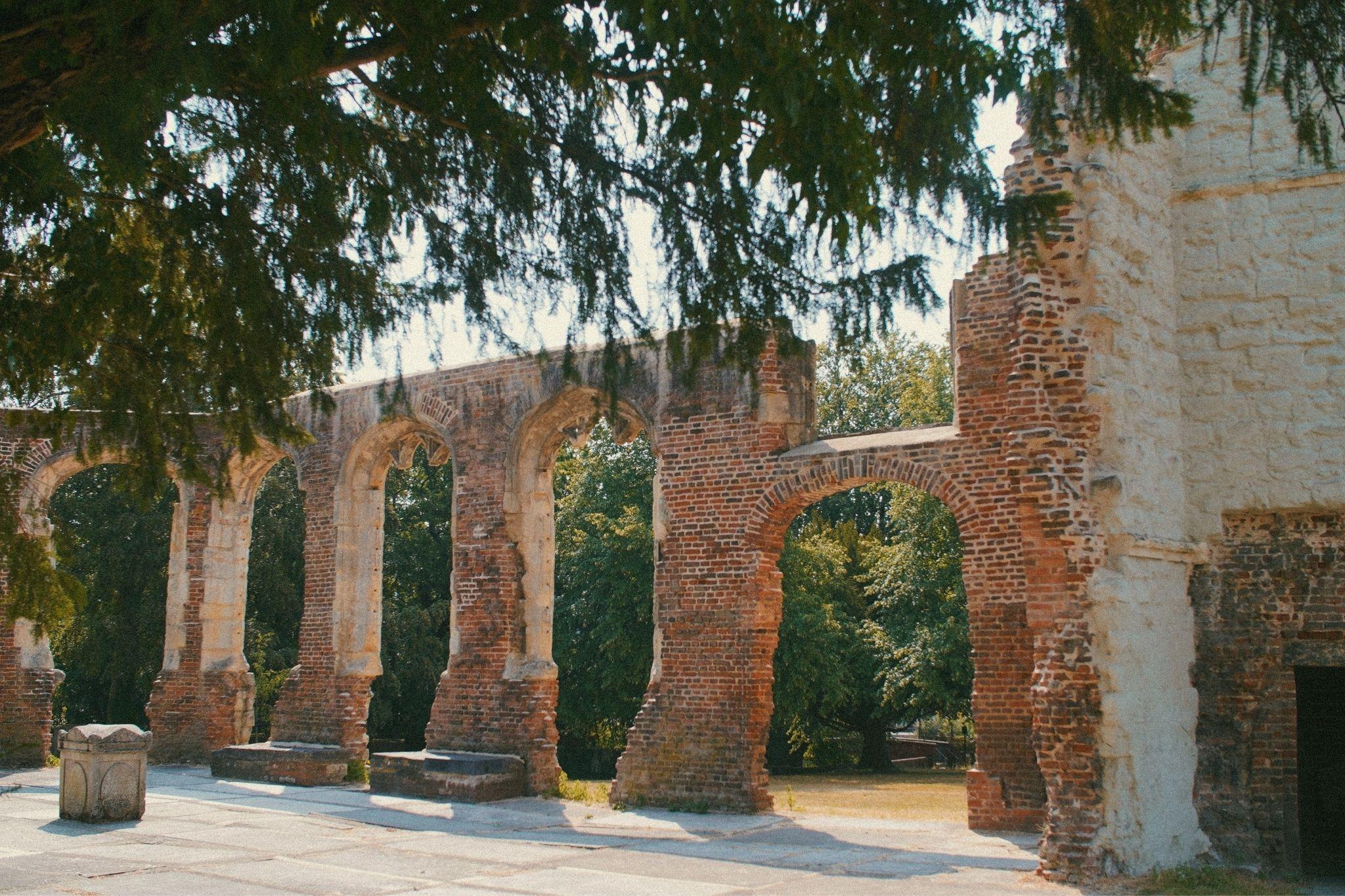
So this is the slime mould pile. I was really pleased that the council started to leave areas just with dead wood, you know, for insects or whatever. And this is where I am often to be found turning over logs, seeing what's around, getting funny looks, but I'm afraid today is not the day. So there's lots of different species of slime mould, and they have the most amazing metamorphosis. They start life often in a kind of bright yellow slick of slime, and that can be massive. And in that iteration, they move around and they predate and they have an intelligence and they have luck and learn and they have memory and they're kind of scoffing bacteria. Then suddenly, they'll transform into fruiting bodies, which often look like very tiny mushrooms on stalks. They can be bright pink, red, yellow, iridescent, white. I mean, the most stunning bright colours, and in really intricate, ornate, bizarre shapes. They might be kind of little tiny nets, or egg cups, or beautiful kind of balloons. They're just so varied and hidden.
If you start looking for them, you want to be looking on the underside of wood logs, where it's kind of wet and damp. And if you have a magnifying magnifying lens, that's really helpful. But you'll see that they're actually everywhere. Then in that second form, they sporulate, so they release their spores, and then the cycle continues. And that was huge for me when I was writing Matrescence. I'd come here and watch the slime moulds change. Actually, one day I came here and I watched the yellow slime mould, this slick of slime moving. I mean, it barely moved, but I stayed long enough for it to slightly move, and then I actually looked at some in my microscope later and saw it pulsing. And I just love the metamorphosis of slime moulds.
It's just, you know, when I felt everything was telling me to bounce back. To work like I didn't have a child, to have a child like I didn't work, and to hide any signs of kind of the maternal body or the kind of multi-layered aspects of care and mothering, to be a kind of particular type of a person, like an economic citizen or something. I liked spending time with things like slime moulds, and I learned from them that everything can change, and that the world is so much weirder and wilder than we think it is, and we're told it is. We're going to go to the lichen wall now.
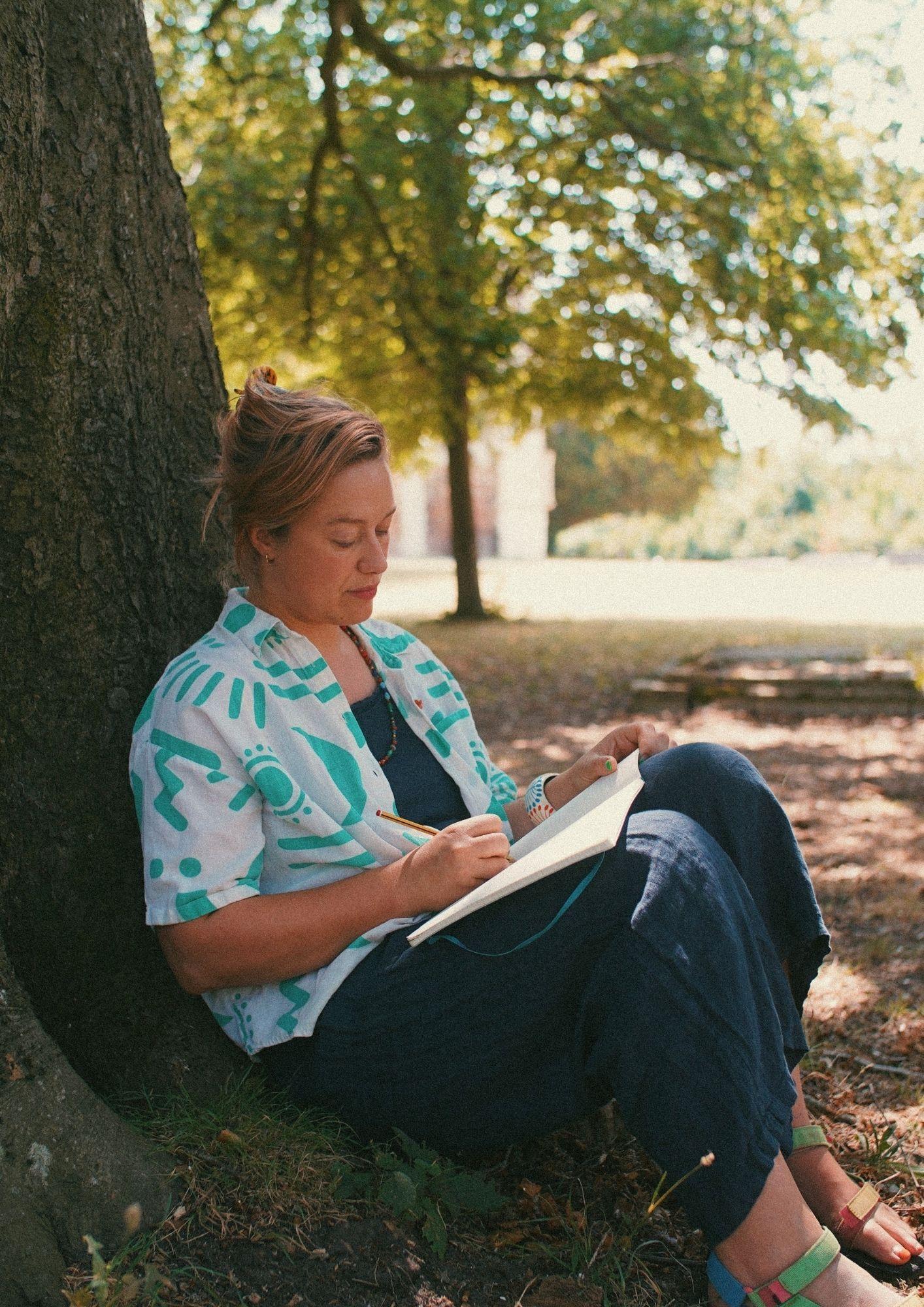
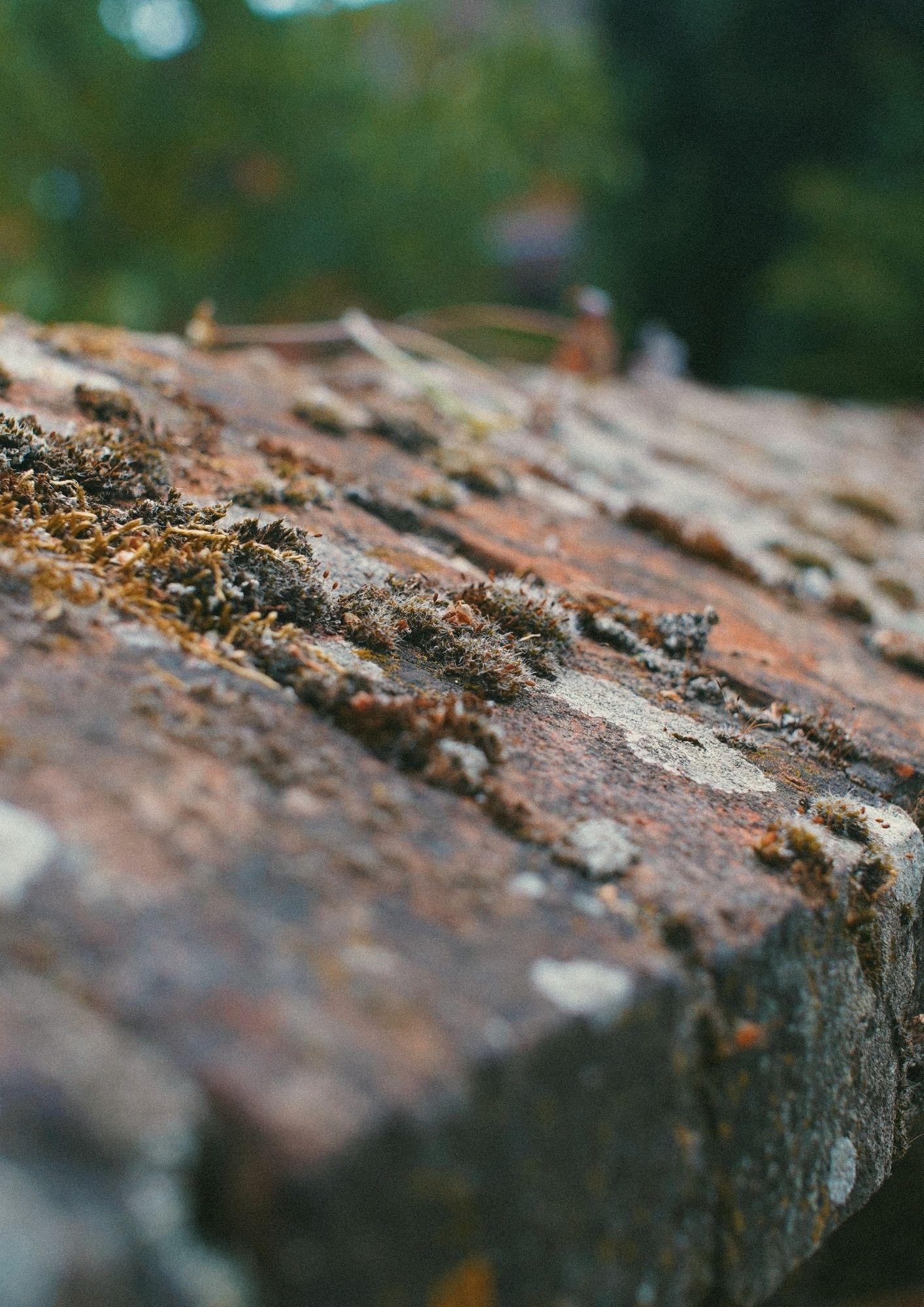
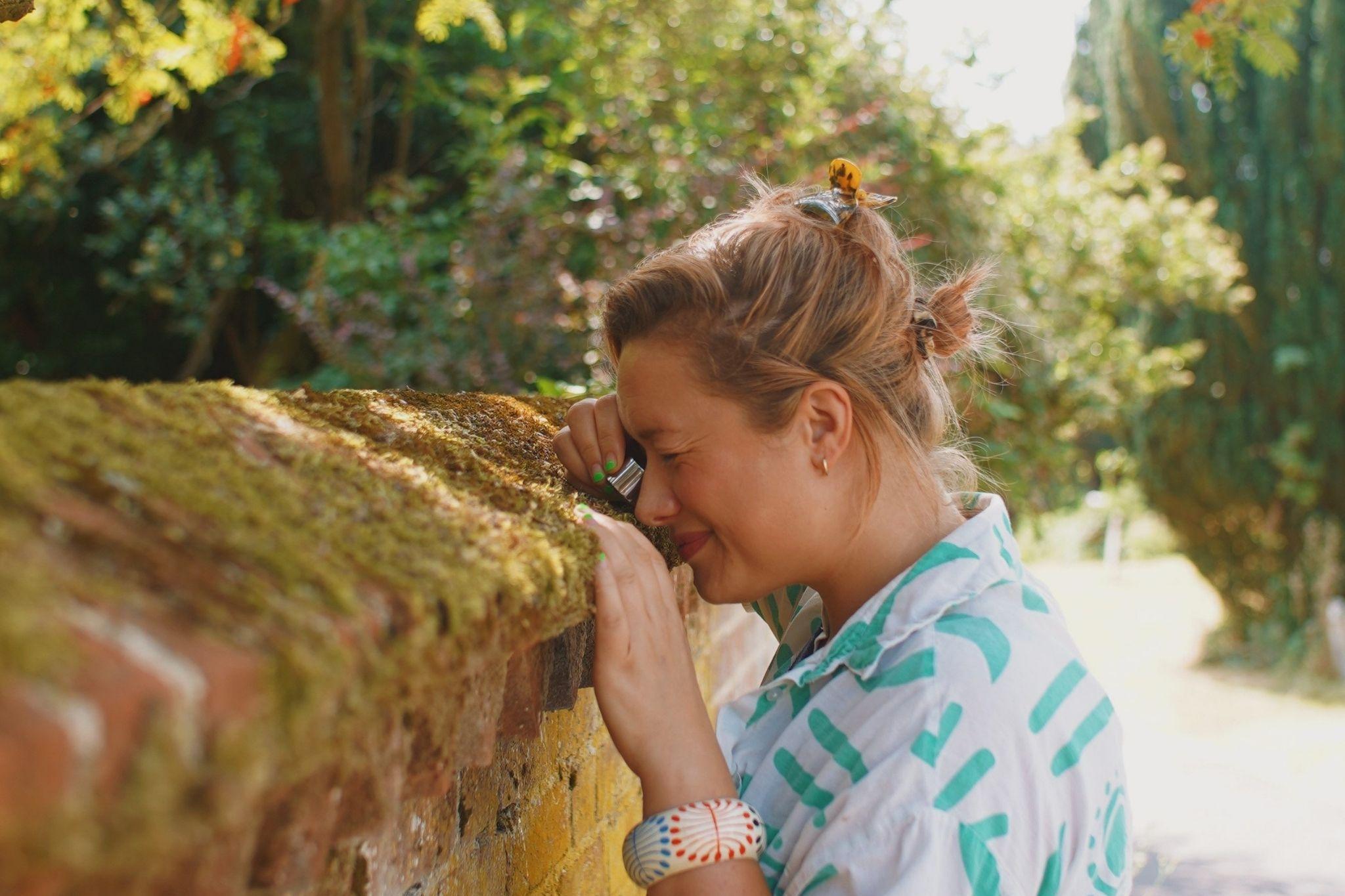
So, yeah, it's a wall with lichen and moss on it, which is quite beautiful and this wall that I love has informed my writing in different ways. I mean, you'd look at it and you think that's literally just some random wall. It's red brick, but it has some beautiful old stone in it as well. But if you look closer, it's absolutely covered with different types of lichen and moss and a few plants like toad flax, and I've been coming to this wall for quite a long time, and using my lens to look at it. And I think the first thing that's inspired me is the ever-changing nature of it. The moss and the stems and the sporangia change shape and change colour and the moss changes according to the elements and the conditions and that again it kind of has given me a kind of real footing and grounding in the world, steadying my feet in a way in the metamorphosis of motherhood and making me really interested in thinking about how the world is full of things becoming other things.
Also, I find lichen itself so interesting because it's not an individual organism; it's two organisms. So it's algae and cyanobacteria, and that for me just helped me make sense a bit of the feeling I had after having a kid and trying to write about it. A feeling of not being an individual self anymore and being kind of connected in a different way to my daughter and and feeling myself to be an ecological being in a way that I hadn't really before.
Before I had kids, I'd been reading all the parenting books about sleep and feeding and how to look after a baby, but I found very little about the actual maternal experience and the experience of pregnancy, birth, and early motherhood. It seemed to me that it was a really kind of under-researched, under-reported, kind of undermined, disavowed experience. Because of that absence of information, we've only really recently found out, thanks to these groups of amazing scientists across the world, that the brain really changes significantly in pregnancy and early motherhood, and that that can bring about a kind of vulnerability. So we we don't know much, but we know that brains change in multiple areas significantly, comparably to how much they change in adolescence.
Brains of fathers and non-gestational mothers change too. So, obviously, in pregnancy and birth, there's this kind of kind of head start, as it were. But we know that the experience of hands-on affectionate care with a father or adoptive parent or non-gestational mother is biological as well, and the brain changes too, and I found that really relaxing to read about and see because I felt so different. I was kind of, “ah okay, of course I feel different. This is what's happening and that's fine.” So yeah, everything I was reading was about the baby, which makes a lot of sense, it's obviously a big thing, but I was really craving accounts of what it felt like to bring a life into the world and to be responsible for that life and to be mothering in a culture and society which doesn't adequately value care, but also has this kind of very kind of oppressive idea, a fantasy of what a mother should be. I was really craving that. I found it in Of Woman Born by Adrienne Rich and other books, but it was so lacking, and I felt it to be such an interesting kind of narrative experience.
I'd done English at uni and read the supposed canon and there's never anything about what it's like to give birth or what it's like to have brought a person into the world through your body, or what it's like to be a mother in this society, and that's happening more and more now. But I thought it was pretty interesting and it was really kind of hardcore and punk, and I wanted to try and write about the drama of it. But actually, it's bittersweet. I've been really surprised by how many people it's spoken to, who have felt similarly in different countries across the world. In a way, that's kind of sad.
Not that the book doesn't have like the love and the joy in it, but I think it’s resonance with people speaks to the fact we're not really doing motherhood in our society in a way that allows people to flourish. I think there's a lot of improvements that need to happen and ways of building a society which values caregivers and makes it easier to have a family and to have happy children and happy mothers. I think pregnancy, motherhood, and spending time with young children has really helped me to see how much we are nature and how much, the divide, the confected, invented divide between humans and the rest of the planet, is so fictional in a way and harmful.
I see how connected we are all are, and how much we kind of need a relationship with with the natural world and that sounds silly because we only live because of it and, you know, we are in a relationship with it all the time because we're breathing and eating, but I guess seeing the children respond to being in woods and parks and gardens, has made me really see how important it is for children and all people to have access to these restorative spaces.
I think the experience of being two people, in pregnancy, and the existential experience of being a being with another being inside you, growing there, for nine months or so, it's made me a lot more interested in the aspects of nature that we can't really see. So like microorganisms and slime moulds, and you know what lives in moss and lichen and the hidden realities that are so invisible to the human eye. It's made me really interested in that.
The way Lucy describes parenting, as a change of who you are, not just the way your life operates, is really quite thought provoking and we hope it helps you deal with any creatures in your own life who leave a trail of mess and slime wherever they go.
There’s another great guest coming in a few weeks and in case you missed it, our south downs natural soundscape, just dropped (quietly, of course, like a falling leaf).
So we’ll see you soon, and please take a second to rate and review ALMW wherever you get your podcasts, we really appreciate it.
Why we're one of the highest scoring travel B Corps in the world
People
We're majority employee owned, which means we all get a say in how the business is run.
Profit
Our Charitable Trust uses 24% ownership of the company to support environmental causes
Planet
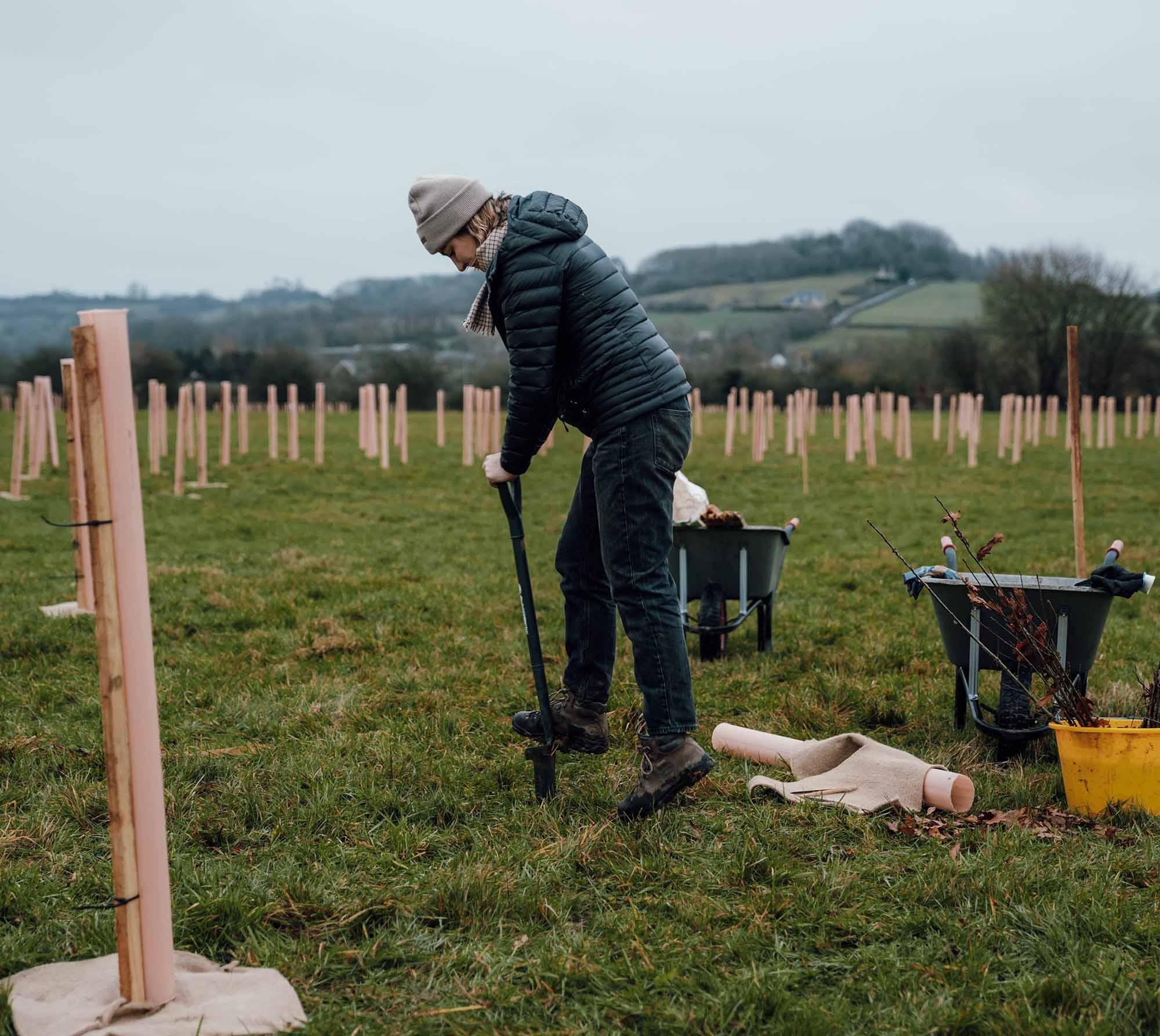
We're committing to raise £50,000 by 2027 to help protect nature in our national parks.