
A Life More Wild - Series 6, Episode 6
Lucy Campbell on reading waves, burning out and finding a new role in surfing
Lucy Campbell was a competitive runner and a keen casual surfer. After a string of injuries, she decided that the more laid-back lifestyle of surfing might make for a more enjoyable career. It was years before she'd find the balance to make that true.
This is an amazing beach to learn on, because it's such a beautiful long, flat beach. It makes really lovely gentle waves to learn on. There are a few spots where, if you know the right time and the right conditions, you can get some really good, really fun waves. And it tends to be a lot quieter than a lot of the places around as well.
I'm Chris from Canopy & Stars, and this is A Life More Wild. Join Lucy now as she walks down to Woolacombe for a swim, reading the waves, talking about her background, and discussing how the intense nature of the competition circuit drove her to burnout, and her search for a new role within the sport.
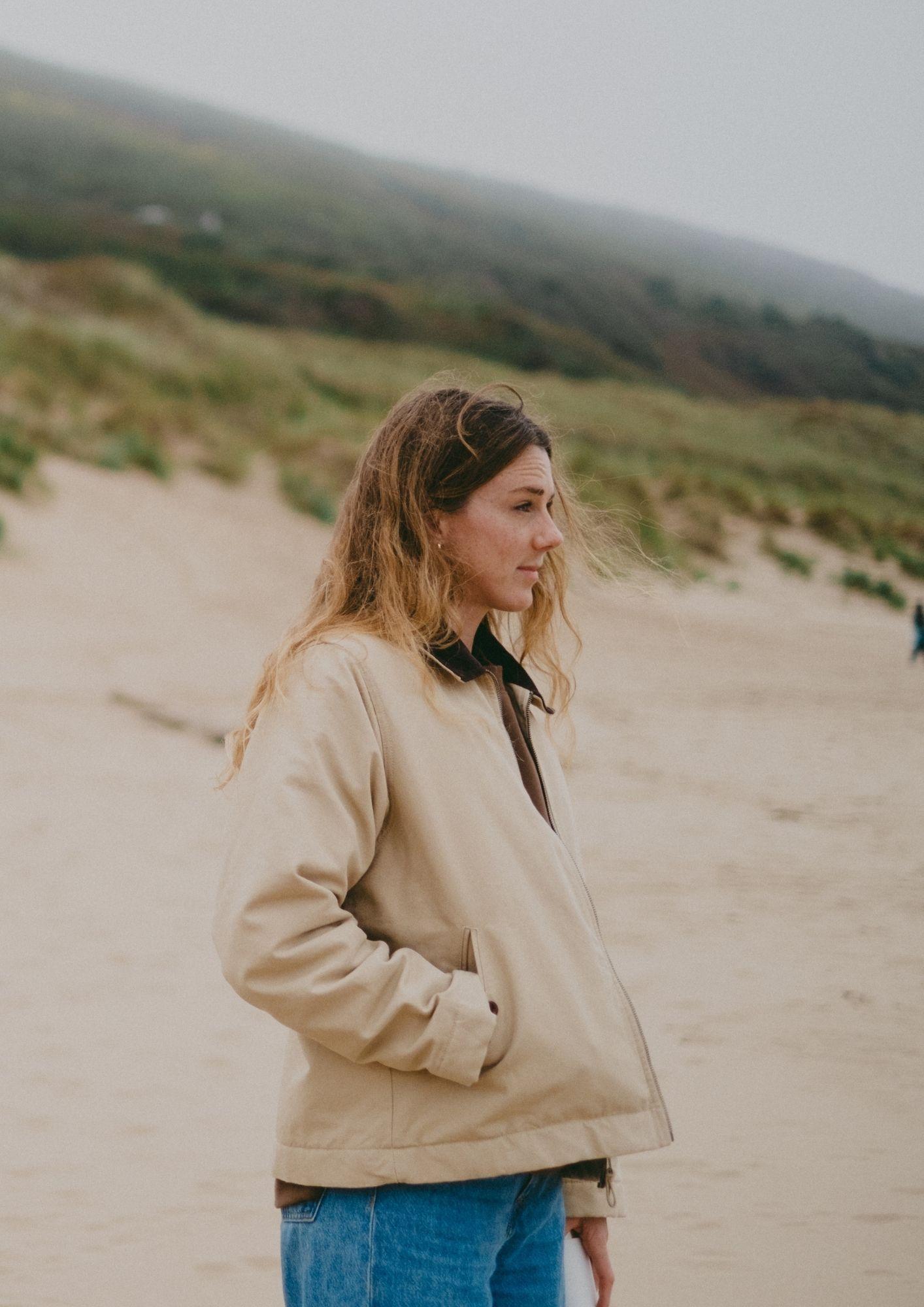
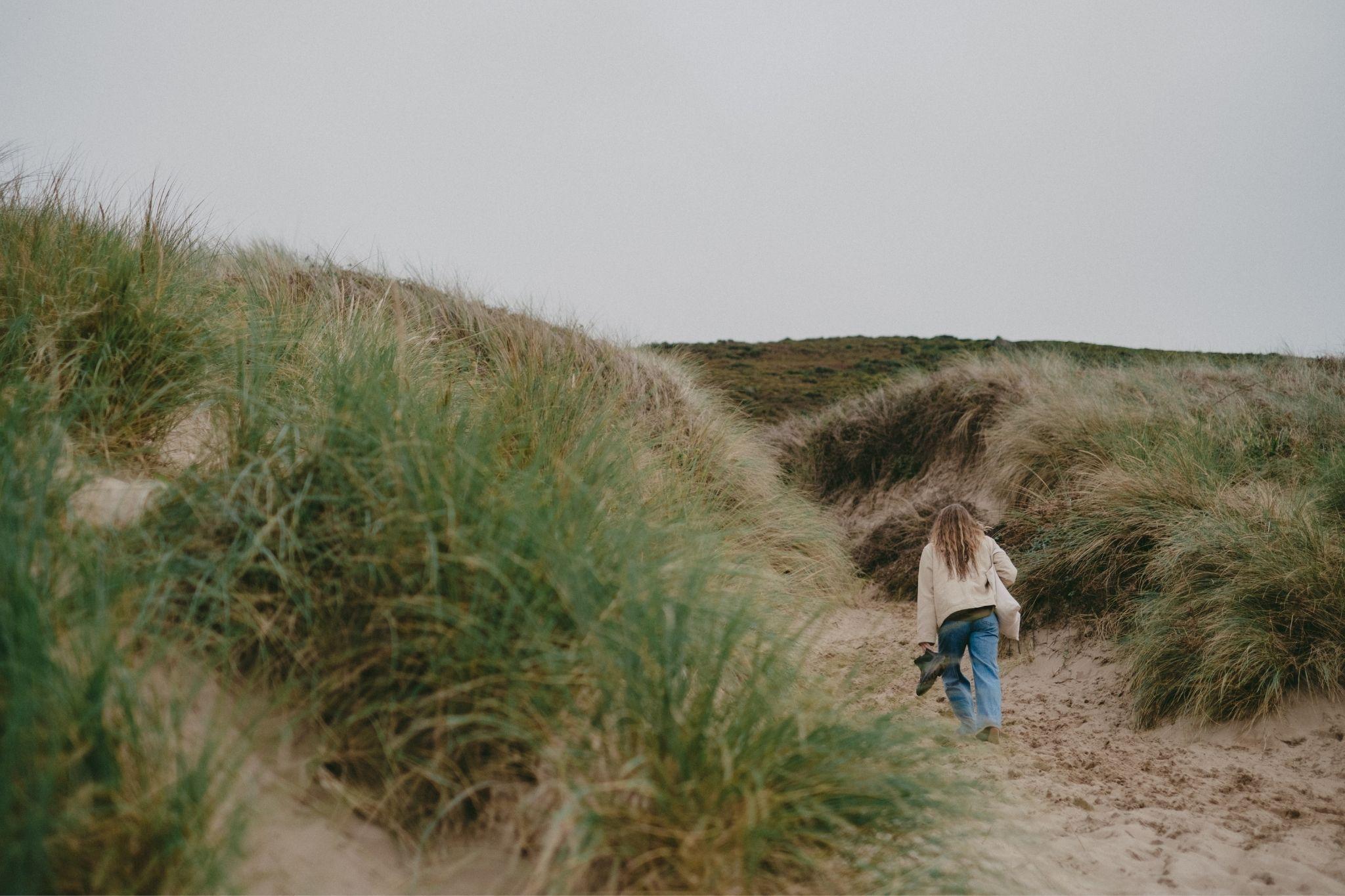
We are on Woolacoombe Beach or just walking down towards Woolacoombe Beach, through the downs, which is where I grew up surfing and where I learnt to surf. At the moment we're surrounded by hills and bracken, and little paths that lead down towards the sand dunes. We're on some quite rough, rocky terrain at the moment, a very steep track leading down to the beach. You can probably hear the stones under our feet. But we're coming out to a little opening where you can see the ocean.
It's actually a very good day for surfing today. Lately it's been so windy for so long that it's so nice to see the ocean calm and clean. I think it's that nice quiet time of year between the summer holidays and winter settling in, when everyone's still getting to the beach and still enjoying it. Heading out for nice long walks, getting the dogs out. It's just really beautiful to see people enjoying the natural spaces.
We moved here to Woolacombe when I was around about five years old, and I started doing surf life savings. I always loved swimming. I was definitely a water baby. Growing up, I've got two older brothers, and to me they were just the coolest thing in the world growing up. They started surfing when we moved here. My brother saved up and bought himself a surfboard, and it was only a matter of time before I was asking them to take me out with them. I still surf with my oldest brother now, and my dad as well, which is really special that we get to share that.
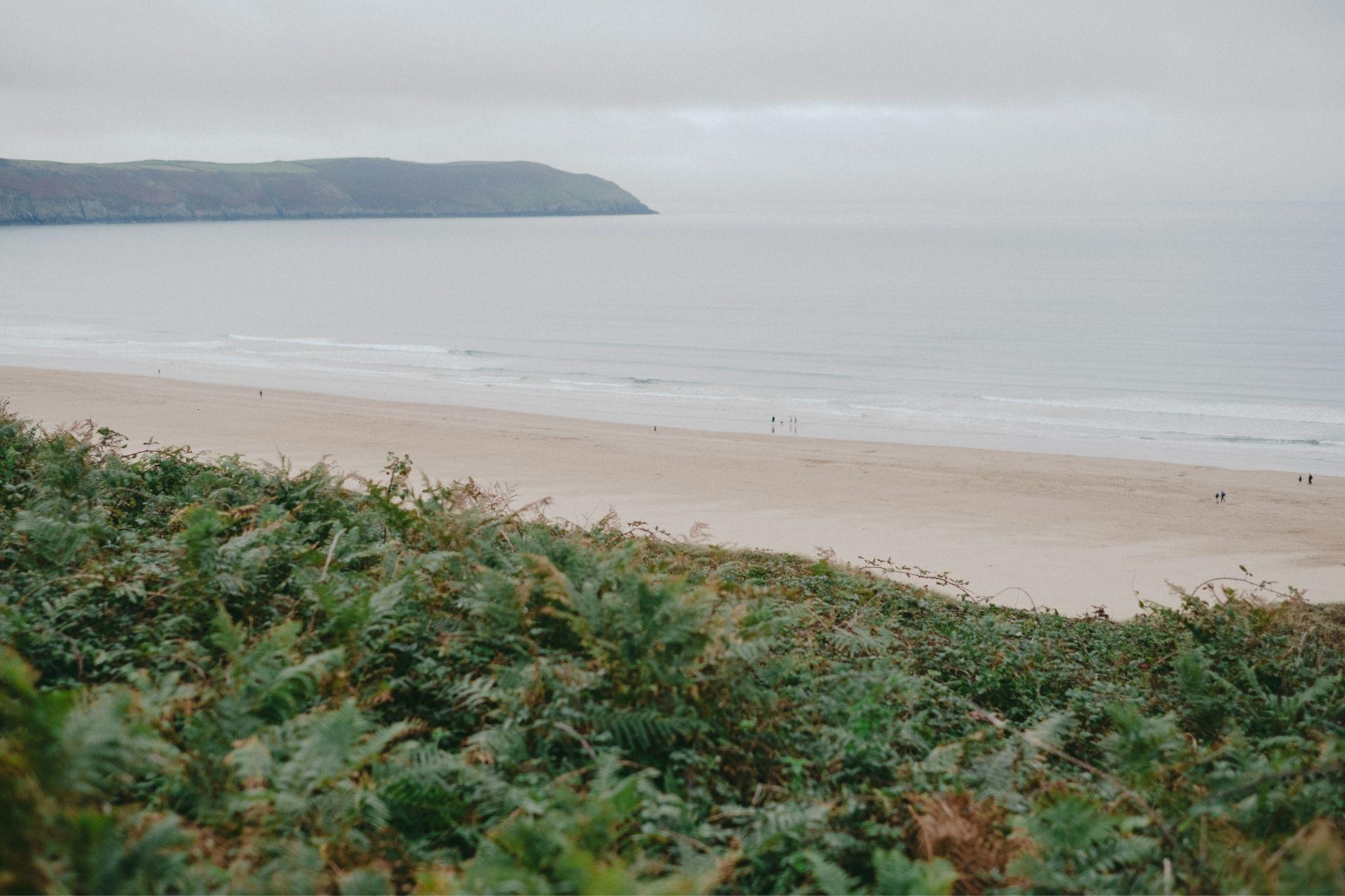
So we've come down the steep hill and we've got to a sort of plateau at the top of the sand dunes, and we're about to come out to look over the whole beach. It's definitely going to be a steep walking back up here as well. All the way up the sand dunes and all the way up the downs.
For me, I love the sense of freedom that surfing gives you. You can go out in the ocean and just disconnect from everything, and just enjoy the stunning views around you. Every wave you catch is always different, always changing. You're always adapting, always reading the ocean. Surfing's such a mindful sport. You can't be distracted by anything else.
And the ocean will always find ways to humble you as well, and you're constantly challenging yourself. I think with any sport, you never complete it. Even the best in the world are still finding ways to improve and find that extra 1% or 0.5% improvement. So I think it's that continual pursuit of just finding new ways to love the sport and fall for it.
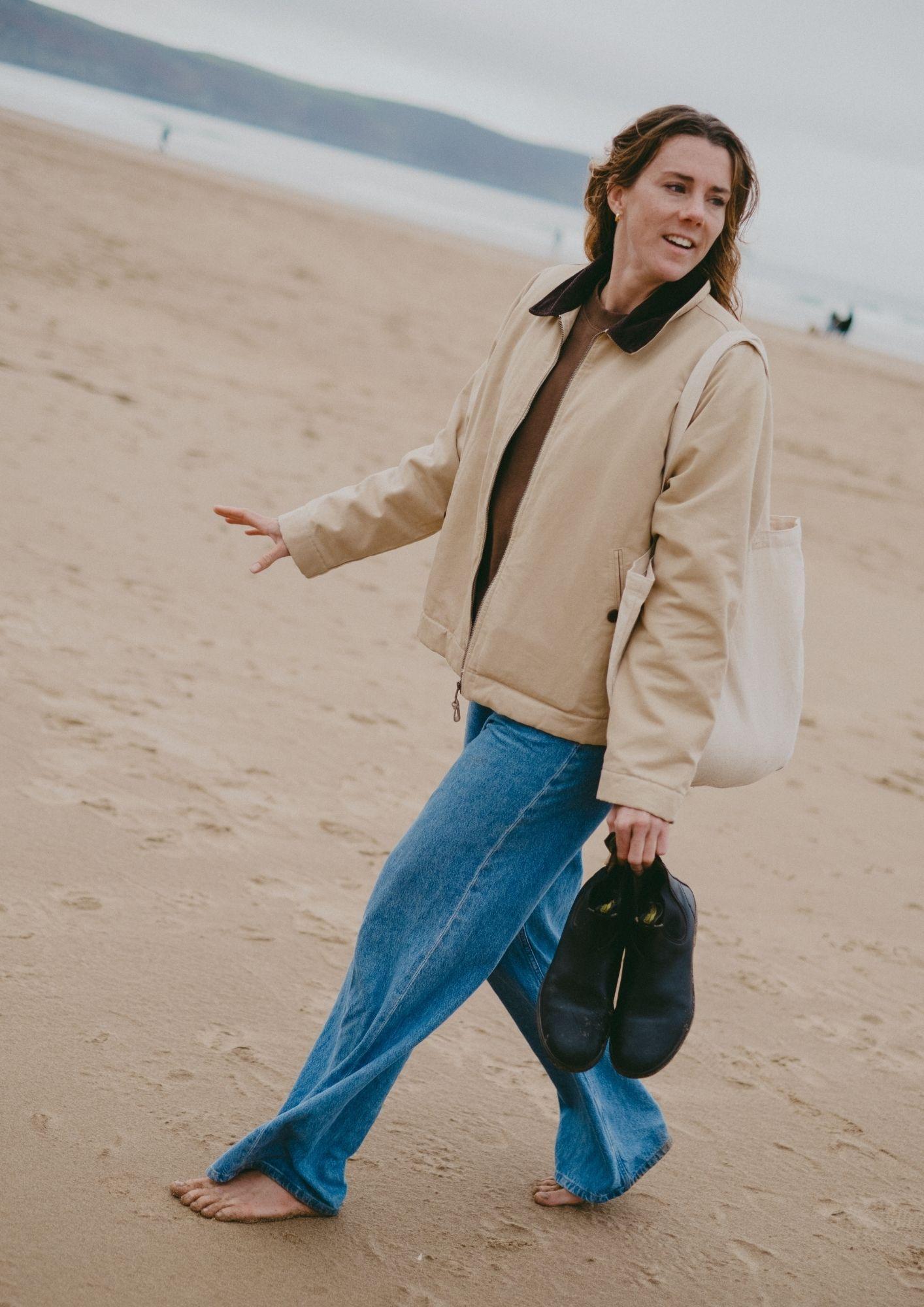
It does change when you're competing and I think it's a different mindset to when you're just out there free surfing for yourself. So it's finding that balance of the time when you're focused and dedicated, working on certain techniques or little tactical things that you might use in a heat. So it's finding the balance between the two really and I feel like I've always surfed for the enjoyment of surfing, and for that experience of getting out into the ocean. I tried not to get too involved in that competing mindset.
On a day like today, when there's not so much wind, you can really hear that sound of the ocean. I'm sure it will come through on the recording. But on other days you'll be stood here, especially coming through into winter. It's so raw and rugged here, with the wind, the rain, the elements really attack this big open space, so it's nice to be able to just hear that, and to hear the birds on a day like today.
As a teenager I was competing at a high level in both running and surfing. In running I just kept getting injured. I had stress fractures in both my feet, tore my Achilles, and just had this chain of injuries. Coming back from those is tough, to get back to national standard times or whatever it was. Probably around my late teens, I saw the potential in surfing for just going to lovely, warm places and training there. It wasn't just hours pounding around a track. So, I think the real draw for me was the lifestyle that came with surfing.
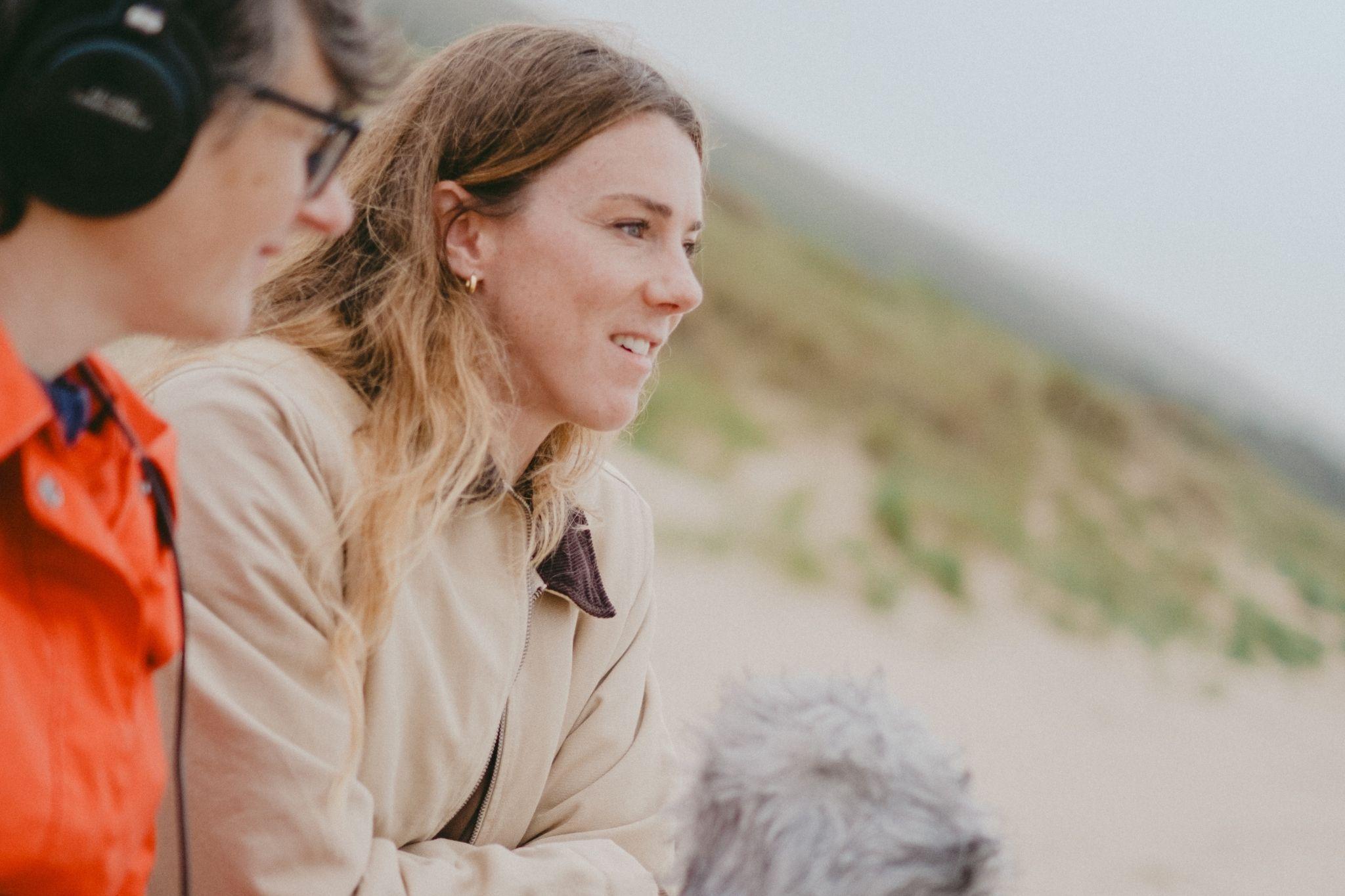
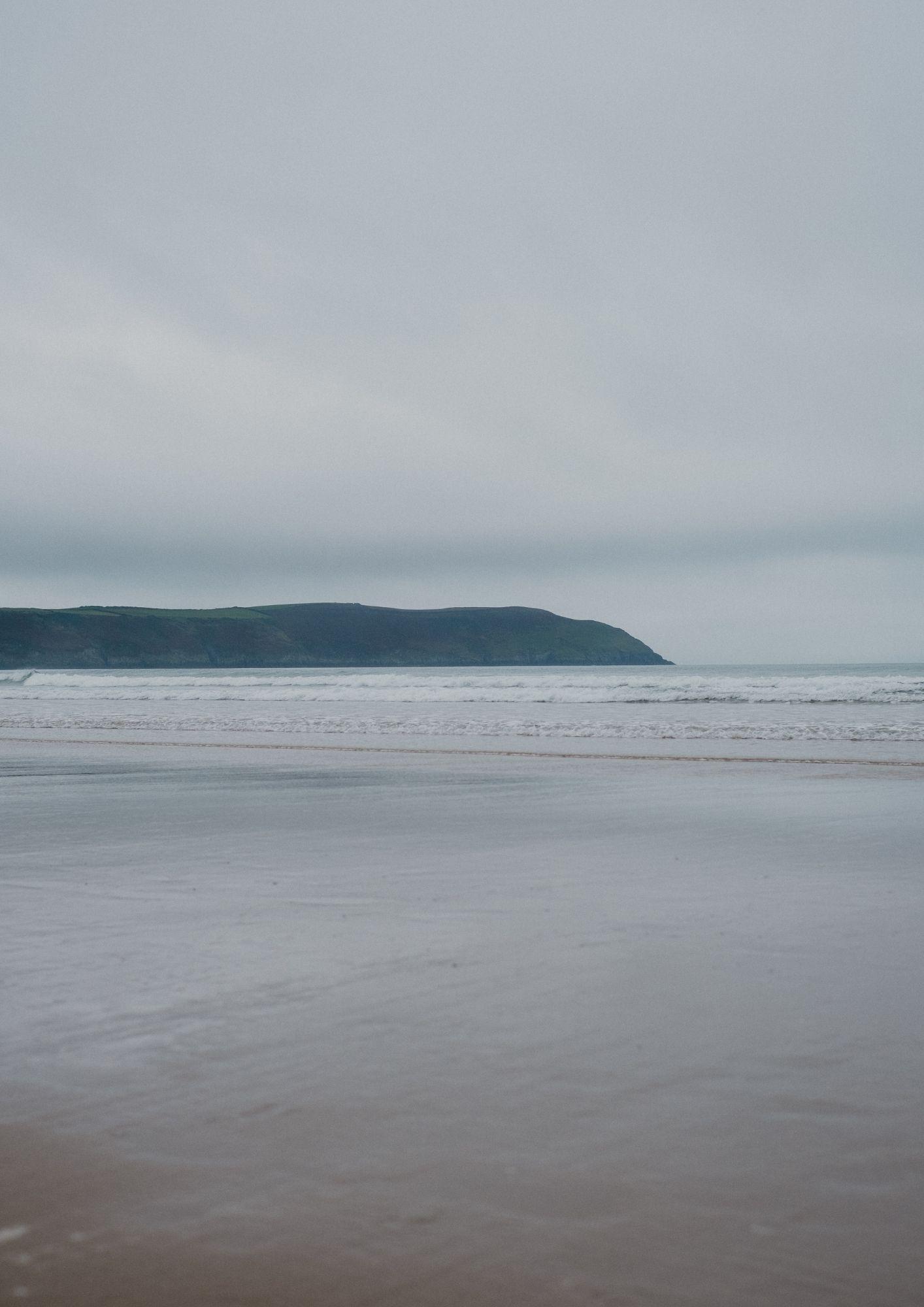
The beach here is three miles long, so we've got a huge expanse of beach. I think you really feel that coming out onto it, you really feel that sense of space around you. It's all just beautiful golden sand and the sand dunes behind us now. And then the two headlands. We've got Baggy Point and Morte Point over in the distance, creating the Woolacoombe Bay.
What makes good conditions for surfing is a swell that's travelled across the Atlantic. The waves have travelled a long way and they've had a chance to filter themselves out into clean lines, like we've got today. Whereas what we usually have a lot of in the UK is local winds that create really choppy, messy conditions. So autumn is the perfect time for those sorts of storms out in the Atlantic that make these really lovely waves.
We've found a little space to stop and take in the waves for a minute. We're perched on a little piece of driftwood that's been washed up on the high-tide line.
My eyes are constantly being drawn to the different peaks popping up along the beach. At the moment I'm looking at one straight in front of us. The way it's breaking, it looks like it would be a really fun wave to surf on my backhand. So I'd call that going left on the way which is left to the surfer as they are paddling in. So that's my backhand when I'm surfing. I've actually been watching this wave the whole time we've been talking, because I think I might go out for a little surf on it after this.
I've will always surf for fun. Even when I was competing all around the world and trying to qualify for the World Tour or chasing Olympic qualification, I always really tried to make sure I was still enjoying my sport. Whether that was through going on different trips and exploring different waves, or through surfing different boards, I always tried to keep the element of fun. Because that's easier for me than motivation. Doing something you enjoy every day is so easy. Especially finding the motivation to put on a frozen-solid wetsuit in the middle of winter, in a freezing-cold car park when it's hailing. It's hard to keep that motivation going for long. So for me, keeping surfing fun has been key for that.
A few years ago, I suffered from burnout, which I didn't really know was a thing at the time. Going through that and I sort of had the initial phase of it, and then around eight months of chronic fatigue following that. That was a chance for me to really stop and assess what I view as success within the sport. To stop and think about what I really wanted to achieve in surfing, and where my career was going to go. So now I have stepped away from competition, and I'm just setting myself a different career within the same sport. I feel so lucky to be able to do that, and a lot of my sponsors have been very supportive.
The new career pathway is around trying to empower women in surfing. Last week I was in El Salvador, coaching the junior girls at the World Games there, and that was incredible. I loved being able to share the knowledge I've learnt from competing all those years. And then different film projects, different trips, and exploring all the different ways I can pursue surfing without sticking to the judging criteria of competition.
I had my best season in competition. I was one place off finaling at the European Championships, and just off the podium on the World Qualifying Series. So I told myself, next season's going to be the season for me. I'm finally going to reach my goals. So I nestled down. I started training harder in the gym, and spending more time in the ocean. And over time my performance started dropping. That was probably the first sign that I should have listened to. But my performance stats were dropping, so I started training harder.
I think someone described burnout to me recently like this: it's like all the warning lights are going off on the dashboard of the car, but you're in such a state of fight or flight, with your nervous system in overload, that you can't even see them. The main symptoms now looking back that I now know were burnout. Any feedback from my coach, I was so sensitive to criticism, I'd be in tears. I was so easily startled by the smallest of noises. I was so exhausted all the time. It was just that my adrenal system was just in that sort of hyperdrive.
I was able to get out of that burnout and chronic fatigue when I finally allowed myself to rest properly and recover. And it almost wasn't until that point when I rested that I realised what I'd been going through the whole time. For that period, I'd have a day of competing or a hard day of training, and the next morning I'd be flat out in bed. I was so exhausted. It wasn't until I'd recovered, and I could have a day's training, take a normal amount of time to come back from it and feel the benefits of the training, that I had a deeper look into what had been going on over that time.
Being out in nature has always been a huge part of my life. I think that since my burnout and that journey, I've realised just how important really taking the time in nature but taking the time to notice what is around in me in nature and using that as a way to really switch off. With a freelance job, your mind is always on what should be done, what could be done, "Do I need to reply to that email?" Having time in nature and really switching off from everything is so key to actually switching off our brains off completely. Well not completely, but switching our brains off from the stresses in our lives.
At a surfing competition you have heats, there is usually four surfers in the water at a time. Each wave you catch will be scored between zero and ten, on your style, a bit like gymnastics, and the difficulty of the moves you do. The size of the waves you catch comes into it a little bit as well. Then the two surfers with the two highest wave scores will go through to the next round, and on and on until you have the final. In the final, the person who catches the two best waves wins the event. Yes it is judged. There's a judging panel of usually about five people who will score each wave you catch. It's like gymnastics, or Strictly Come Dancing.
I think with competitive surfing, there's so much that's out of your control, and that can be extremely stressful. Especially if you've dedicated two months to training for an event. Then you don't even get the chance to show it. You don't get the waves in the heat, you don't get position, you make one small error and you don't get a chance to show the training you've put in. So it can be such a frustrating sport. You travel across the world to an event location for a competition, and you just don't get the chance to prove yourself. One of the things I loved about running is that first across the line is the winner. Whereas there's so much within surfing that's out of your control, and open to interpretation as well.
It's actually for a quite grey afternoon, it's very busy on the beach, so many dogs and people out walking. It's so lovely to see.
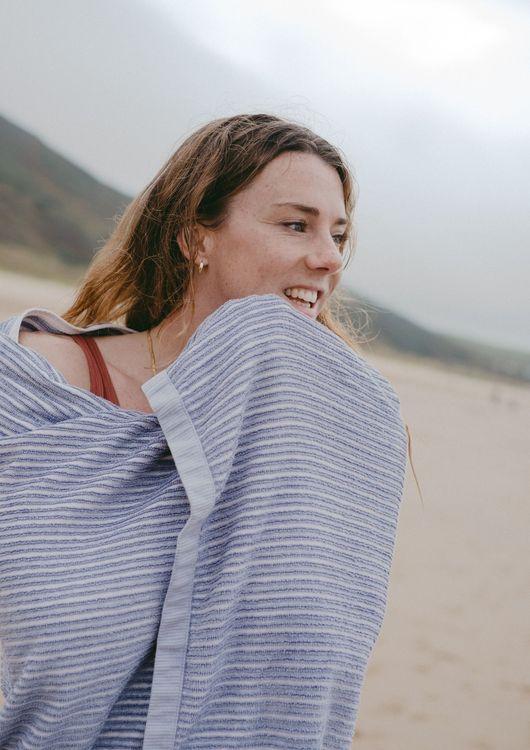
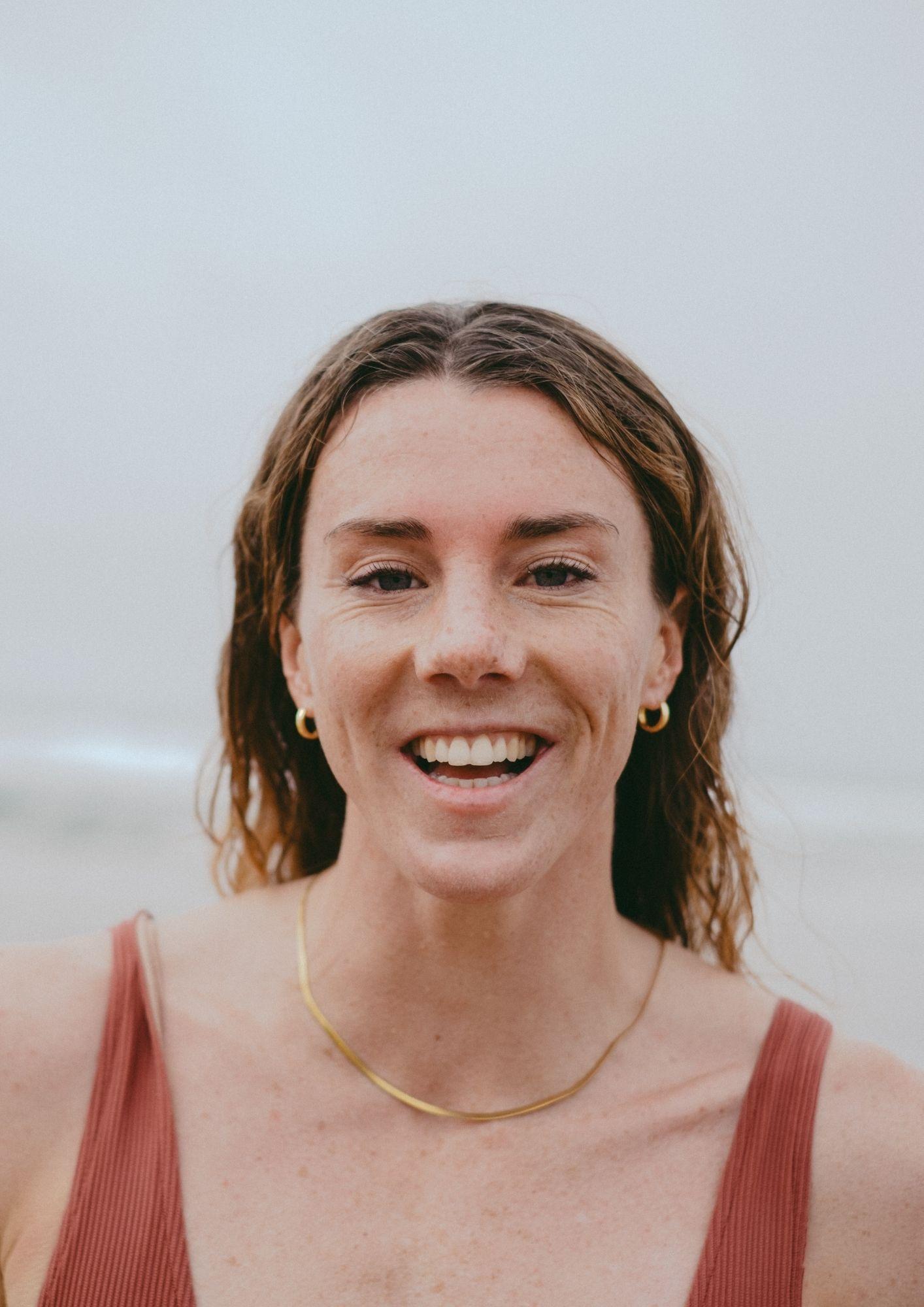
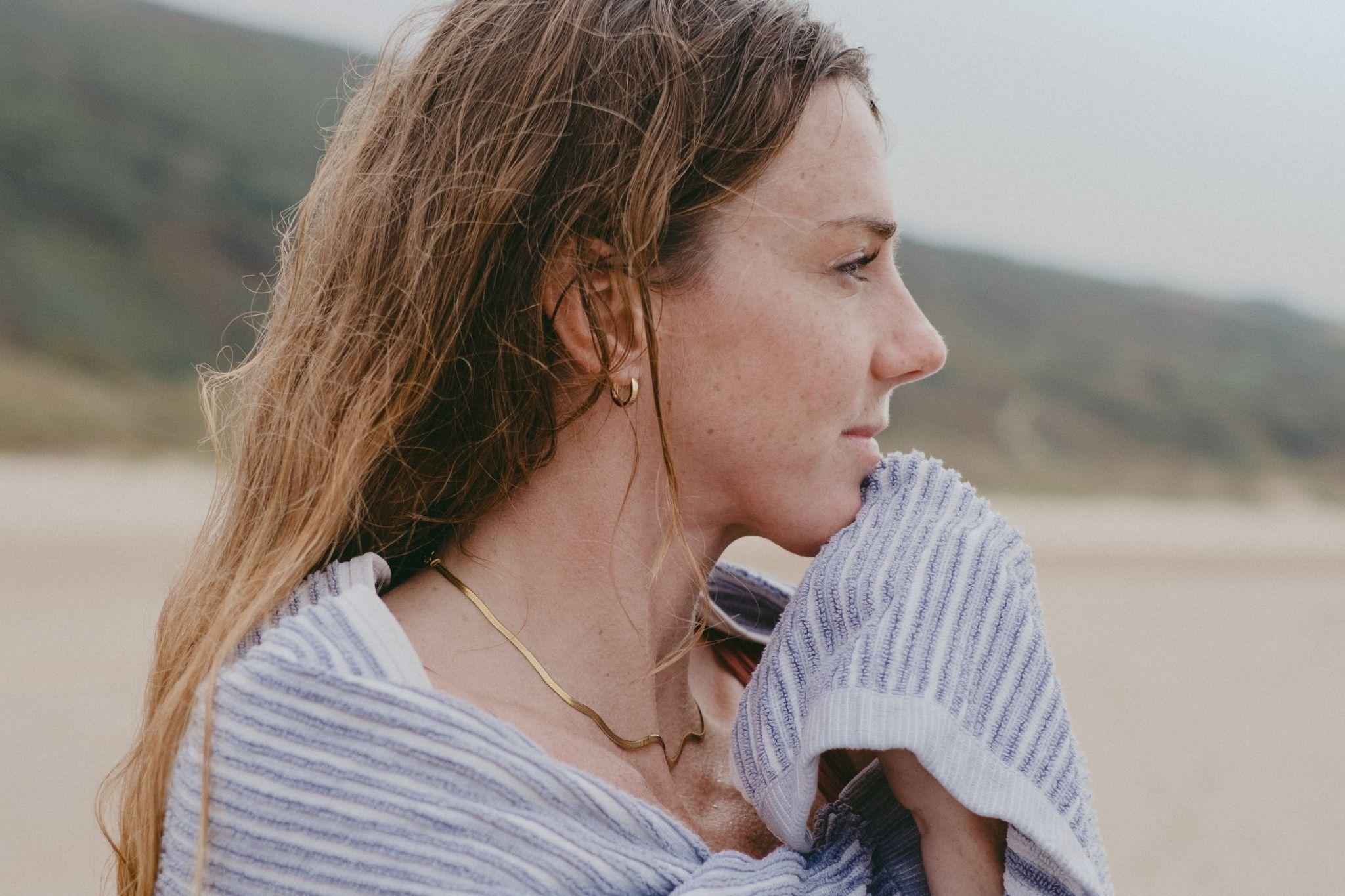
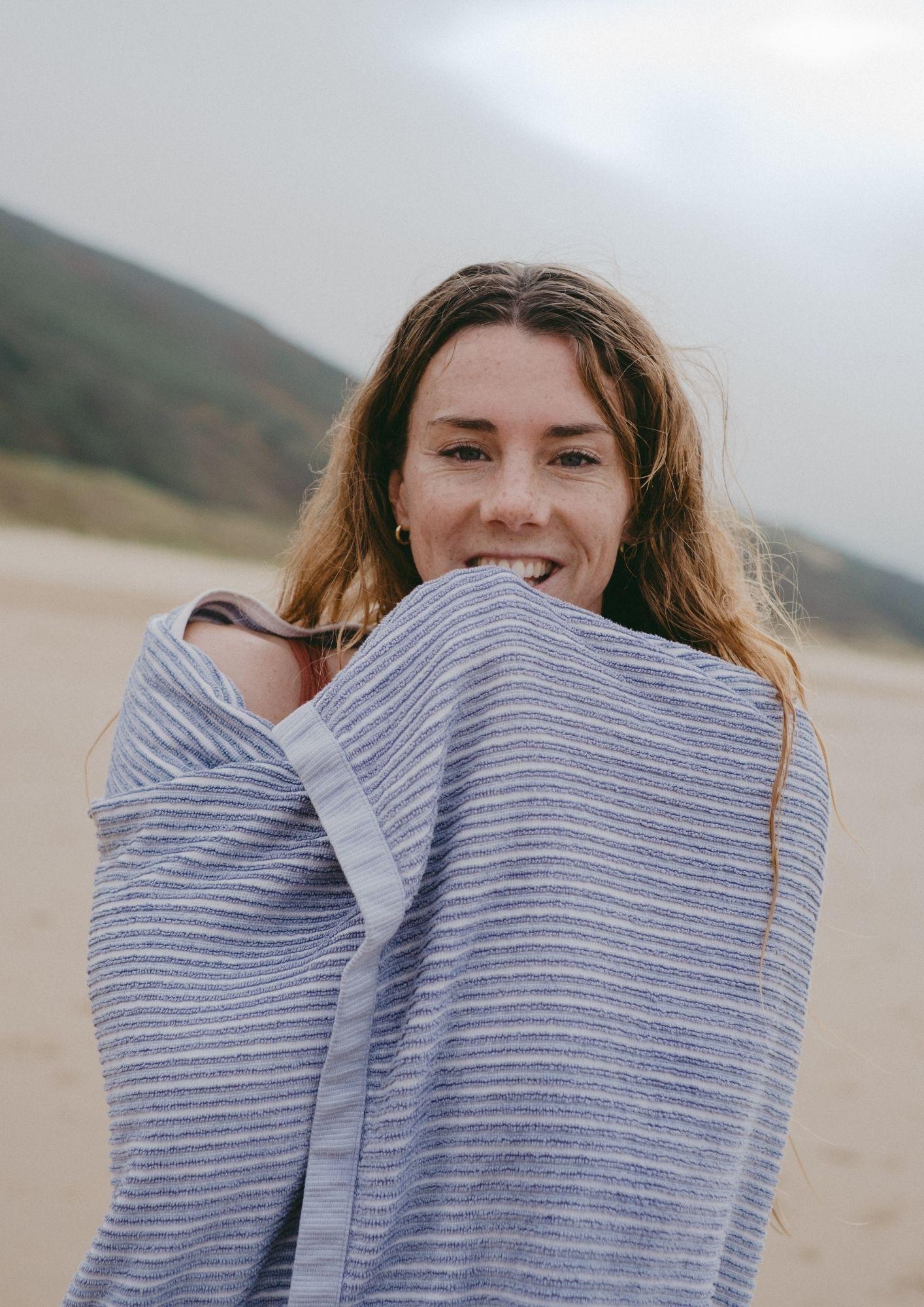
Autumn is the warmest time in the ocean in the UK. The sea temperature is usually about three months behind the air temperature, so it's still quite warm out there. But I think the air's quite chilly today, so I think coming back out is going to be the hardest part. Saying that, I've got my swimming cosy with me so I'm going to run in for a quick little swim.
That was invigorating. Definitely felt quite fresh out there, but it's so nice to get out there and then come back and get all cosy and warm afterwards.
There's a good lesson for us all. Even if something is a career, make sure you still love it. Sometimes when we're not doing this podcast, I just walk around narrating things for fun. Seriously, though, burnout can creep up on you, even if your work is also your passion. So watch for the signs, and try to actually act on them too.
We'll see you soon with our last guest of the season. In the meantime, we've got the sounds of a peat bog coming to you very shortly from Dartmoor. Don't worry, it's seriously gripping stuff as you'll know if you've ever stepped in one. Please take a second to rate and review A Life More Wild wherever you get your podcasts too. It really does help.
Why we're one of the highest scoring travel B Corps in the world
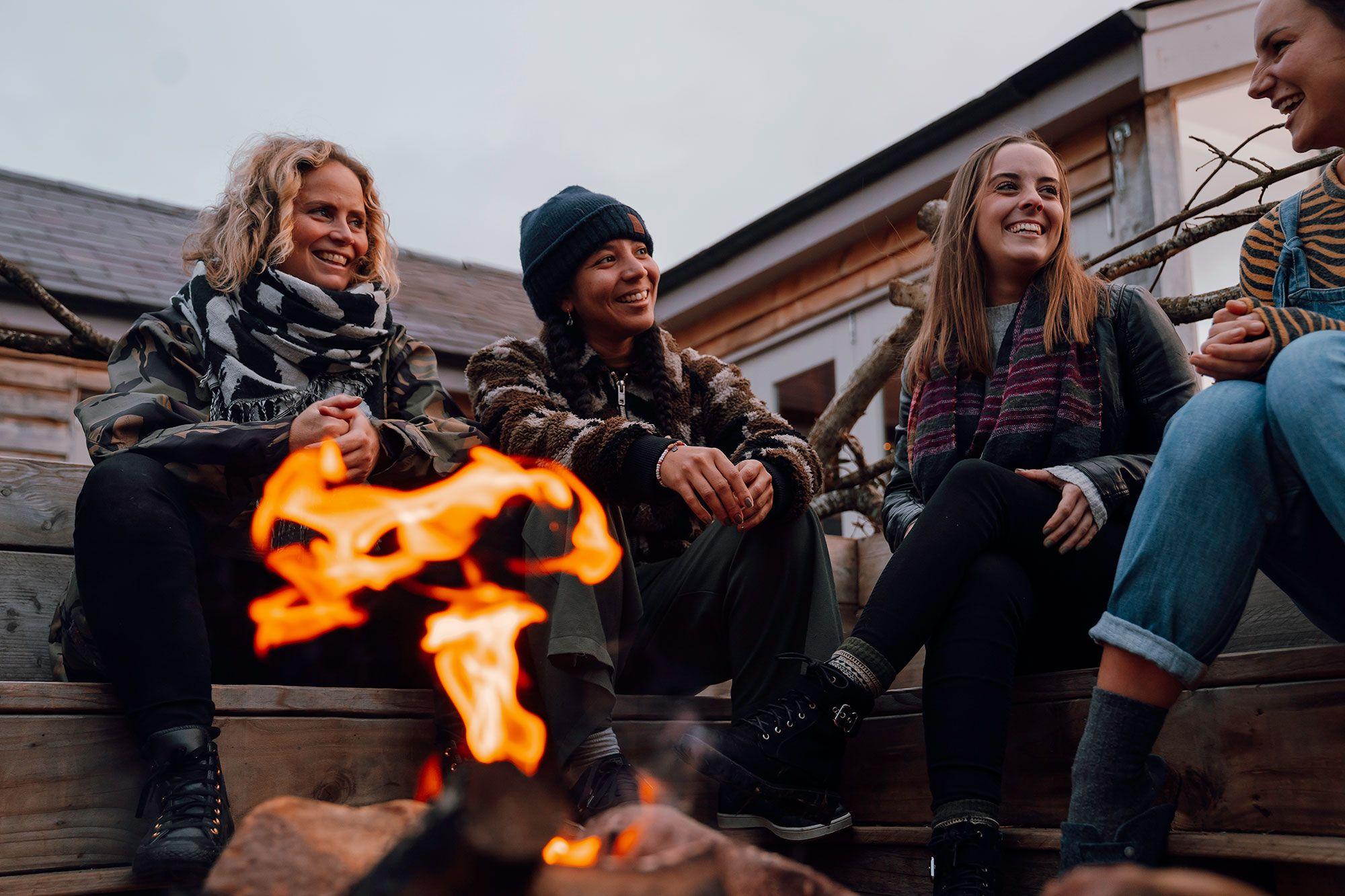
People
We're majority employee owned, which means we all get a say in how the business is run.
Profit
Our Charitable Trust uses 24% ownership of the company to support environmental causes
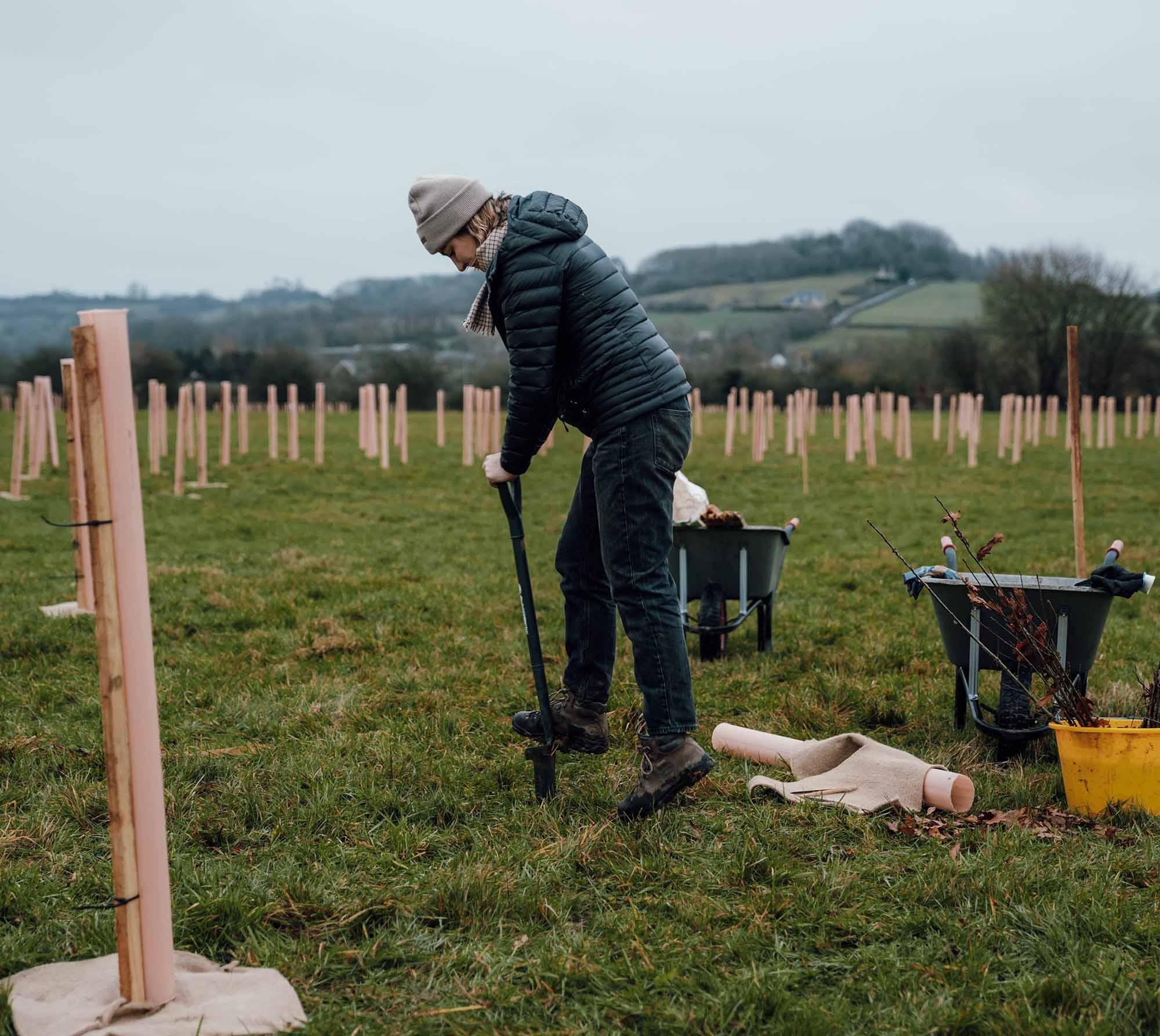
Planet
We're committing to raise £50,000 by 2027 to help protect nature in our national parks.