
Meet the suitless beekeeper – Millie Uhlein on taking nothing from nature but inspiration
For artist and beekeeper Millie Uhlein, nature isn't something to manage or take from, but something to be part of. Her unusual approach to beekeeping has led to a life where art, bees and the wild are all part of the same circle.
“I wanted it to look like it had just landed there, like a huge acorn in the tree.” Millie Uhlein is an artist, beekeeper and lover of nature. She’s explaining how the natural beehive she installed in a small copse near Frome is one step on a creative path, with every work bringing greater refinement. Her issue with it isn’t entirely about aesthetics, it’s also about embodying a principle that’s subtly woven into every strand of her work, an attempt to express something instilled in her from an early age.
For as long as she can remember, nature has been a part of Millie’s life, not as something to be utilised, or even as a place to be explored, almost as a character in itself. “My dad was really into fairy tales,” she tells me, “we’d go walking in the woods and he’d make up stories about all the creatures, so my mind’s always been looking for beings in the wild.”
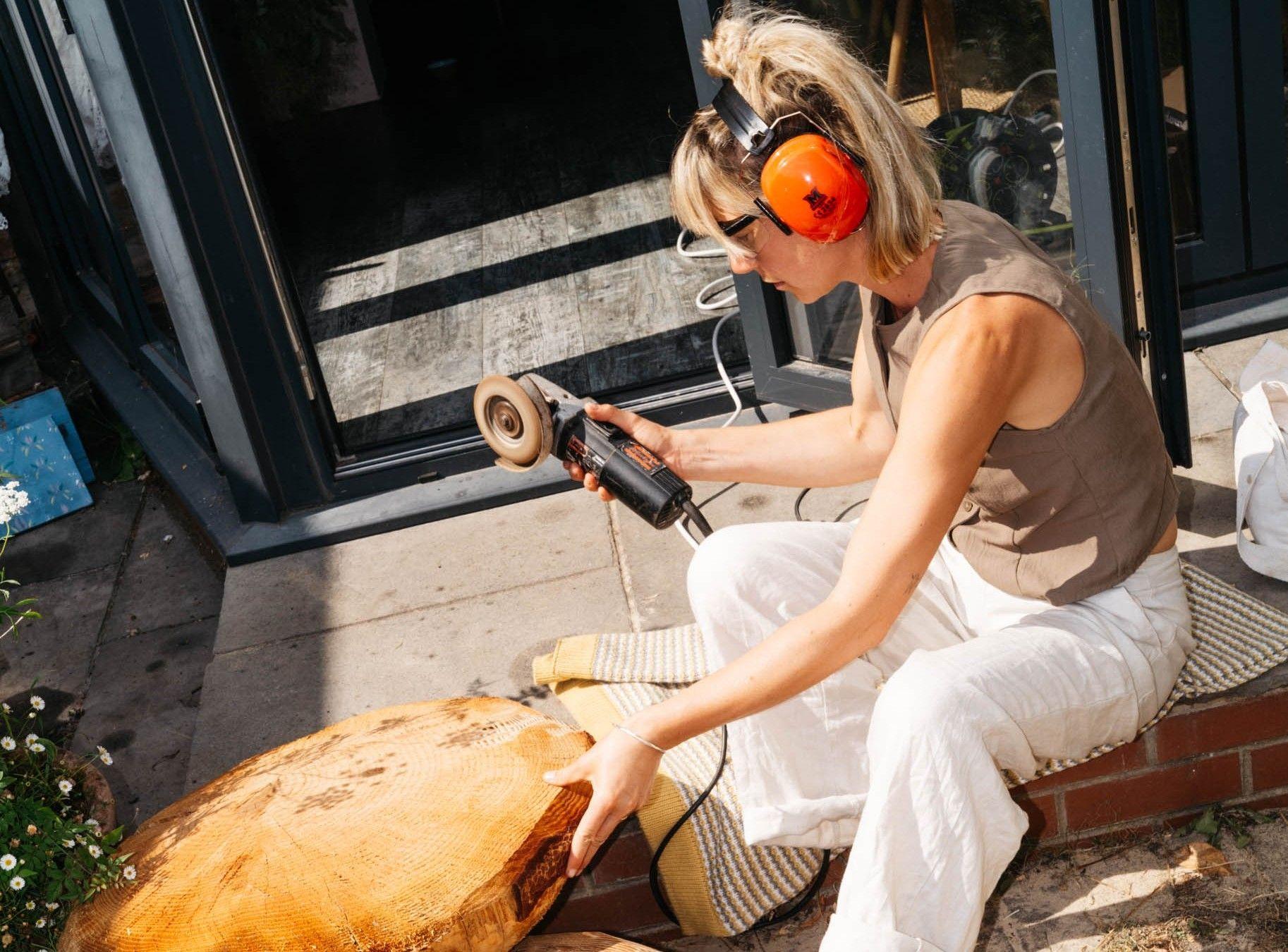
A degree studying art in California was an attempt to develop that instinct, but despite what she knew she could have learnt there, she cut the course short when a visit home to Somerset made her realise where her heart lay. “Everything in my body wanted to be back there,” she says with a sense of wonder, “I had this incredibly strong urge to be home and to do something there that really connected me with nature.” That thing, it turned out, was beekeeping, but what Millie didn’t realise then, was that she was headed for another conflict between head and heart.
Despite always having been fascinated by bees, drawn to the complex shapes in their hives and the mysteries of their social structures, Millie admits to going into beekeeping with a romanticised view of the practice. She found a mentor and began to learn everything about its intricacies but soon felt that something wasn’t right.
"sometimes the best thing we can do is create space for bees, or other creatures and plants, to thrive on their own terms."
“Traditional beekeeping is focused on what the bees produce and there’s nothing wrong with that, but it just didn’t resonate with me,” she says with a shrug. She explains how certain processes, such as removing honey or expanding the size of the hive alter the bees’ behaviour, causing them stress or reducing their chances of swarming, heading off to found new colonies. While they all have their purpose, Millie felt that her own relationship with bees should be focused less on what she wanted from them and more on what they needed themselves.
“Nature has a wisdom to it,” she says simply, “this has all been going on for a very long time and as much as we might like to think we know better, sometimes the best thing we can do is create space for bees, or other creatures and plants, to thrive on their own terms. It’s not how everyone does it, but it felt right for me.”
That feeling is what led her to create her own natural beehives, like the almost-an-acorn. It’s also the reason you’ll never see her in the iconic white suit and netted headgear. She does own one and it does get worn, perhaps when she’s helping someone deal with their own hives or trying to move an endangered colony, but her own work never requires her to pull it on. She’s unlikely to be stung when she barely interacts with the bees at all. One of her hives, installed over a year before we speak, sat unoccupied for months while she waited for winter to pass before refreshing the scented lures she uses. Eventually, bees might moved in, or they might not. It’s up to them.
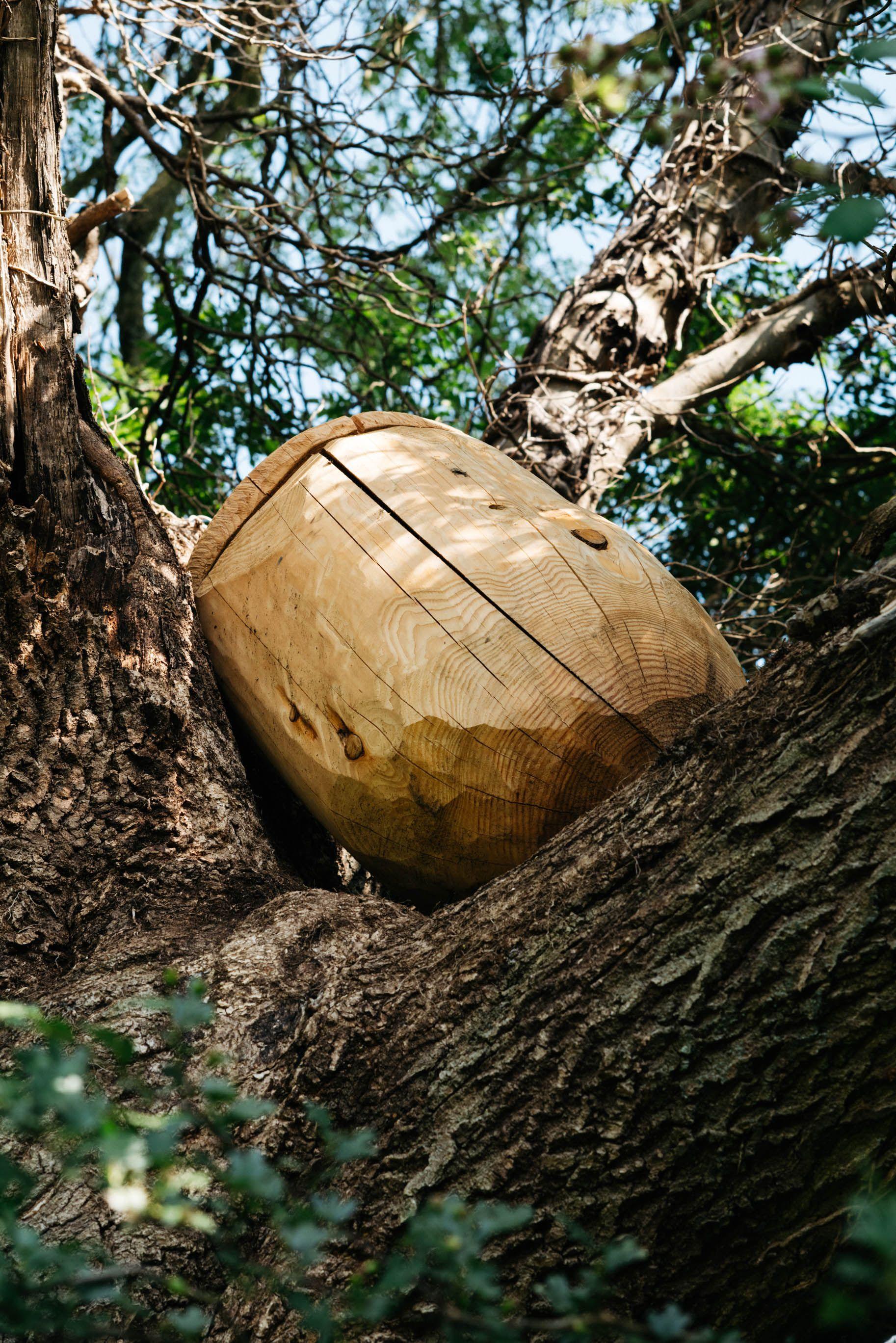
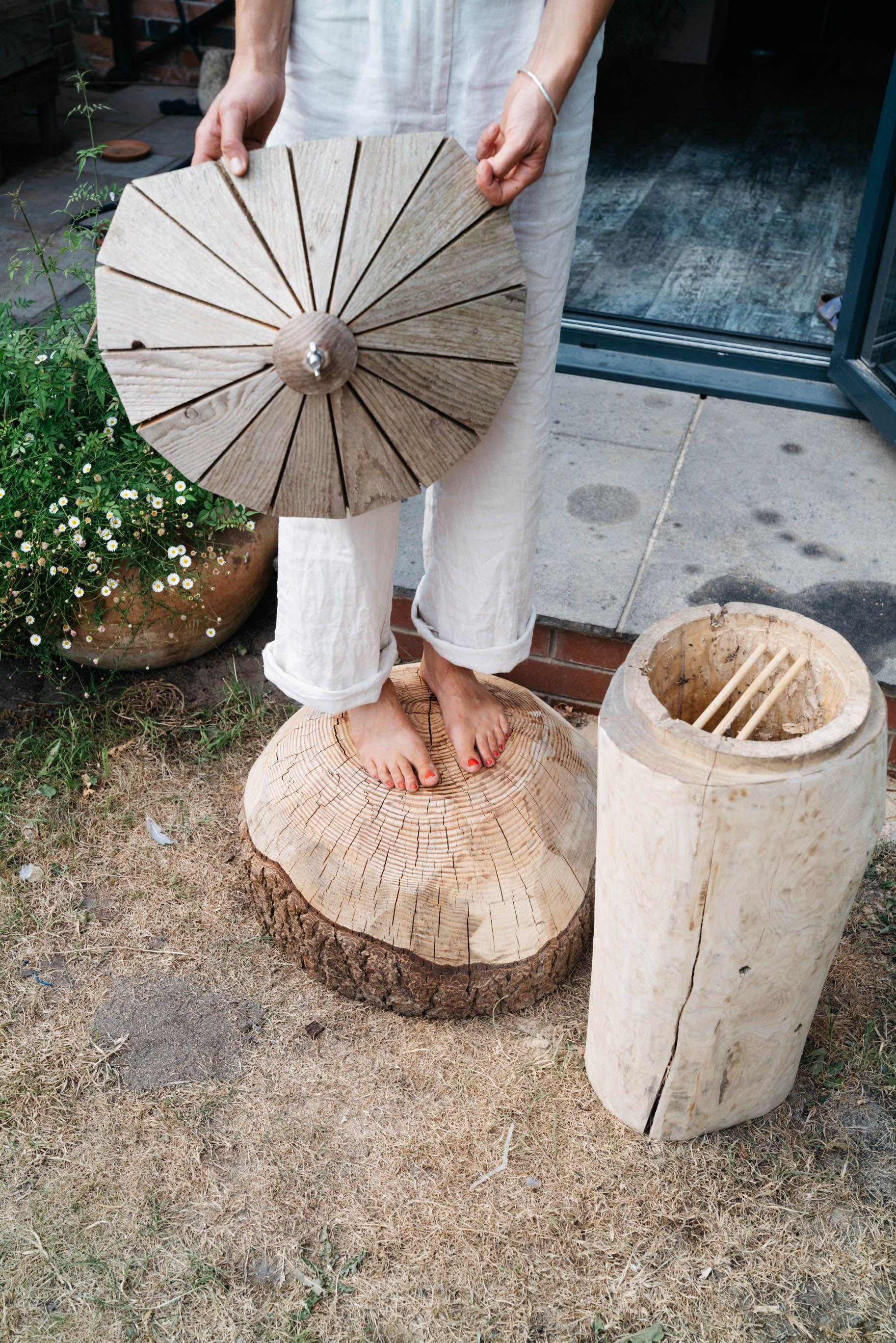
Removing concerns about honey production or any attempts at management also frees up the design process, meaning Millie is free to make the hive as close as she can to how the bees would live in the wild. There’s no need for the vertical interior walls or slatted, roofed appearance of the classic beehive. She spends time seeking out a suitable spot, assesses it for size and natural context, then sees what comes to her while ensuring that the cavity size, orientation and positioning of the entrances mimic a tree hollow as much as possible.
But while the meditative manufacturing process is one of much gentle shaping and careful adaptation to the site, it begins with the noisy slice of a chainsaw. “I have a brilliant guy in Bridport called Joe,” Millie begins, “and he takes a trunk and cuts into a good size for a hive and then hollows it out with the chainsaw for me. When I get it, it’s a pretty rough piece of wood and I smooth it down, close off the ends and make an entrance.”
"there are certain things in nature where it’s so crucial not to think about what we can extract."
At this point, as she explains the later crafting stages, it feels like art starts to creep back in, secondary to function but never completely out of mind. Perhaps a shine to the exterior, or a darker stain that helps the hive blend into its surroundings while also making it something you’d notice and wonder at if you came across it in the woods. Given that so much of her other art comes from what she finds in nature, I say that it feels like a perfect circle.
“It does in a way. When I started out beekeeping I would sometimes sculpt with the beeswax left behind or work with other parts of the hive. It’s the same as how I’ll walk in the woods and find an old seedhead that I take home to my studio, having used some of the flowers the year before. It’s about that cyclical nature of... nature, everything really. I try to be part of it.”
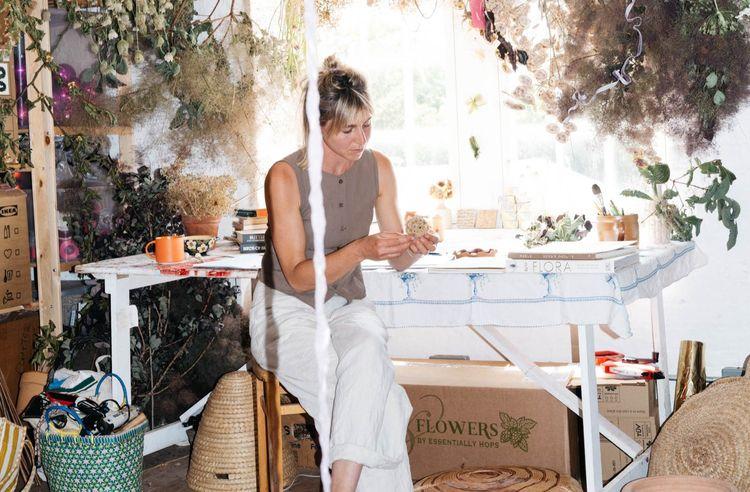
We talk about her approach to art, which is similar to her approach to hive-making, except with fewer chainsaws. She gathers materials, creates a meditative environment in her studio, then explores the shapes and forms that emerge. Tiny chairs spring up from dried grasses, sweet pea leaves become fragile butterfly wings, candles sprout elegant mushrooms. Nature becomes nature, over and over in a cycle of reinvention and rebirth that feels effortless, unaffected, harmonious.
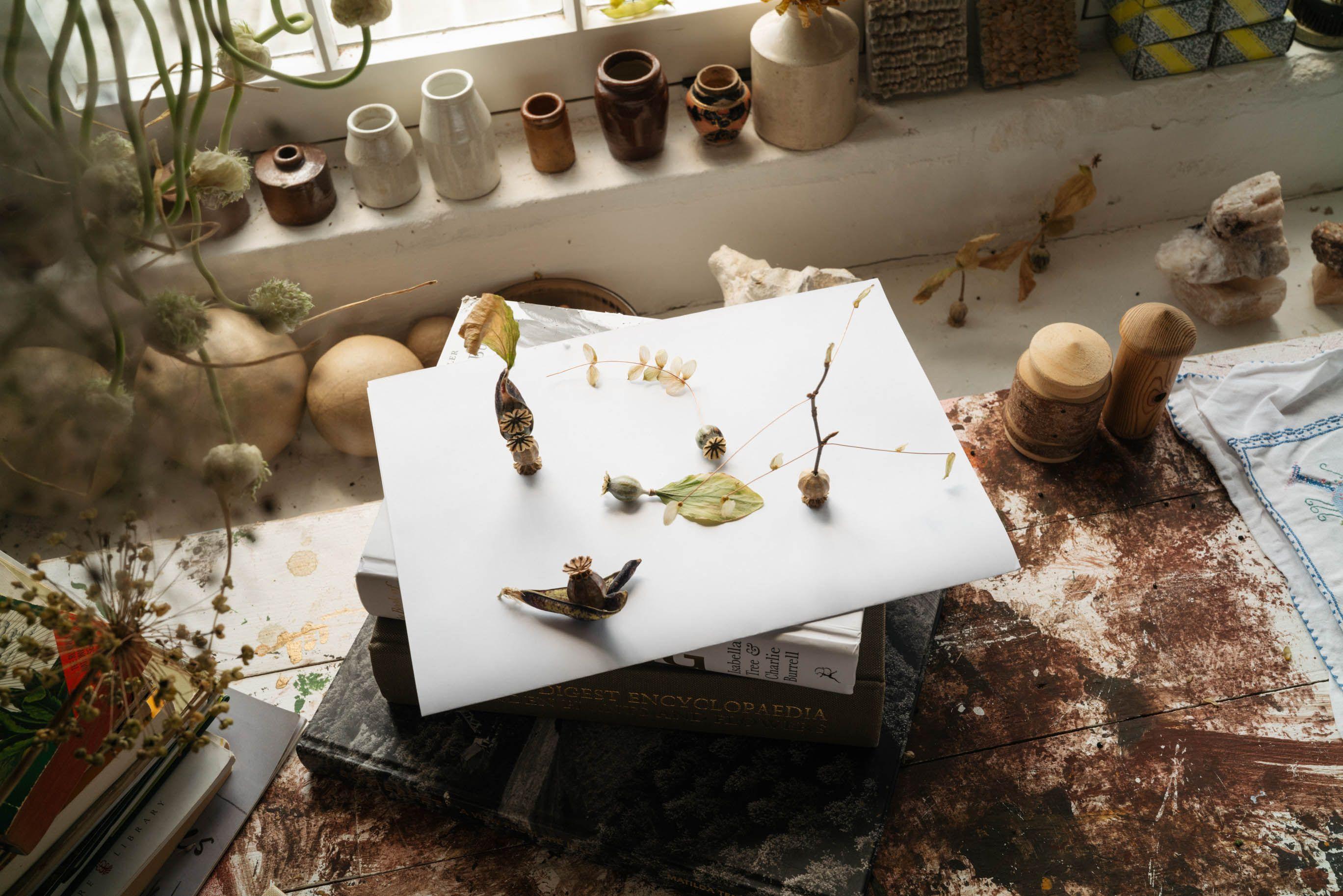
That harmony, it seems, is the strand that brings everything together. Millie doesn’t have a shop for her art, she doesn’t take honey from the bees, everything simply exists for its own sake. It’s a reciprocal arrangement, an artistic ecosystem, in which bees help the plants and trees grow into things that might one day make their way to Millie’s studio and even become hives themselves.
She is firmly of the belief that, “we shouldn’t be monetising everything. There are certain things in nature where it’s so crucial not to think about what we can extract. Beekeeping made that clear to me. I’m really happy with where I am with it now. The bees do so much for us, it’s nice to give a little something back.”
If that something happens to be an interesting piece of art, then Millie has, with remarkable grace, taken that single strand and woven all her worlds and all her loves into a single perfect expression.
Other articles you might like

Cooking wax and cutting buses – the surprising story of Shred & Butta
Why I swim: In conversation with Sophie Hellyer