


Guardian of another world – Edith Morris
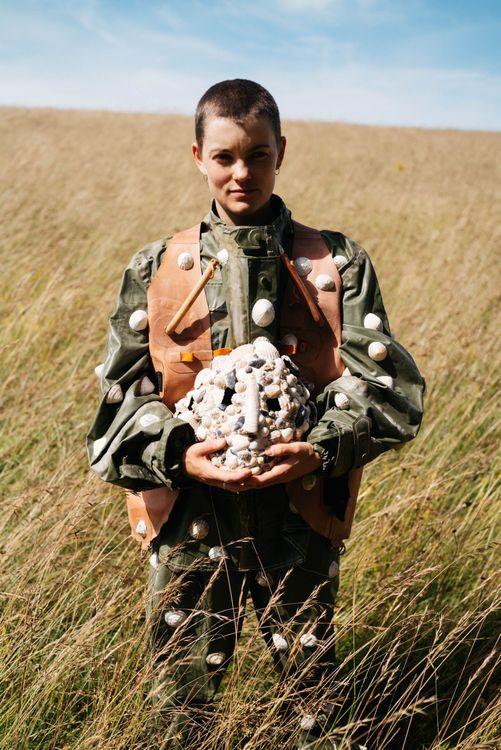
Edith Morris is a multi-disciplinary artist who works in film, ceramics and other media, drawing on ancient folk tales for inspiration. We spoke to her in the last of the summer sun but asked her to cast her mind back to colder times and darker tales.
-
Part of our 'Wild World' series | Written by Christopher-Wilson Elmes | Published November 2026 | Read time: 9 minutes
It's below zero. A few flakes of snow drift through the air and settle, taking a moment to melt into the grey water of the lake. Everything is still. Mirrored peaks ripple in the breeze. Slowly, a creature breaks the surface, rising up to reveal its immense height. It towers over the frosted mountains, its face a mask of shells. A fishing boat chugs past below, watched by giant, ragged eyes.
This is Trolsk, a film by the artist Edith Morris, shot on location near Lofoten, in Norway's wild north-western reaches. Throughout its five-minute run time, other creatures appear, looming over buildings, peering down at forests, unnoticed by the few people who wander through the shots. It's clear that each of the creatures is real, a person in a suit not a digital creation. They look present, natural, and the whole film has a grainy quality that makes it feel earthy and authentic despite the element of the fantastic.
"No, that was a professional Norwegian. Someone used to being cold"
The blend of the natural and the mystical in the film is striking and I know it'll make an interesting topic of discussion when I talk to Edith, but there's one thing I simply have to ask before anything else – was that her coming up out of the freezing lake? Sitting outside the caravan in which she lives just outside Bristol, she laughs and shakes her head. "No, that was a professional Norwegian. Someone who's used to being cold, cold, cold." She did dip a toe in, it turns out, but there was no way she was going under. She's quite happy sticking to cultural immersion.
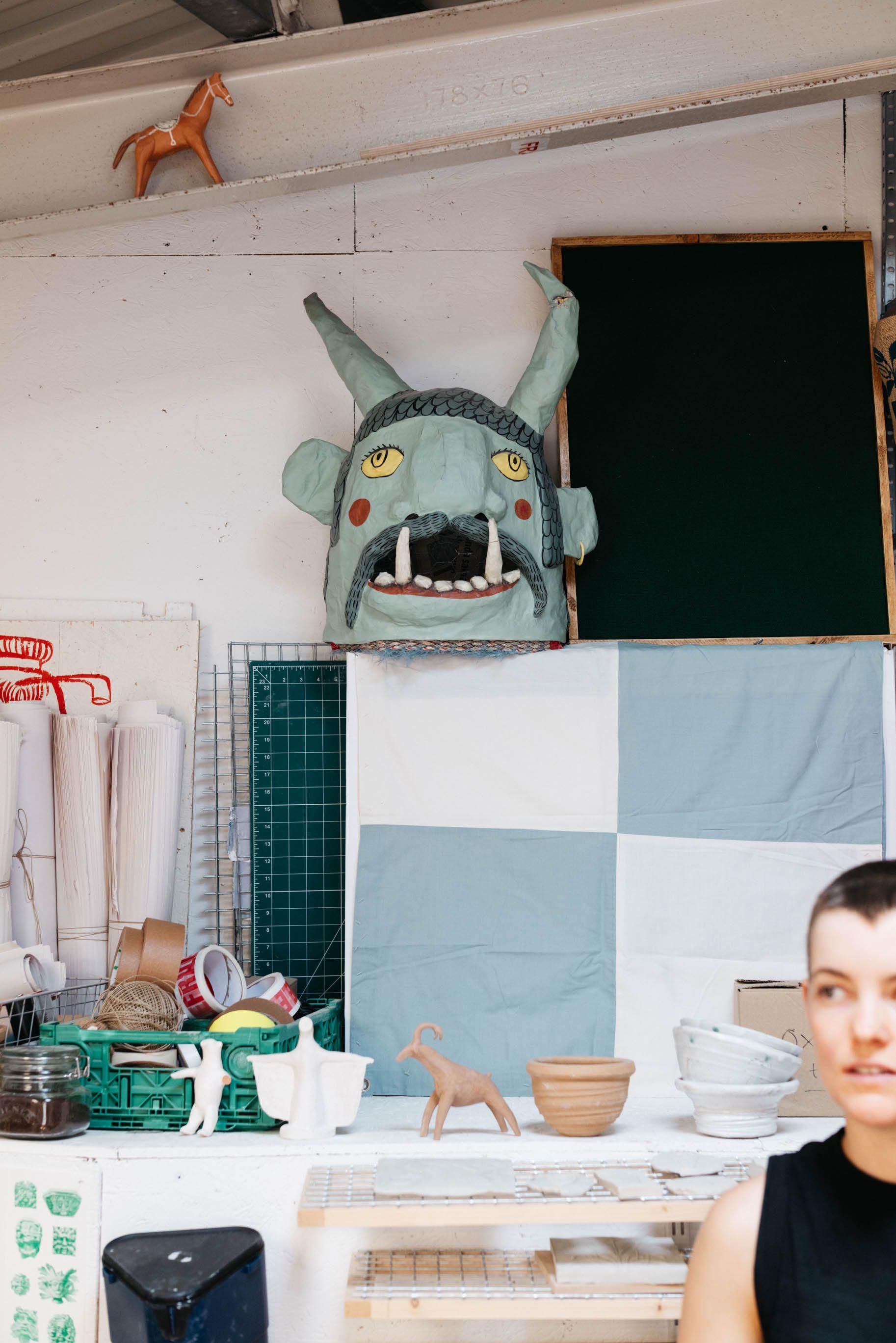
She talks about growing up in Wales, steeped in the art world, her mother a painter and her father a film maker. It was an upbringing full of stories and the strong, shared myths of Welsh culture. A hill nearby was the seat of a giant, the underworld denizens of Annwn were known for their red horns and ears, local paths were beaten into the land by the feet of the Tylwyth Teg, whose wild revelling often ended badly for any humans caught in the glow of the fair folk.
"There's a message there. Make sure you take proper care of your dead."
Wherever she looked for stories and myths, she found them, from the Cornish Knockers to the Scandinavian tales from which she took the characters of Trolsk. Work experience in theatre design and an early career in animation helped her examine storytelling from different angles, but she was always fascinated by the bigger, older picture of story as a part of culture, which she began to explore in her own art.
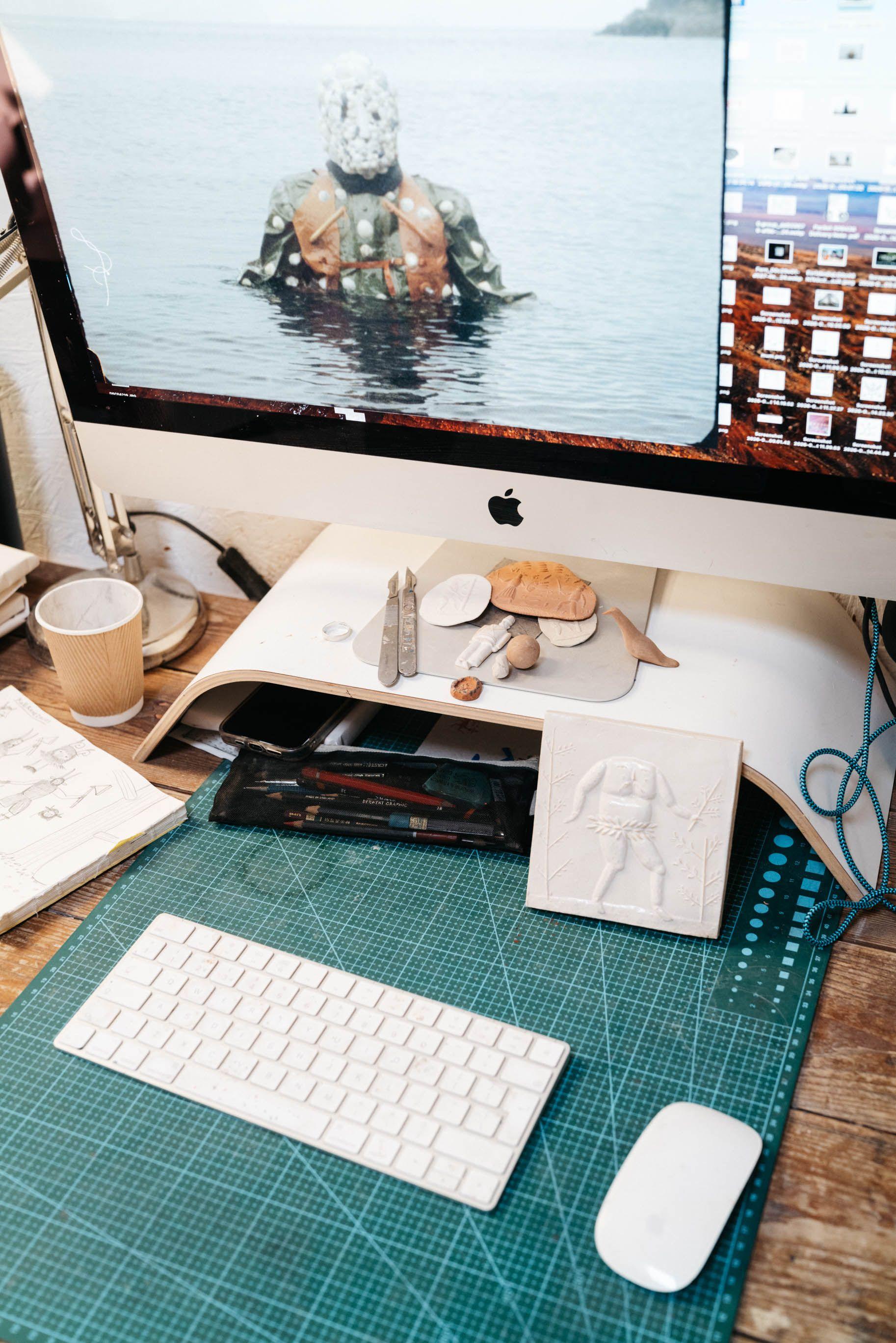
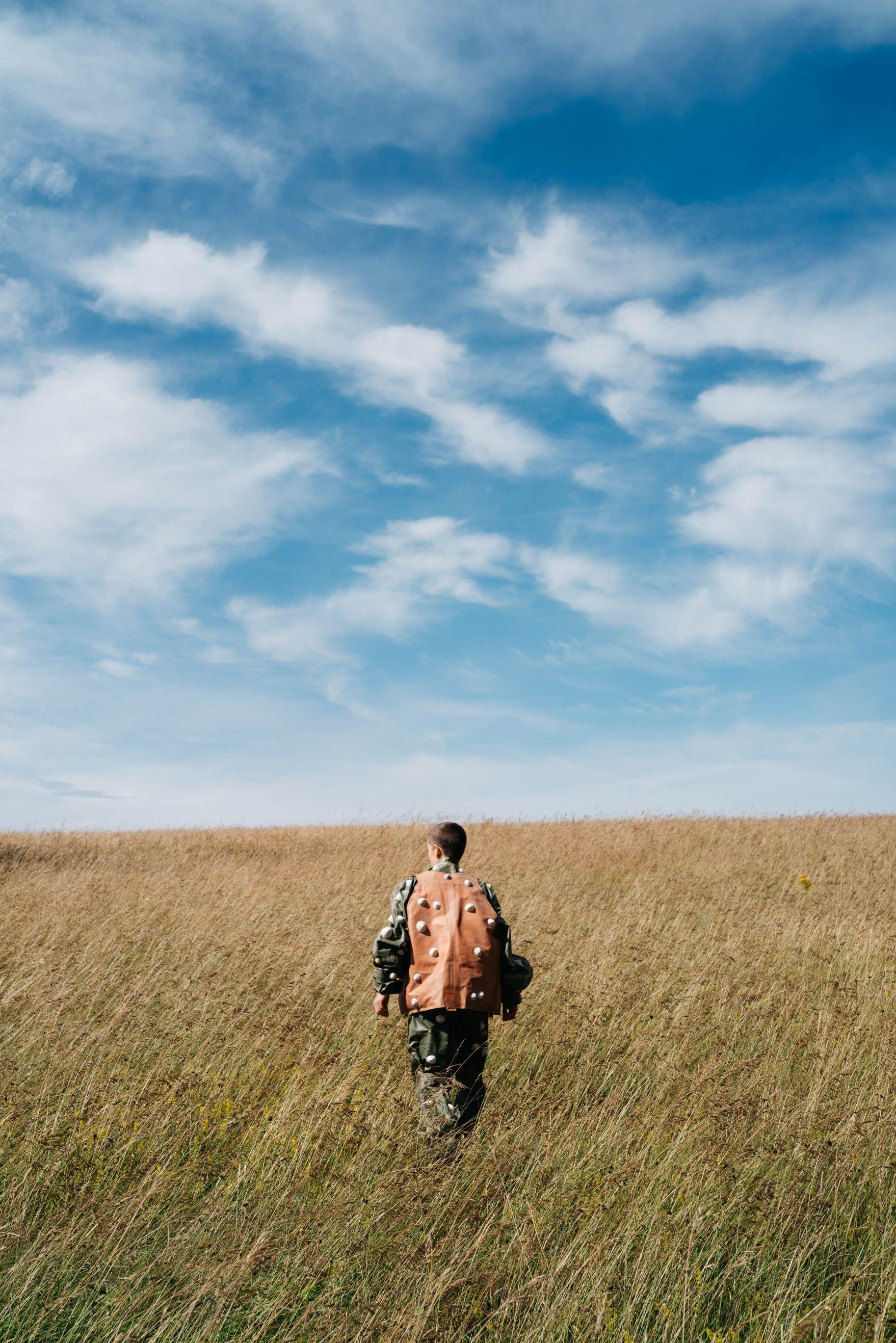
Some folktales served a purpose, like the shell-covered draug from Trolsk_._ "He's basically a fisherman who went overboard," Edith says, "and was denied a proper Christian burial, so he haunts the seas. And there's a message there. Make sure you take proper care of your dead." Other stories might send moral messages or give practical information about anything from farming to which paths were safe at night. "I'm really interested in how we use story, " she continues, "and how we've used it throughout history, before we could even speak, by painting on cave walls."
She's found that it's in the more extreme regions of the world that story was strongest and still persists, retaining some of that original purpose. Those are the places she's drawn to, where the immediacy of the natural world forces a closer relationship, stretching its roots into everyday life and emerging in our shared cultural experience. Nature was a character in people's lives, just as the gods were to the Greeks – a kind of blurred reality which Edith feels is almost impossible in our scientific and cynical present, but one which she's fighting to preserve.
"It was something that excited people, maybe scared them, maybe left them mystified."
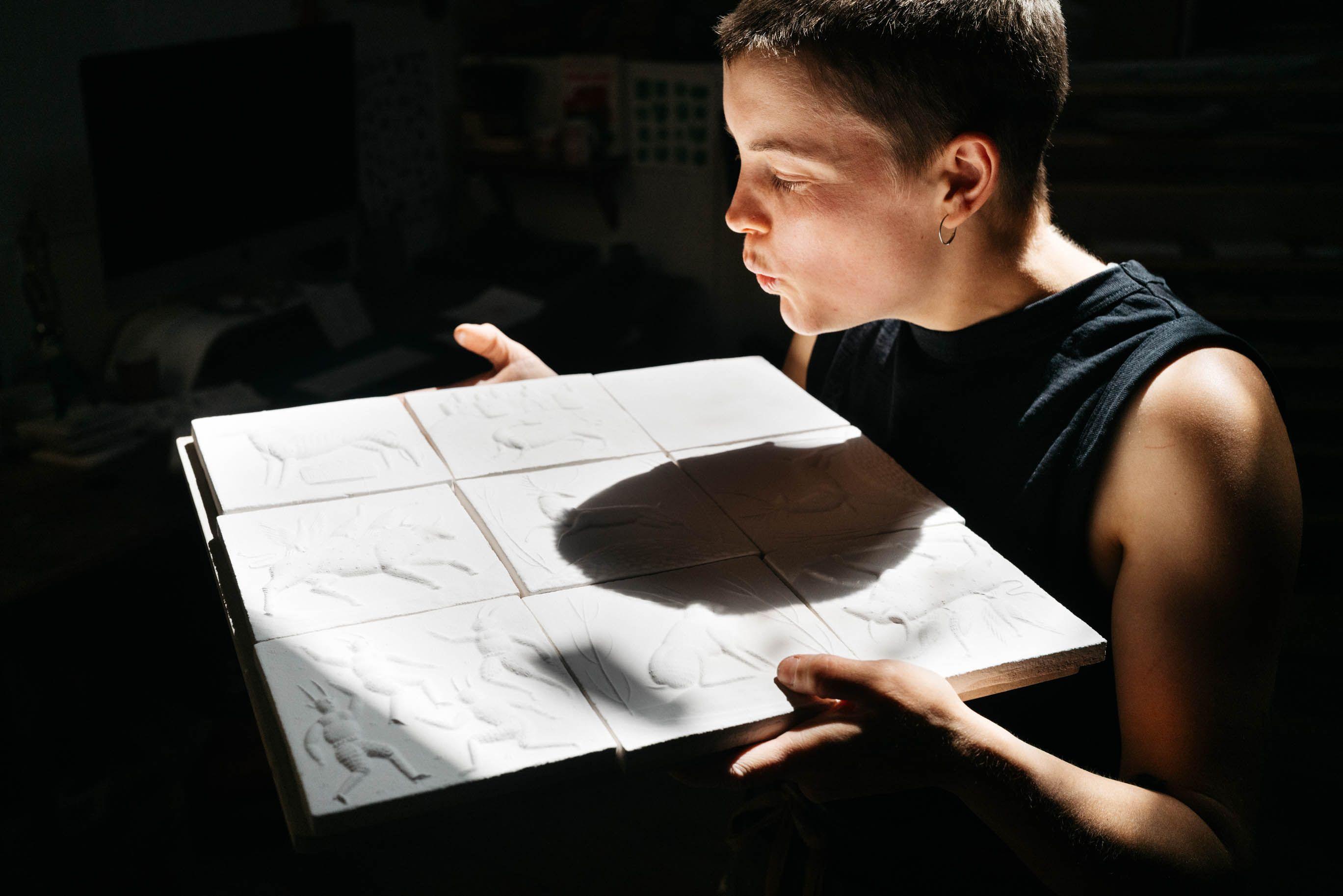
"Hearing and listening to these stories and keeping them alive is a lot of what I'm trying to do. I'm making a series of tiles at the moment, with creatures on them, each drawn from a real story from our past and I hope that helps them carry on." Just to play mischievous Tylwyth Teg myself for a moment, I ask if people still need story in the same way as they did when those myths arose. Is anyone feeling the threat of becoming a draug while they're scrolling through Instagram? Edith nods but smiles. It's clearly something she's thought about.
"That's where the other part of story comes in - the telling itself, the performance, the magic," she explains, "there was an experience of the story, not just a flatly delivered message. It was something that excited people, maybe scared them, maybe left them mystified." She references Georges Méliès, the French film maker whose famous short film of a rocket hitting the moon in the eye was one of the earliest examples of camera trickery. It was a story with a bit of the bizarre, clearly an illusion but one that few watching would have understood the mechanism behind. It's a reasonable analogue of ancient myth, in which wondrous things are presented as normal.
Edith tells me about watching people as they watch Trolsk, for which she used a film camera and old masking techniques to place her fantastical creatures in the ordinary world. She sees them laugh a little as they try to piece together how it was done as much as they think about the meaning behind it. It's that doubt, that questioning of reality, which is as important as anything else the film is trying to communicate.
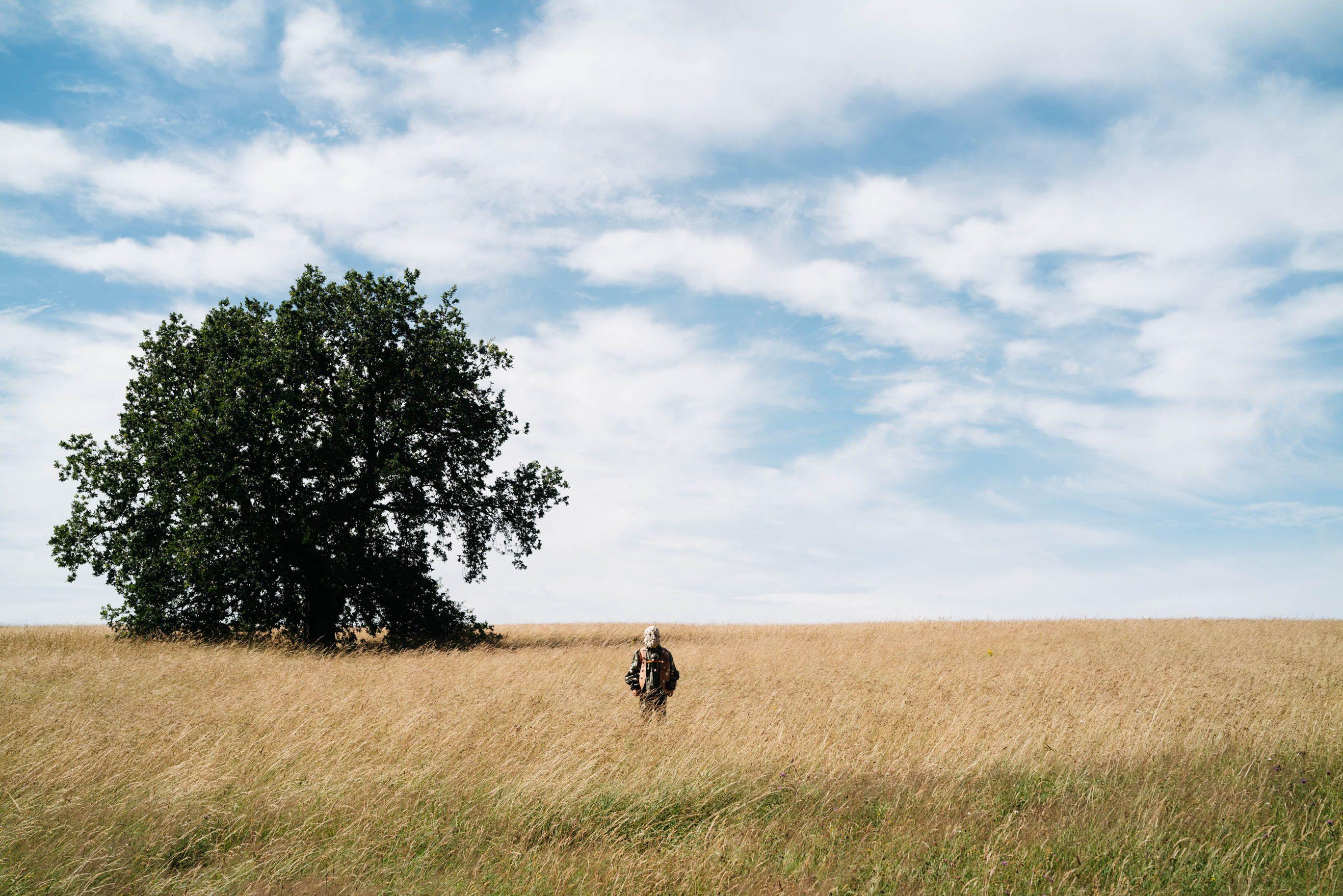
It's an effect that CGI or AI could never reproduce, and Edith feels that the time taken over the work, the realness of the traditional methods, is part of its impact, that the slowness of the methodology comes through. Where she is in Bristol, living by a dairy farm and cider maker, she is surrounded by the slow processes of fermentation, churning and seasonal change. There's a natural rhythm, in the literal sense that nature itself only allows things to happen at a certain pace.
Binding closely to nature, feeling those patterns emerge and telling the tales that arise from them is story as it has always been done and Edith believes it still has its place. "Everything is very factual for us now. We've lost the connection, the moral ending, the magic. But there's a movement of slowness, people caring, eating seasonally, going back to nature. So I do think there's hope. I hope there's hope."
In the final shot of Trolsk, the draug turns to face the camera but seems to look beyond it. As an ending, it's hard to know if it's meant to be hopeful, mournful or completely outside such ordinary emotions. But it is magical, mystical and ever so slightly unsettling, just like the best stories always have been.
Other articles you might like
Meet the suitless beekeeper – Millie Uhlein on taking nothing from nature but inspiration
Wrong turns and tulips – how an artist found his way
